
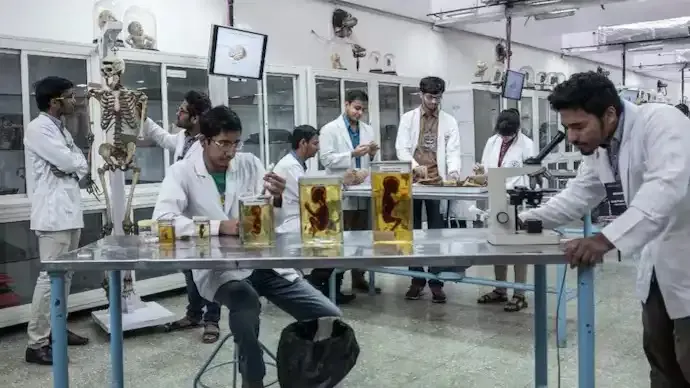
In a major reform aimed at reshaping postgraduate medical education in India, the National Medical Commission (NMC) has announced that admissions to postgraduate (PG) diploma medical courses will be phased out after the 2026-27 academic session.
The decision marks a significant shift in specialist medical training, with greater emphasis being placed on MD (Doctor of Medicine) and MS (Master of Surgery) degree programmes. The move is expected to standardise postgraduate medical qualifications and strengthen specialist healthcare training across the country.
2026-27 to Be the Final Admission Cycle
As per the latest notification issued by the National Medical Commission, the 2026-27 academic session will be the final year in which students can seek admission to PG diploma medical courses.
Beginning with the 2027-28 academic year, no fresh admissions will be permitted in these diploma programmes. Medical colleges and institutions have been provided a transition period to convert existing diploma seats into MD or MS degree seats.
The phased approach is intended to ensure a smooth transition without disrupting ongoing academic programmes or affecting current students.
Why Is NMC Ending PG Diploma Courses?
The decision is part of a broader effort to strengthen postgraduate medical education and align specialist training with evolving healthcare requirements.
MD and MS degree programmes generally provide more extensive training, longer duration of study, and greater opportunities for specialization compared to diploma courses. By encouraging institutions to shift towards degree-based education, policymakers aim to enhance the quality and consistency of specialist medical training.
The move is also expected to create a more uniform framework for postgraduate medical qualifications across India.
What Are PG Diploma Medical Courses?
Postgraduate diploma courses are specialised medical programmes pursued after completing an MBBS degree. Traditionally, these courses have offered focused training in specific medical disciplines and usually have a shorter duration than MD and MS programmes.
Popular PG diploma courses have included specializations such as:
- Diploma in Child Health (DCH)
- Diploma in Obstetrics and Gynaecology (DGO)
- Diploma in Anaesthesia (DA)
- Diploma in Orthopaedics (D Ortho)
- Diploma in Ophthalmology (DO)
These courses have played an important role in producing specialists, particularly in smaller towns and underserved regions.
How Will the Change Affect Medical Students?
Medical aspirants planning to pursue postgraduate education will need to focus increasingly on MD and MS degree programmes in the coming years.
Students seeking admission during the 2026-27 academic session will still have the opportunity to apply for diploma courses where seats remain available. However, future aspirants will have to compete primarily for MD and MS seats after the transition is completed.
Key Implications for Students
- PG diploma admissions will continue only until the 2026-27 session.
- No fresh admissions will be allowed from 2027-28 onwards.
- Greater emphasis will be placed on MD and MS degree programmes.
- Medical colleges may convert diploma seats into degree seats.
- NEET PG aspirants may see changes in seat distribution over time.
What Does This Mean for Medical Colleges?
Medical institutions currently offering diploma programmes will need to prepare for the transition. Colleges are expected to gradually convert existing diploma seats into MD and MS seats while ensuring compliance with NMC regulations.
This transition period gives institutions time to upgrade infrastructure, faculty strength, and training facilities required for degree programmes.
Experts believe the conversion of diploma seats into degree seats could expand opportunities for postgraduate medical training while improving academic standards.
Impact on India's Healthcare System
The reform could have long-term implications for India's healthcare workforce. By promoting degree-based specialist training, the system aims to produce doctors with more comprehensive clinical expertise.
However, healthcare experts will closely monitor how the transition affects the availability of specialists, especially in rural and semi-urban regions where diploma holders have traditionally played a vital role.
Balancing quality training with accessibility to healthcare services will remain an important focus during the implementation phase.
What NEET PG Aspirants Should Know
Students preparing for NEET PG should keep track of future seat allocation changes as medical colleges begin converting diploma seats into MD and MS programmes.
Aspirants are advised to:
- Regularly monitor NMC notifications.
- Review updated seat matrices during counselling.
- Explore MD and MS specializations aligned with career goals.
- Stay informed about changes in postgraduate medical admission policies.
What Happens Next?
The 2026-27 academic session will serve as the final admission window for PG diploma courses across India. Over the next few years, medical colleges are expected to restructure their postgraduate offerings in line with NMC guidelines.
The transition is likely to reshape India's postgraduate medical education landscape and influence the career pathways of thousands of future doctors.
Conclusion
The National Medical Commission's decision to discontinue PG diploma medical admissions after the 2026-27 academic session marks a major transformation in India's medical education system. With the focus shifting towards MD and MS degree programmes, the reform aims to strengthen specialist training and create a more standardized postgraduate framework. Medical students and institutions alike will need to prepare for the changes as the country moves toward a new era of medical education.
FAQ SECTION
Q1. When will PG diploma medical admissions end in India?
Admissions to PG diploma medical courses will be conducted for the final time during the 2026-27 academic session.
Q2. Will PG diploma courses be available after 2027?
No fresh admissions will be permitted from the 2027-28 academic year onwards.
Q3. Why is NMC discontinuing PG diploma courses?
The move is intended to strengthen specialist medical education and encourage training through MD and MS degree programmes.
Q4. Will current PG diploma students be affected?
Students already enrolled in diploma programmes will be able to complete their courses as per existing regulations.
Q5. What will happen to diploma seats in medical colleges?
Medical colleges are expected to gradually convert diploma seats into MD and MS degree seats.
Q6. How will this affect NEET PG aspirants?
Future aspirants may see changes in seat distribution as institutions transition from diploma programmes to degree-based postgraduate courses.


Conversation
Be kind and stay on topic. Comments are moderated; abuse, spam and personal attacks are removed. Report a problem