



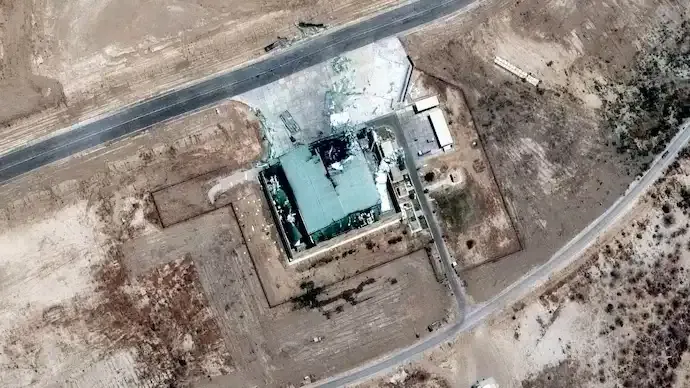
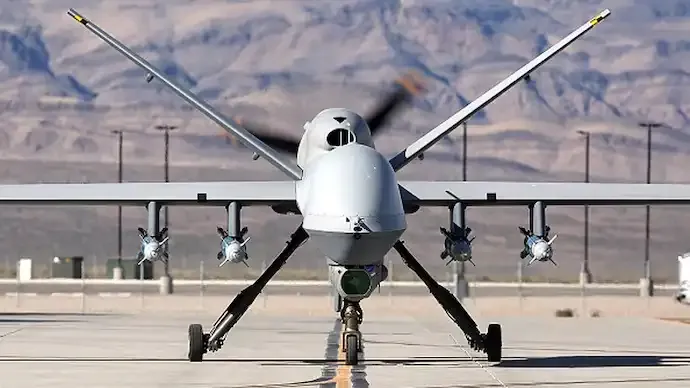
Operation Sindoor has renewed scrutiny over Pakistan’s nuclear vulnerabilities after former Chief of Defence Staff General Anil Chauhan said a mysterious blast near the Kirana Hills on May 10, 2025, may have been caused by a stray Indian loitering munition.
During India’s strikes on Pakistani military infrastructure, the Kirana Hills explosion remained unexplained. The area is believed to contain a Pakistani special-weapons storage facility, although India had publicly denied targeting the hills during the operation.
Chauhan’s remarks have now brought the incident back into focus. He said the munition may have been launched towards Pakistan Air Force facilities at Sargodha and, after failing to find a target, eventually struck one of the hills.

Kirana Hills blast raises nuclear questions
The Kirana Hills area has long attracted attention because of its reported links to Pakistan’s nuclear weapons infrastructure. Analysts have therefore debated whether the explosion represented an accidental strike, a warning, or something else.
Open-source analysis of videos from the incident had previously placed the explosion near entrances to a cave complex. Some analysts described the incident as potentially a warning strike without evidence of penetration into underground facilities.
The mystery became more significant because Pakistan had also launched a Fatah-2 ballistic missile towards India during the conflict. The missile was reportedly intercepted near Sirsa in Haryana.
The article argues that the combination of India’s ability to penetrate Pakistani airspace, the disruption of Pakistani military infrastructure and the Kirana Hills incident may have exposed vulnerabilities in Pakistan’s nuclear command and delivery systems.
Pakistan’s nuclear deterrent under scrutiny
Operation Sindoor demonstrated India’s ability to conduct long-range precision strikes against targets deep inside Pakistan, according to the article.
The strikes reportedly affected airfields, radar installations, command-and-control infrastructure and other military assets. Pakistani aircraft were subsequently moved towards bases farther from the main conflict zone.
The developments raised questions about Pakistan’s ability to protect its nuclear forces from counterforce operations, particularly because its geography provides less strategic depth than countries such as India, Russia, China and the United States.
Pakistan relies primarily on air- and land-based nuclear delivery systems and has not established a mature operational sea-based nuclear deterrent.
Pakistan seeks an undersea deterrent
The vulnerability has increased interest in Pakistan’s long-standing effort to develop a sea-based nuclear capability.
Pakistan tested the Babur-III submarine-launched cruise missile in 2017 and established a naval command structure for its strategic forces. However, there have been no publicly confirmed operational deployments of Pakistani nuclear weapons at sea over the past decade.
The article also reports that Pakistan has explored obtaining nuclear-powered submarines from China, including discussions involving the strategic importance of Gwadar.
China, however, has reportedly been unwilling to provide Pakistan with nuclear-submarine technology.
Why a sea-based capability matters
A sea-based nuclear deterrent can make it harder for an adversary to locate and destroy a country's nuclear forces in a first strike.
For a country with limited geographical depth, submarines can provide greater survivability because they can hide and operate away from vulnerable land-based facilities.
Pakistan therefore faces a significant technological and financial challenge if it wants to develop a credible undersea nuclear deterrent.
The article suggests that conventional submarines capable of carrying long-range missiles could become a more realistic alternative, potentially involving cooperation with countries such as Turkey and financial support from Saudi Arabia.
Operation Sindoor’s strategic impact
The Kirana Hills incident remains officially unresolved in several respects, but General Chauhan’s comments have added a new dimension to the debate surrounding Operation Sindoor.
The episode has raised broader questions about Pakistan’s ability to protect its nuclear infrastructure during a conventional conflict and whether its traditional strategy of relying on nuclear deterrence to constrain India’s military response remains effective.
For Pakistan, the lesson may be the need for greater survivability of its nuclear forces. For India, the operation demonstrated the importance of precision weapons, air defence and long-range strike capabilities.
The result could be a renewed Pakistani push towards a survivable sea-based deterrent as Islamabad reassesses the vulnerabilities exposed during Operation Sindoor.







Conversation
Be kind and stay on topic. Comments are moderated; abuse, spam and personal attacks are removed. Report a problem