

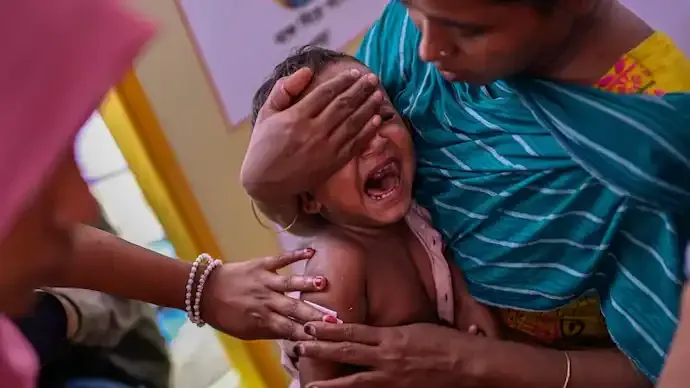

India has recorded a significant increase in measles cases during the first half of 2026, reporting 26,627 infections, making it the country with the second-highest number of reported measles cases globally, according to data from the World Health Organization (WHO) and the US Centers for Disease Control and Prevention (CDC).
The latest figures have raised fresh questions about India's surveillance system, transparency in reporting and the progress of its ambitious goal to eliminate measles and rubella by 2026.
India's Measles Cases Rise Sharply in 2026
According to international surveillance data, India has already exceeded the 18,794 measles cases reported during the whole of 2025.

Only Bangladesh, which is battling a major measles outbreak, has reported more infections this year with 42,127 cases and nearly 800 deaths.
Despite the increase, there have been no reports of widespread nationwide outbreaks or detailed official information identifying the states and districts most affected.
Measles Elimination Goal Faces Fresh Challenge
India has repeatedly postponed its measles and rubella elimination target after missing earlier deadlines in 2015, 2020, and 2023.
The latest rise in infections comes as the country aims to eliminate the disease by 2026, making effective surveillance, vaccination and rapid outbreak response even more critical.
Public health experts have also highlighted the lack of publicly available district-wise data on infections and deaths, making it difficult to assess the true extent of the outbreak.
How Measles Cases Have Changed Since 2021
WHO surveillance data shows fluctuations in reported measles cases over the past few years:
- 2021: 6,025 cases
- 2022: 43,578 cases
- 2023: 68,794 cases
- 2024: 20,635 cases
- 2025: 18,794 cases
- 2026 (first half): 26,627 cases
The major nationwide outbreak in 2022 was largely attributed to disruptions in routine childhood immunisation during the COVID-19 pandemic.
What Is Measles and Why Is It Dangerous?
Measles is a highly contagious viral disease that spreads through respiratory droplets when an infected person coughs or sneezes.
Common symptoms include:
- High fever
- Cough
- Runny nose
- Sore throat
- Red eyes
- Red skin rash
Although there is no specific antiviral treatment, supportive care—including fever management and Vitamin A supplementation—can help reduce complications.
Children may develop severe illnesses such as pneumonia and encephalitis (brain inflammation), which can be life-threatening.
Experts also note that measles can weaken the immune system for months after recovery, increasing vulnerability to other infections.
Experts Raise Concerns Over Surveillance Transparency
Virologist Dr T Jacob John, former professor at Christian Medical College (CMC), Vellore and former co-chair of India's Measles-Rubella Task Force, said the overall case numbers alone should not trigger panic.
However, he expressed concern about the country's elimination efforts and the limited public availability of surveillance data.
According to Dr John, India currently lacks publicly accessible district- and state-level information on measles cases, making it difficult to monitor outbreak patterns or assess the effectiveness of control measures.
Vaccination Coverage Continues to Improve
Despite the rise in infections, vaccination coverage has shown steady improvement.
According to the latest WHO-UNICEF Estimates of National Immunisation Coverage (WUENIC):
- 98% of children received the first dose of the measles vaccine in 2025.
- 95% received the second dose, an improvement over previous years.
Health experts believe maintaining high vaccination coverage while rapidly detecting and controlling local outbreaks will be essential if India is to achieve its long-delayed measles elimination target.
Key Highlights
- India has reported 26,627 measles cases in the first half of 2026.
- The country has the second-highest reported measles burden globally, after Bangladesh.
- India has already exceeded the total number of cases recorded during 2025.
- Experts have raised concerns over surveillance transparency and the lack of district-level data.
- Vaccination coverage has improved, with 98% first-dose and 95% second-dose coverage in 2025.
FAQs
How many measles cases has India reported in 2026?
India has reported 26,627 measles cases during the first half of 2026, according to WHO and CDC data.
Which country has reported the highest number of measles cases?
Bangladesh has reported the highest number of measles cases in 2026, with over 42,000 infections.
What is India's measles elimination target?
India aims to eliminate measles and rubella by 2026, after previously missing elimination targets in 2015, 2020 and 2023.
How is measles prevented?
Measles is prevented through vaccination. Under India's Universal Immunisation Programme, children receive two doses of the Measles-Rubella (MR) vaccine.
Why are experts concerned despite high vaccination coverage?
Experts say improved vaccination rates are encouraging, but greater surveillance transparency and quicker identification of local outbreaks are essential to eliminate measles.







Conversation
Be kind and stay on topic. Comments are moderated; abuse, spam and personal attacks are removed. Report a problem