
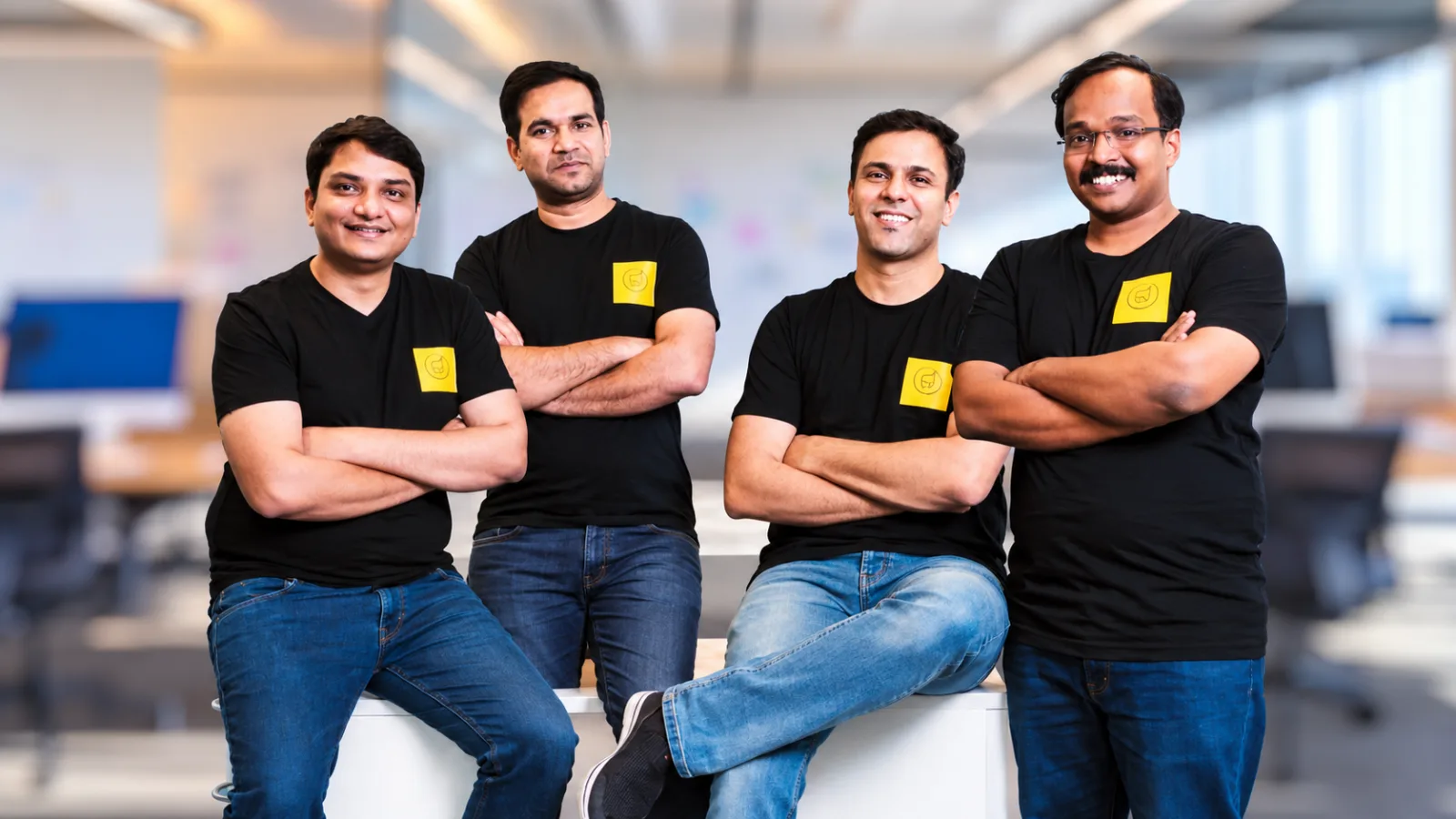
For Ottonomy CEO Itukar Vijay, the biggest gap in logistics is often found in the “messy middle” — the movement of samples, meals, parts and parcels between buildings, through elevators and across large campuses. While robotics has entered several parts of the logistics industry, these short-distance movements have remained difficult to automate.
The need became more visible during the COVID-19 pandemic, when hospitals, industrial facilities and travel hubs increasingly required contactless movement of supplies and goods. For Vijay, the shift highlighted an opportunity for autonomous technology to address labour shortages in last-mile and intra-campus logistics.
Building robots for real-world logistics
Vijay, who has around two decades of experience in robotics and autonomous driving, founded deeptech startup Ottonomy in 2020 with college mate Hardik Sharma and former colleagues Pradyot Korupolu and Ashish Gupta.
The company focuses on autonomous logistics systems designed to move goods through complex environments rather than relying solely on traditional warehouse automation.
“Ottonomy was founded on the belief that last-mile and intra-campus logistics are areas where labour shortages are most acute and where autonomous technology can deliver real value today,” Vijay said.
Ottonomy is headquartered in Sunnyvale, California, and has a team of more than 60 people, with most of its workforce operating across India's Delhi National Capital Region.
From robotics to Physical AI
The startup recently won the Supply Chain and Engineering category at the Accenture Tech Next Challenge 2026. According to Vijay, the recognition helped the team better understand what is required to scale Physical AI within enterprise environments.
The award also provided access to industry leaders and organisations working on the adoption of autonomous technologies, potentially helping Ottonomy explore larger enterprise applications.
The broader push reflects growing interest in Physical AI, where software intelligence is combined with machines capable of interacting with physical environments.
Accenture's Aditi Kulkarni said autonomous technologies are contributing to a new phase of enterprise transformation, with deeptech startups playing an increasingly important role.
Through initiatives such as the challenge, startups are being connected with enterprise customers, investors, technology experts, ecosystem partners and academia. For companies such as Ottonomy, the focus is shifting from demonstrating autonomous technology to finding practical applications that can operate reliably and scale across real-world enterprise environments.
Relevant Link: Ottonomy



Conversation
Be kind and stay on topic. Comments are moderated; abuse, spam and personal attacks are removed. Report a problem