


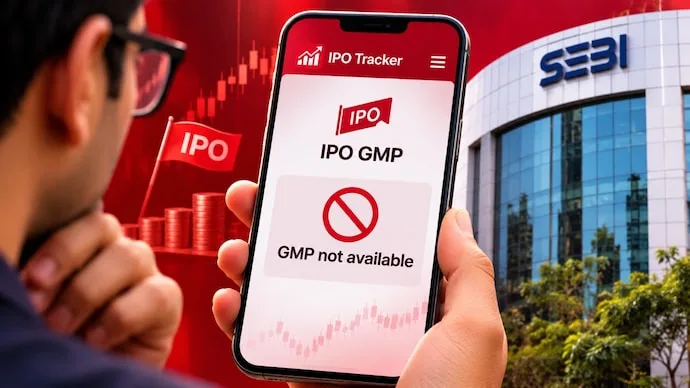
The IPO grey market premium may no longer be published or circulated by registered market intermediaries and participants following a new advisory issued by the Securities and Exchange Board of India (SEBI) on November 23.
The regulator has raised concerns over the growing circulation of unofficial pre-listing premium figures, commonly known as grey market premiums (GMP), across websites, digital platforms, newspapers and social media. These figures are often presented as indicators of a company's expected listing price or potential returns.
SEBI said such premiums are unofficial, unverified and unregulated because the transactions take place before shares are formally listed on recognised stock exchanges.

According to the advisory, these transactions operate outside the exchange framework and do not have regulatory oversight, settlement guarantees, investor protection or a formal price-discovery mechanism.
The warning is significant for IPO investors who track GMP figures to assess market sentiment and estimate potential listing-day gains.
Why SEBI Wants IPO GMP Publication Discontinued
Grey market premiums are widely followed during the IPO process, with investors using the figures to understand whether an upcoming stock is trading at a premium or discount in the unofficial market.
However, SEBI said publishing such figures may be detrimental to investor interests and could undermine transparency and accountability in the securities market.
The regulator has advised registered intermediaries and market participants to refrain from publishing, displaying, circulating or broadcasting IPO GMP figures through their websites, platforms or other communication channels.
The advisory specifically mentions email, SMS and social media as channels through which such information should not be disseminated.
SEBI has also indicated that the publication and circulation of grey market premium figures may be discontinued across the securities market.
What SEBI Has Advised IPO Investors
SEBI has cautioned investors against treating GMP as an indicator of a stock's likely listing price or the returns they may receive after listing.
It has also advised investors to avoid transactions linked to grey market premiums because these activities fall outside the formal regulatory framework.
The regulator has urged investors to participate in IPOs exclusively through SEBI-registered intermediaries and authorised platforms.
The advisory highlights the risks associated with relying on unofficial transactions, particularly when disagreements arise between participants.
No Investor Protection or Formal Grievance Redressal
A major concern raised by SEBI is that investors involved in GMP-linked transactions cannot access the protections available through the regulated securities market.
The regulator said disputes arising from such transactions would not fall under the investor protection and grievance redressal mechanisms administered by SEBI or stock exchanges.
Participants also cannot use the Online Dispute Resolution (ODR) portal operated by stock exchanges and depositories to resolve disputes connected with these unofficial dealings.
This leaves investors without access to the formal grievance mechanisms available for transactions conducted through recognised market platforms.
SEBI's advisory draws a distinction between investing in an IPO through the regulated market and participating in unofficial pre-listing transactions. It has urged investors to exercise caution and avoid relying on grey market premiums when assessing an IPO's prospects.
Editorial note: The advisory's wording should be reported carefully. It advises registered intermediaries and market participants to refrain from publishing or circulating GMP figures and says such dissemination may be discontinued. Avoid describing this as a blanket statutory ban on every website or individual unless the underlying SEBI notification explicitly establishes that scope.








Conversation
Be kind and stay on topic. Comments are moderated; abuse, spam and personal attacks are removed. Report a problem