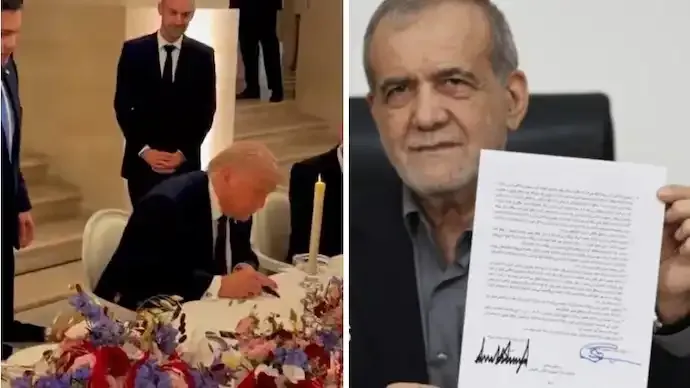
In a major diplomatic breakthrough that could reshape the geopolitical landscape of the Middle East, Donald Trump and Masoud Pezeshkian have formally signed a memorandum of understanding (MoU) aimed at ending months of conflict between the United States and Iran.
The agreement, which took effect immediately after being digitally signed by both leaders, is being viewed as one of the most significant diplomatic developments in recent years. The deal is expected to reduce tensions in the region, reopen critical energy routes and create a pathway for broader negotiations between Washington and Tehran.
Digital Signing Marks Historic Diplomatic Moment
According to officials from both countries, the agreement was digitally executed after preliminary approvals were completed earlier through senior representatives.
The move replaces plans for a formal signing ceremony that had been scheduled in Switzerland later this week.
The immediate implementation of the MoU signals a strong commitment from both governments to move forward with de-escalation efforts and establish a framework for long-term stability.
Strait of Hormuz Set to Reopen
One of the most important outcomes of the agreement is the reopening of the Strait of Hormuz, one of the world's most critical energy corridors.
The waterway handles approximately one-fifth of global oil shipments and has been at the center of international concerns during recent tensions.
The reopening is expected to:
-
Improve global energy supply stability
-
Reduce fears of oil disruptions
-
Support international trade
-
Ease pressure on energy markets
-
Strengthen investor confidence
Energy analysts believe the move could have significant implications for oil prices and global inflation trends.
Sanctions Relief Included in Agreement
The memorandum reportedly includes provisions related to sanctions relief, allowing Iran greater access to international markets.
The agreement is expected to facilitate:
-
Resumption of Iranian oil exports
-
Expanded trade discussions
-
Financial engagement mechanisms
-
Economic stabilization efforts
The measures could provide a major boost to Iran's economy while also increasing global oil supply.
Framework for Future Negotiations
While the MoU formally ends the current phase of conflict, it is also designed as a roadmap for broader diplomatic engagement.
Officials confirmed that both countries have agreed to a 60-day framework during which negotiators will work toward a more comprehensive agreement.
The upcoming discussions are expected to focus on:
-
Regional security
-
Economic cooperation
-
Sanctions implementation
-
Diplomatic relations
-
Long-term conflict prevention mechanisms
Global Markets Welcome the Development
The announcement has already generated positive reactions across international financial markets.
Investors view the agreement as a potential turning point after months of geopolitical uncertainty that had threatened global economic stability.
Reduced tensions in the Gulf region could help ease concerns surrounding:
-
Energy security
-
Supply chain disruptions
-
Inflationary pressures
-
Commodity price volatility
-
Global growth risks
Several analysts described the development as one of the most important geopolitical events of the year.
Diplomatic Win for Both Nations
The agreement represents a significant diplomatic achievement for both Washington and Tehran.
For the United States, it provides an opportunity to stabilize a strategically important region while reducing military and economic risks.
For Iran, the deal offers a path toward economic recovery and renewed engagement with global markets after years of sanctions and diplomatic isolation.
Regional Powers Closely Monitoring Developments
Countries across the Middle East are expected to closely monitor the implementation of the agreement.
Regional governments, energy exporters and international organizations will be watching for signs that the ceasefire framework can translate into lasting stability.
The success of the initiative may influence future diplomatic efforts across the broader region.
Challenges Still Remain
Despite the optimism surrounding the agreement, experts caution that significant challenges remain.
The success of the MoU will depend on:
-
Effective implementation
-
Compliance by both sides
-
Progress in follow-up negotiations
-
Regional cooperation
-
Management of political opposition within both countries
While the agreement marks a major step forward, long-term peace will require sustained diplomatic engagement.
A Turning Point for Global Energy and Diplomacy
The signing of the MoU between the United States and Iran could prove to be a defining moment for both international diplomacy and global energy markets.
With the Strait of Hormuz reopening, sanctions relief under discussion and formal negotiations set to continue, the agreement offers a rare opportunity to reduce tensions in one of the world's most strategically important regions.
Prev Article
Pakistan Eyes Bay of Bengal Return With New China-Built Submarines, Reviving 1971 War Memories
Next Article
Elderly Sikh Couple Shot Dead Inside Pakistan Gurudwara, Attack Sparks Outrage