Shopping cart
Your cart empty!


Your cart empty!
Terms of use dolor sit amet consectetur, adipisicing elit. Recusandae provident ullam aperiam quo ad non corrupti sit vel quam repellat ipsa quod sed, repellendus adipisci, ducimus ea modi odio assumenda.
Lorem ipsum dolor sit amet consectetur adipisicing elit. Sequi, cum esse possimus officiis amet ea voluptatibus libero! Dolorum assumenda esse, deserunt ipsum ad iusto! Praesentium error nobis tenetur at, quis nostrum facere excepturi architecto totam.
Lorem ipsum dolor sit amet consectetur adipisicing elit. Inventore, soluta alias eaque modi ipsum sint iusto fugiat vero velit rerum.
Sequi, cum esse possimus officiis amet ea voluptatibus libero! Dolorum assumenda esse, deserunt ipsum ad iusto! Praesentium error nobis tenetur at, quis nostrum facere excepturi architecto totam.
Lorem ipsum dolor sit amet consectetur adipisicing elit. Inventore, soluta alias eaque modi ipsum sint iusto fugiat vero velit rerum.
Dolor sit amet consectetur adipisicing elit. Sequi, cum esse possimus officiis amet ea voluptatibus libero! Dolorum assumenda esse, deserunt ipsum ad iusto! Praesentium error nobis tenetur at, quis nostrum facere excepturi architecto totam.
Lorem ipsum dolor sit amet consectetur adipisicing elit. Inventore, soluta alias eaque modi ipsum sint iusto fugiat vero velit rerum.
Sit amet consectetur adipisicing elit. Sequi, cum esse possimus officiis amet ea voluptatibus libero! Dolorum assumenda esse, deserunt ipsum ad iusto! Praesentium error nobis tenetur at, quis nostrum facere excepturi architecto totam.
Lorem ipsum dolor sit amet consectetur adipisicing elit. Inventore, soluta alias eaque modi ipsum sint iusto fugiat vero velit rerum.
Do you agree to our terms? Sign up

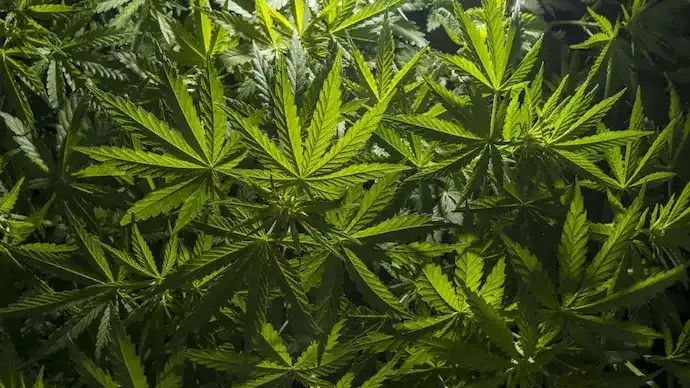
US President Donald Trump has signed an executive order directing federal agencies to ease regulations on marijuana, marking one of the most significant shifts in American cannabis policy in decades. The move sets the stage for marijuana to be reclassified under the US Controlled Substances Act, potentially reshaping research, healthcare access and the cannabis industry nationwide.

Under the order, the US Attorney General has been instructed to expedite the process of downgrading marijuana from its current Schedule I classification — a category reserved for drugs deemed highly addictive with no accepted medical use — to Schedule III. If implemented, marijuana would be placed alongside substances such as certain painkillers, ketamine and testosterone, which are recognised as having legitimate medical applications and a lower potential for abuse.
Despite the shift, marijuana would remain illegal at the federal level. Trump emphasised that regulation would continue to depend on state laws, resulting in a fragmented legal landscape across the country. While several US states allow recreational and medical cannabis use, others still enforce strict bans on possession and consumption.
Speaking to reporters at the White House, Trump said the decision was driven by growing public demand, particularly from patients seeking relief from chronic pain. “We have people begging for me to do this, people that are in great pain for decades,” he said, while also reiterating his personal opposition to drug use.
The executive order could significantly expand opportunities for scientific research and reduce financial barriers for cannabis-related businesses. Reclassification would make it easier for researchers to study marijuana’s medical benefits and risks, while also improving access to banking and investment for the legal cannabis sector.
The policy shift has drawn mixed reactions in Washington. Senate Democratic leader Chuck Schumer welcomed the move, calling it a long-overdue correction to outdated drug laws that have disproportionately impacted millions of Americans. In contrast, several Republican lawmakers strongly opposed the order, warning that it could send the wrong message to young people and increase public safety risks.
In a joint letter released on Thursday, Republican members of Congress argued that reclassification could “enable drug cartels, weaken road safety, and normalise drug use among children.”
The Drug Enforcement Administration (DEA) is now expected to conduct a formal review of the proposal. The agency has been deliberating marijuana’s classification for months, and the executive order is likely to accelerate that process. Even if reclassified, marijuana would still be subject to federal oversight and criminal penalties in certain circumstances.
Marijuana remains the most widely used illicit drug in the United States, with nearly one in five Americans reporting annual use, according to the Centers for Disease Control and Prevention. Millions have been arrested over the years for possession-related offences, even as legal cannabis businesses operate openly in multiple states.
The move signals a gradual but meaningful recalibration of US drug policy, reflecting shifting public attitudes while stopping short of full federal legalisation.
37
Published: Dec 19, 2025

All India Story is your trusted source for comprehensive and up-to-the-minute news coverage across India. Bringing you the latest on politics, business, technology, entertainment, sports, and more, we are dedicated to keeping you informed with accurate, engaging, and insightful stories from every corner of the nation.