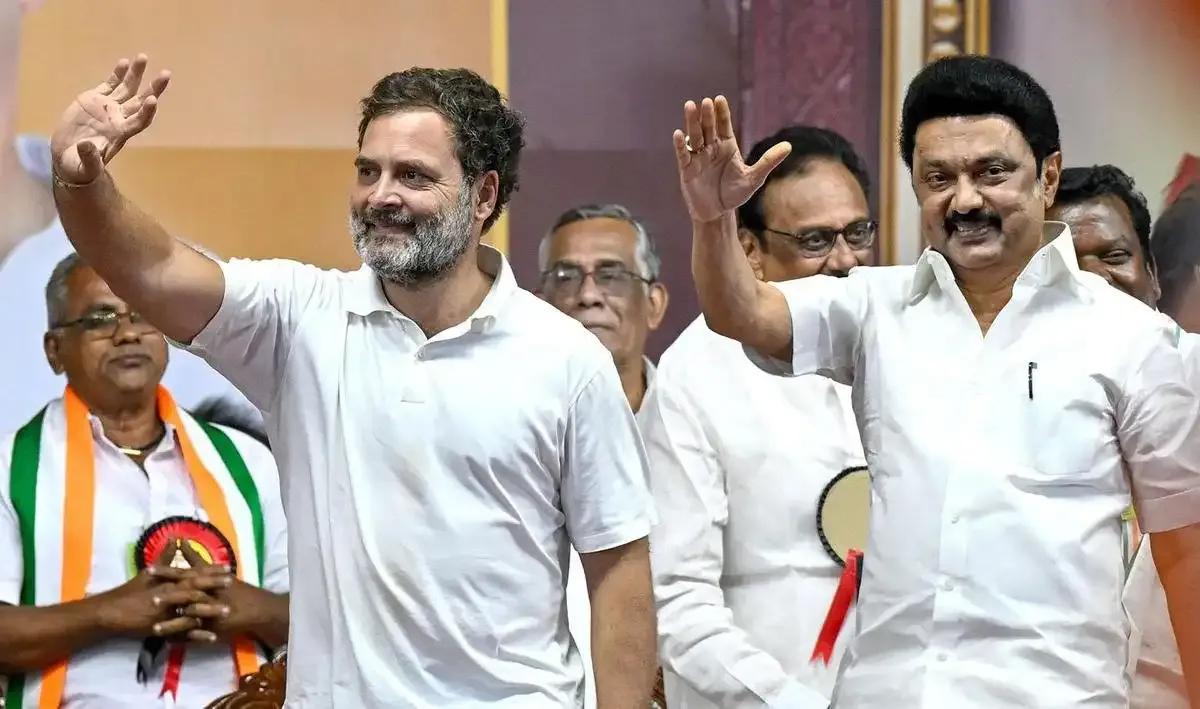
The political temperature in Tamil Nadu has risen sharply as the long-standing debate over language and cultural identity returned to the centre stage ahead of the 2026 elections. Deputy Chief Minister Udhayanidhi Stalin triggered fresh controversy by asserting that “Hindi has swallowed many mother tongues,” accusing the Union government of attempting to impose the language through national education reforms.
Speaking amid mounting political tensions, Udhayanidhi alleged that the Centre was using policy instruments such as the National Education Policy (NEP) to gradually erode regional languages. He argued that linguistic diversity, a defining feature of India’s federal character, was under threat as Hindi increasingly gained institutional dominance.
According to the DMK leader, language imposition was not merely an academic concern but a cultural and political issue that directly affected identity, heritage and social equity. He claimed that several indigenous languages across the country had already declined due to the unchecked expansion of Hindi in administration, education and public life.
The remarks quickly drew a sharp reaction from the Bharatiya Janata Party. Union Minister L. Murugan and other BJP leaders accused the DMK of indulging in divisive politics for electoral gains. They rejected allegations of Hindi imposition and maintained that the NEP promotes multilingualism rather than linguistic domination.
BJP leaders also questioned the DMK’s ideological consistency, pointing to its alliance with the Congress at the national level. They argued that the Congress had historically overseen policies that expanded Hindi’s role and accused the DMK of selectively invoking language issues for regional mobilisation.
The political exchange escalated further when Chief Minister M. K. Stalin entered the debate, targeting the opposition All India Anna Dravida Munnetra Kazhagam. He alleged that the AIADMK’s return to the National Democratic Alliance was the result of pressure and political blackmail by the BJP, suggesting that the regional party had compromised its autonomy.
The AIADMK strongly dismissed the allegations, counter-attacking the DMK leadership. Party leaders claimed that the ruling dispensation was rattled by growing anti-incumbency sentiments ahead of the elections. They went further to predict a political decline for the Stalin family, framing the language issue as a diversion from governance challenges.
Political analysts see the renewed language debate as a strategic move in Tamil Nadu’s highly polarised electoral environment. Language politics has historically shaped the state’s political identity, with anti-Hindi agitations playing a crucial role in the rise of Dravidian parties. The DMK’s latest stance appears aimed at consolidating its core voter base by reviving a narrative deeply rooted in regional pride and federal autonomy.
At the same time, the BJP’s aggressive rebuttal signals its intent to counter regional narratives with a national integration framework, even as it seeks to expand its footprint in the southern states. The Congress, a key ally of the DMK in the opposition bloc, has largely stayed on the sidelines as the exchange unfolded, underscoring the delicate balance within opposition alliances.
As campaigning gathers momentum, the language row is expected to remain a key flashpoint, shaping alliances, narratives and voter sentiment. With identity, culture and federalism intersecting in the debate, the political battle lines in Tamil Nadu are becoming increasingly defined well ahead of polling day.
Prev Article
DMK-Congress Rift Widens in Tamil Nadu Over Power-Sharing Demands Ahead of Elections
Next Article
Assam Theatre Legend Nuruddin Ahmed Among Padma Shri Awardees From Northeast