

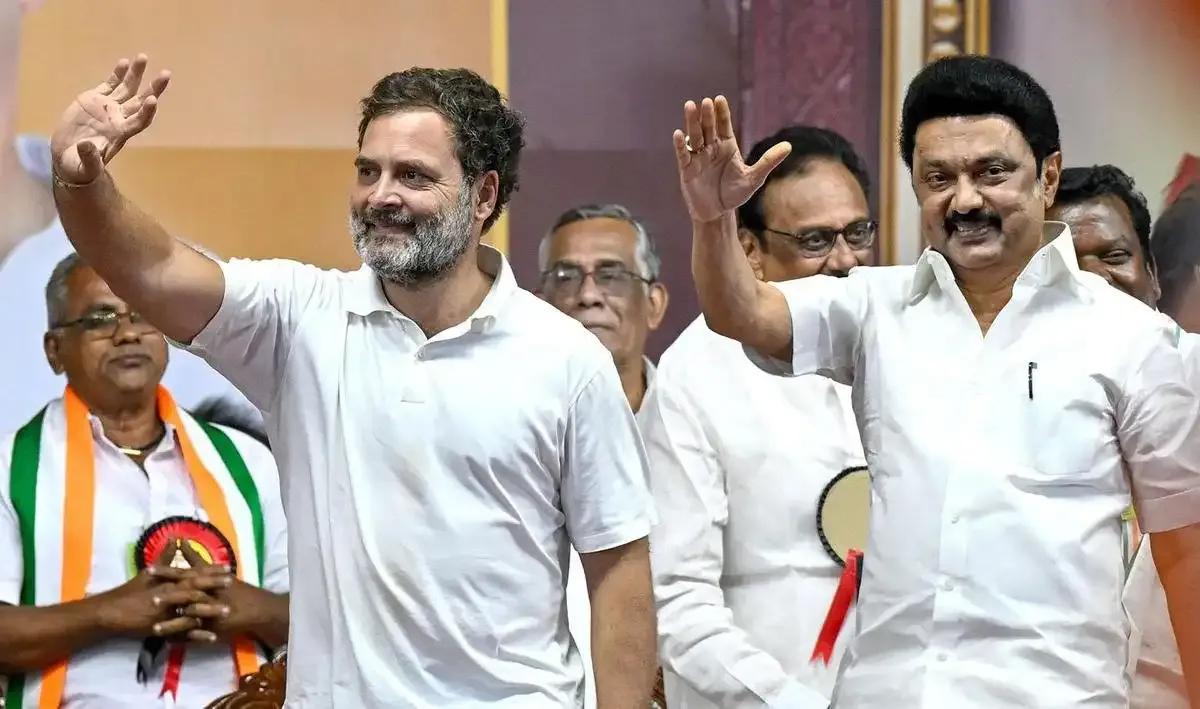

Political fault lines within Tamil Nadu’s ruling alliance have become increasingly visible, as tensions between the Dravida Munnetra Kazhagam and the Indian National Congress intensified over power-sharing demands ahead of the upcoming elections. What was once portrayed as a stable partnership under the broader opposition coalition is now facing open disagreements, raising questions about the alliance’s electoral cohesion in the state.
The rift came into the spotlight after Congress leaders in Tamil Nadu publicly pushed for a greater role in governance and clearer power-sharing arrangements within the alliance. These demands triggered a sharp and unusually blunt response from a senior DMK legislator, who asserted that there could be “no national opposition alliance without the DMK,” underscoring the regional party’s dominant position in the state’s political landscape.
The DMK MLA went further, suggesting that certain Congress leaders should not be allocated seats in future elections, a remark widely interpreted as a direct warning to the Congress leadership. The comments reflected growing unease among DMK cadres, many of whom believe that the Congress has been demanding disproportionate influence despite its limited organisational strength and electoral footprint in Tamil Nadu.

Within DMK circles, resentment has been building over what party workers describe as “entitlement politics” by alliance partners. Local leaders argue that the DMK’s grassroots machinery, governance record and mass base are the primary drivers of electoral success in the state, and that any seat-sharing or power-sharing formula must reflect that reality.
The Congress, however, has sought to downplay the controversy. Leaders from the Tamil Nadu Congress Committee have maintained that alliance decisions, including seat-sharing and administrative arrangements, will ultimately be taken by the party’s central leadership in New Delhi. They have described the public sparring as premature and stressed the need for unity to counter the ruling dispensation at the national level.
Despite these assurances, the public nature of the disagreement has exposed deeper structural tensions within the alliance. Analysts point out that while the two parties share ideological ground on federalism and social justice, friction often emerges when questions of electoral arithmetic and administrative authority come to the fore.
The situation is particularly sensitive as the opposition bloc, often referred to as the ‘Indy Alliance,’ seeks to project cohesion and readiness ahead of high-stakes polls. Tamil Nadu remains a crucial pillar for the alliance, and any visible cracks could complicate broader national calculations.
Political observers note that alliance management in Tamil Nadu has historically required careful balancing, given the state’s strong regional identity and the DMK’s entrenched dominance. The current episode, however, suggests that negotiations this time may be more contentious, especially if public statements harden positions on both sides.
As election timelines draw closer, the ability of the DMK and Congress to contain internal disagreements and present a united front will be closely watched. Whether the power-sharing dispute is resolved quietly through back-channel talks or escalates into a more serious rupture could significantly influence the alliance’s prospects in Tamil Nadu and beyond.





Conversation
Be kind and stay on topic. Comments are moderated; abuse, spam and personal attacks are removed. Report a problem