
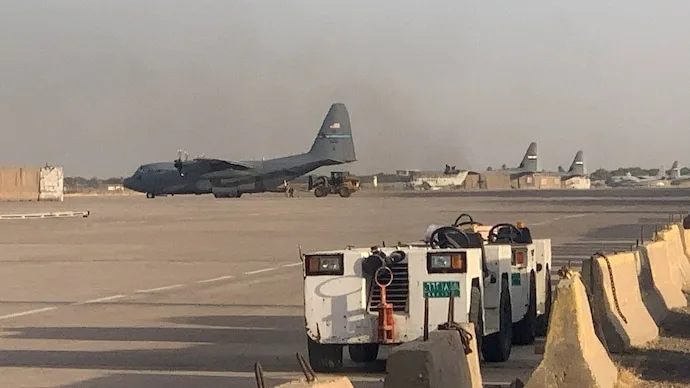
The US exits Iraq on Wednesday as American forces leave their remaining bases, bringing an end to a military presence that began with the 2003 invasion. The withdrawal was agreed in 2024 and is now being completed under President Donald Trump. While the move is broadly welcomed in Iraq, concerns remain over the country's ability to manage security threats without the same level of American military support.
From 2003 invasion to Islamic State
US-led forces invaded Iraq in 2003 and overthrew Saddam Hussein. The following years were marked by insurgency and sectarian violence, with American troops eventually leaving at the end of 2011.
The US returned to Iraq less than three years later after Islamic State captured large areas of the country and declared a self-styled caliphate. American forces supported Iraqi troops during the campaign that pushed the militant group out of its territorial strongholds between 2014 and 2017.
More than 4,500 US troops died during the two decades of conflict in Iraq, according to Reuters.
Iran-backed militias could gain influence
The US departure has also raised questions about Iran's influence in Iraq. Tehran has long opposed the presence of American forces in the region and maintains close relationships with several Iraqi political and armed groups.
Analysts cited by Reuters have warned that Iran-backed militias could feel more empowered following the withdrawal and seek greater influence over Iraqi institutions and state policy.
At the same time, Baghdad has attempted to maintain relationships with both Washington and Tehran.
Islamic State threat remains
Although Islamic State lost its territorial control in Iraq nearly a decade ago, sleeper cells and militant networks remain active.
Iraqi security officials have expressed concern that reduced US intelligence, surveillance and reconnaissance support could create additional challenges in tracking the group's movements.
The withdrawal therefore leaves Iraqi security forces facing multiple challenges, including Islamic State remnants, armed groups with ties to Iran and the wider instability surrounding the region.
The end of the US military presence marks a major turning point in Iraq's post-2003 history, while the country's security institutions now face greater responsibility for containing these competing threats.


Conversation
Be kind and stay on topic. Comments are moderated; abuse, spam and personal attacks are removed. Report a problem