

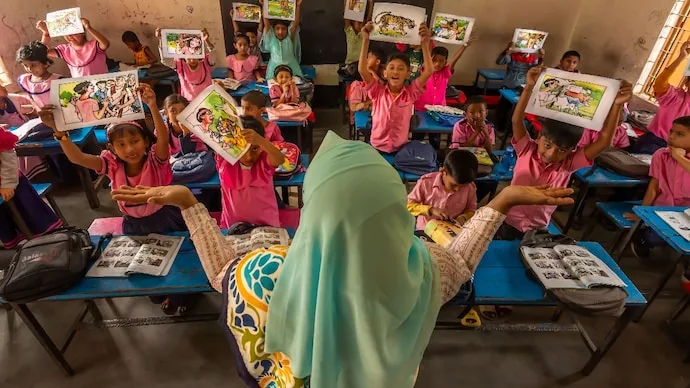

India marks World Teachers’ Day 2026 with a mixed picture in higher education: the country added nearly 3.65 lakh teachers over the past decade, but 34% of sanctioned teaching posts remain vacant in central universities and centrally funded institutions, according to an SBI Research report based on AISHE data.
India’s Teacher Workforce Rises 27%
India’s higher education teaching workforce increased from 13.68 lakh in 2013-14 to 17.32 lakh in 2023-24, marking a 27% rise.
The share of female teachers also increased from 39% to 45% during the period. Representation of reserved categories rose as well, with SC teachers increasing from 6.9% to 10%, ST teachers from 2% to 3%, and OBC teachers from 23.5% to 32%.

The expansion coincided with growth in higher education infrastructure. India had 1,289 universities, 48,246 colleges and 15,221 standalone institutions in 2023-24.
Teacher-Student Ratio Shows Wide State Gap
India’s overall pupil-teacher ratio in higher education stood at 23 in 2023-24. However, the national figure hides significant differences between states.
Tamil Nadu, Kerala and Goa reported a ratio of 14, while Bihar recorded 57 and Jharkhand 48. Uttar Pradesh stood at 33. The Parliamentary Standing Committee on Education has previously cited 15:1 as an ideal ratio for higher education.
34% Teaching Posts Still Vacant
Despite the increase in teacher numbers, vacancies remain a major concern. The SBI Research report said 34% of sanctioned teaching positions across central universities and centrally funded institutions were vacant.
Of 41,351 sanctioned positions, 27,133 were filled while 14,042 remained vacant. Vacancy levels stood at 33% in central universities, 39% in IITs, 54% in IIITs, 29% in NITs and 31% in IIMs.
Professor-level vacancies were particularly high, with 56.2% of sanctioned professor posts remaining unfilled.
World Teachers’ Day is observed globally on October 5. In 2026, it also marks 60 years since the 1966 ILO/UNESCO Recommendation concerning the Status of Teachers.
The figures underline a key challenge for India: expanding the number of teachers is important, but ensuring adequate staffing, balanced teacher-student ratios and filling sanctioned positions will be equally critical for the future of higher education.
Relevant Link: UNESCO – World Teachers’ Day





Conversation
Be kind and stay on topic. Comments are moderated; abuse, spam and personal attacks are removed. Report a problem