
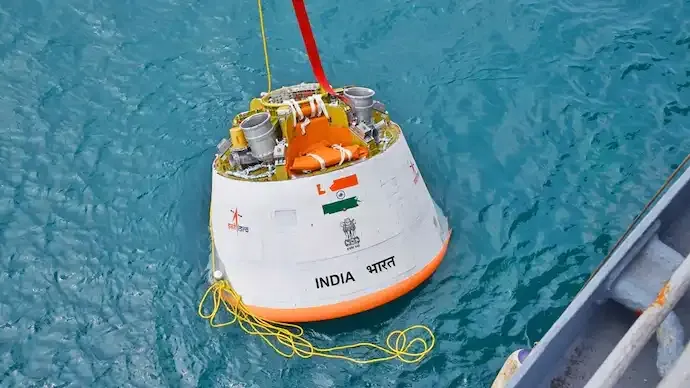
India’s human spaceflight ambitions have entered a decisive stage as Indian Space Research Organisation confirmed that the Gaganyaan programme is now in the final phase of preparation for its first uncrewed mission, known as G1. With all propulsion systems cleared for human-rating and more than 8,000 ground tests completed, the space agency says mission readiness is steadily taking shape.
The extensive ground-testing campaign has covered structural qualification, subsystem validation, and multiple safety assessments across mission hardware. According to Isro, these tests form the backbone of confidence-building required before attempting human spaceflight. The focus has now shifted towards software simulations, mission rehearsal exercises, and environmental validations to meet the targeted launch timeline.
To strengthen oversight at this critical juncture, Isro has constituted an Integrated Mission Review Committee. The committee is tasked with examining design maturity, simulation results, and any remaining technical gaps, particularly in software test beds. The objective is to ensure that all systems operate seamlessly together under real mission conditions.
The Gaganyaan programme involves the integrated testing of the crew module, service module, and the human-rated LVM3 launch vehicle. Completion of propulsion-related human-rating tests marks a major milestone, as these systems must demonstrate exceptional reliability before astronauts can be cleared to fly.
The upcoming G1 mission will carry Vyommitra, a humanoid designed to simulate crew functions during spaceflight. Vyommitra will be deployed into low Earth orbit at an altitude of approximately 400 kilometres for a three-day mission. During this period, the spacecraft will validate critical systems including environmental control, life-support operations, guidance and navigation, re-entry dynamics, and post-landing recovery.
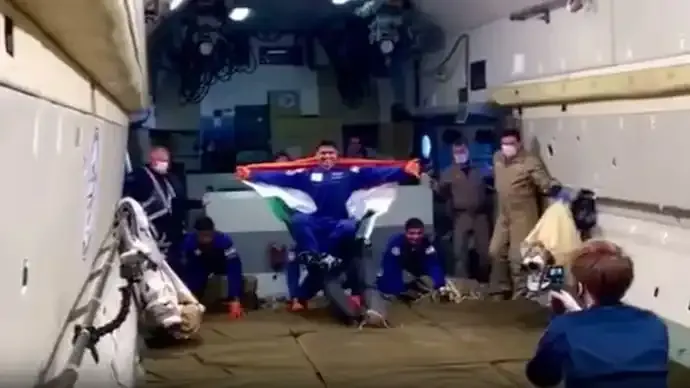
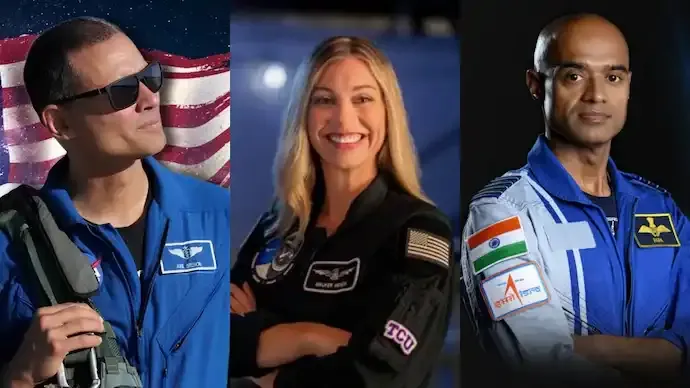
Isro has tentatively scheduled the G1 launch for March 2026. This mission will be followed by a second uncrewed flight, G2, later in the year. The first crewed Gaganyaan mission is planned for 2027, carrying astronauts Shubhanshu Shukla, Prasanth Balakrishnan Nair, Ajit Krishnan, and Angad Pratap.
The programme’s timeline has evolved over the years due to disruptions caused by the COVID-19 pandemic and complex engineering challenges. Despite these delays, Isro has steadily progressed through major test milestones, including TV-D2 parachute qualification and integrated air-drop trials.
Gaganyaan represents India’s entry into the small group of nations capable of independent human spaceflight. Beyond national prestige, the mission is expected to generate long-term benefits through technology transfer to private startups, expansion of microgravity research, and international collaboration initiatives such as IMEx-2026. The Indian Navy is also closely involved, coordinating sea-based recovery operations to ensure mission safety.
The decision to conduct the G1 mission without astronauts is rooted in safety-first principles. The uncrewed flight will expose the spacecraft to actual launch stresses, orbital conditions, and re-entry heat without risking human lives. Successful completion will be a crucial step toward certifying both the spacecraft and launch vehicle for human missions.
As 2026 unfolds, Isro officials say the programme is firmly in its home stretch, with simulations and system-level reviews forming the final hurdle before launch. If executed as planned, Gaganyaan’s maiden mission could mark a transformative moment in India’s space journey.




Conversation
Be kind and stay on topic. Comments are moderated; abuse, spam and personal attacks are removed. Report a problem