

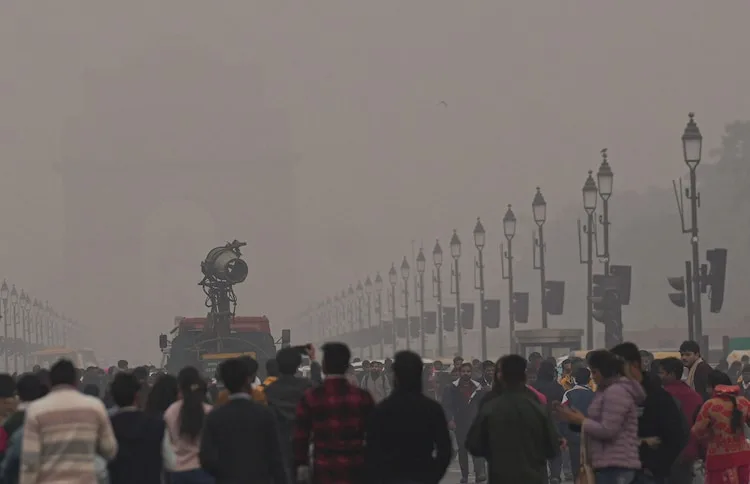

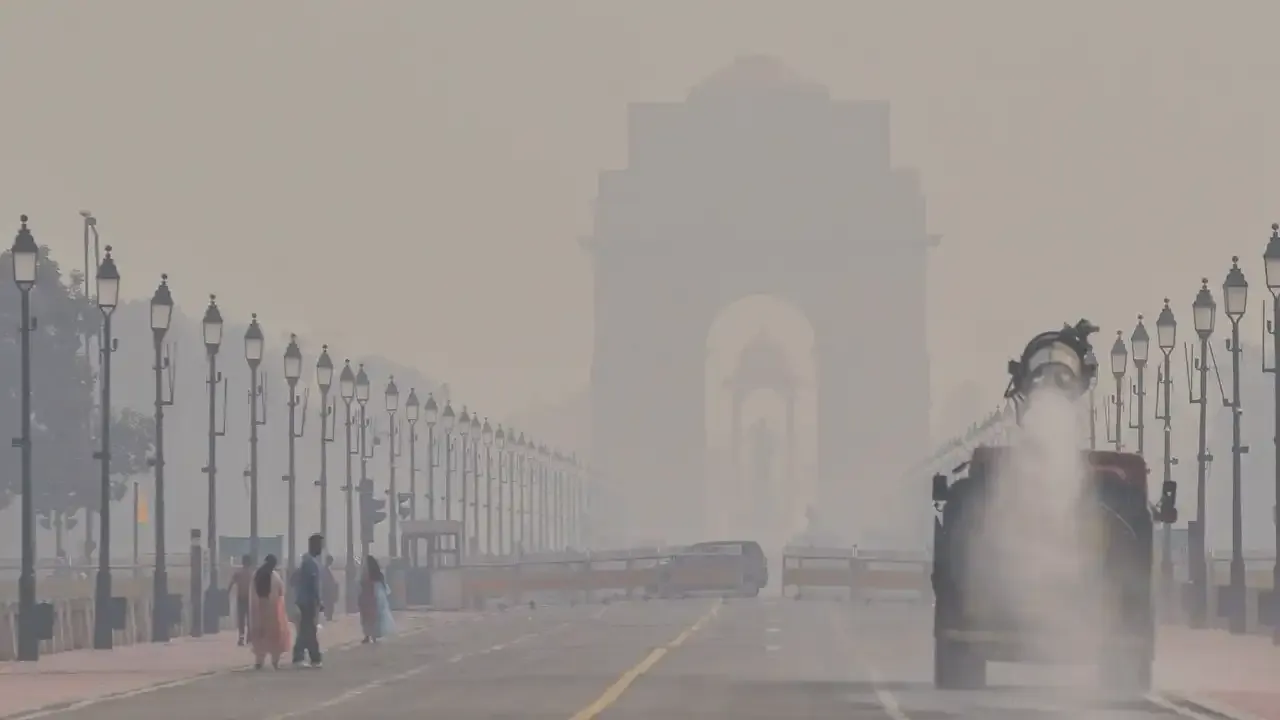
The Delhi AQI 2026 has taken a sharp turn for the worse, with pollution rising for five consecutive days and the capital recording its worst October start since 2020. Delhi’s average AQI for October 1–4 stood at 174.5, significantly higher than the corresponding period in 2025 and 2021.
The deterioration comes shortly after Delhi experienced one of its cleaner September periods, highlighting how quickly weather conditions can change the capital’s air quality.
Delhi Records Sharp October Pollution Rise
Delhi’s average AQI reached 187 on October 4, its highest level in 83 days. Fourteen of the capital’s 43 active monitoring stations recorded “Poor” air quality in the CPCB’s 4 pm bulletin.

Mundka recorded the highest AQI at 273, followed by CRRI Mathura Road and Narela at 257 each. Jahangirpuri recorded an AQI of 237.
The October 1–4 average of 174.5 was higher than 119.75 in 2025, 167.25 in 2024, 155 in 2023, 161.25 in 2022 and 107.25 in 2021. Only October 2020, with an average of 176.25 for the same period, was worse.
Why Is Delhi’s AQI Rising?
The immediate deterioration is closely linked to changing weather conditions. Late-September rainfall and stronger winds had helped disperse pollutants, but rainfall stopped and wind speeds weakened, allowing emissions to accumulate.
PM10 has emerged as a major pollutant during the recent deterioration. Road dust and construction activity are among the important contributors to these larger particles.
Temperatures have also remained unusually high. Delhi recorded a maximum temperature of 36.4°C on October 4, around 2.2°C above normal, while the minimum was 24.1°C.
Local Emissions Add to Delhi’s Pollution
Local pollution sources are also contributing. The Commission for Air Quality Management has flagged violations involving road dust and construction-and-demolition waste along stretches of Delhi’s Inner and Outer Ring Road.
Farm fires have started appearing across northern India, but there is currently insufficient evidence to say stubble burning is the primary reason for this latest deterioration.
As winter approaches, traffic, industries, power plants, biomass burning and agricultural fires could add further pressure.
For now, Delhi’s worsening AQI appears to have multiple causes rather than one culprit: weaker winds, reduced rainfall, local emissions and the seasonal transition are combining to push pollution higher.
Relevant Link: Central Pollution Control Board





Conversation
Be kind and stay on topic. Comments are moderated; abuse, spam and personal attacks are removed. Report a problem