

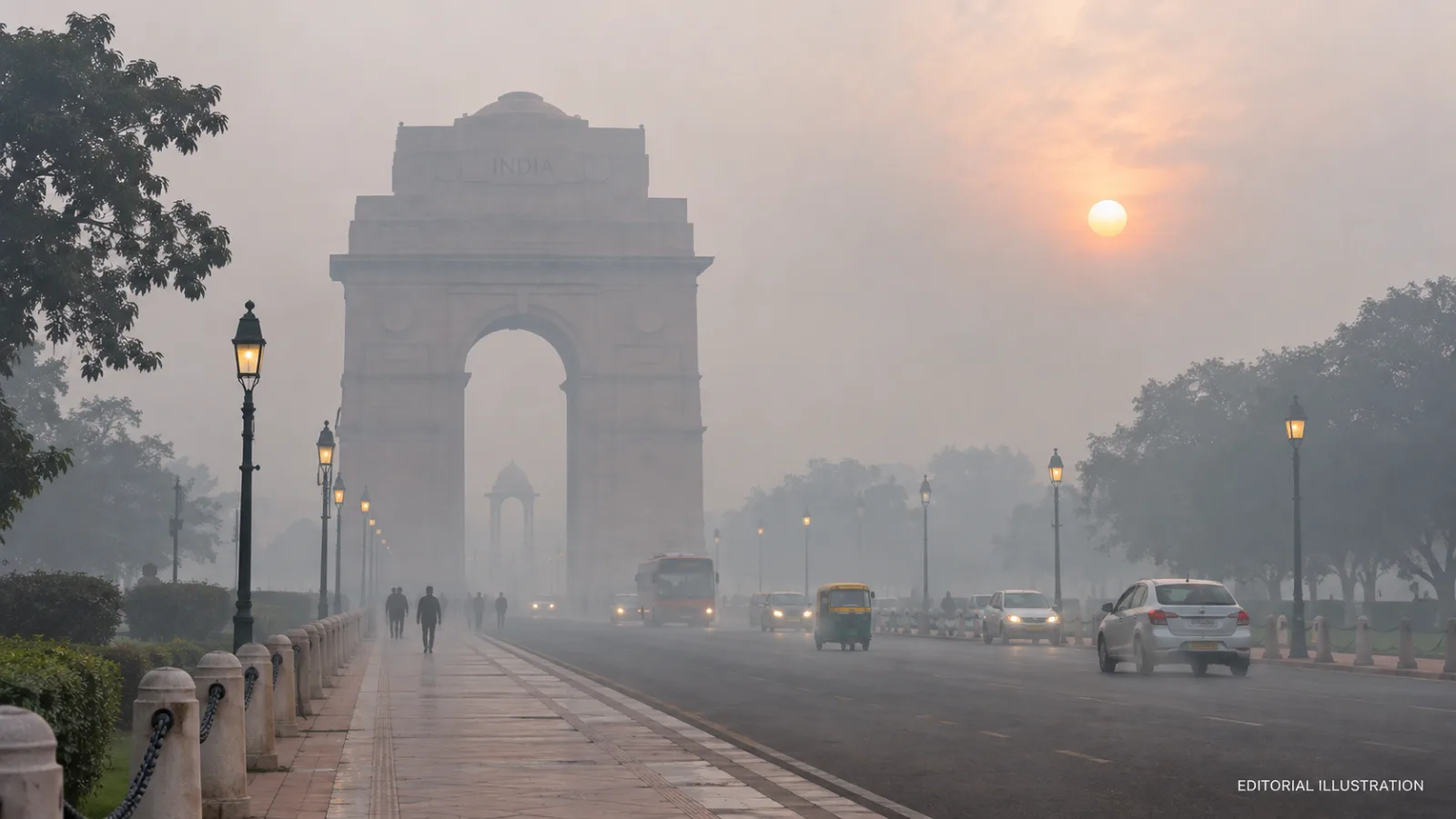

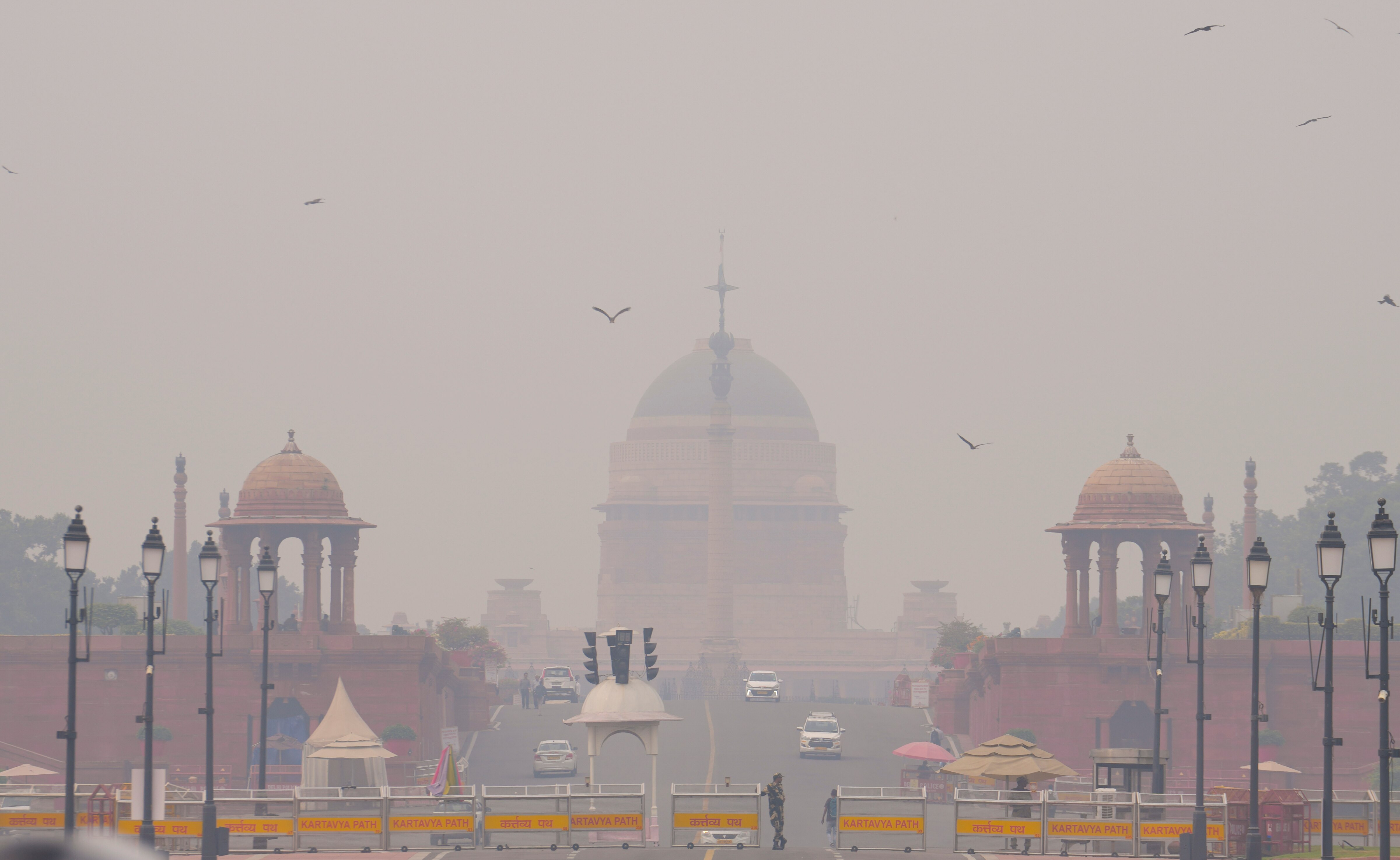
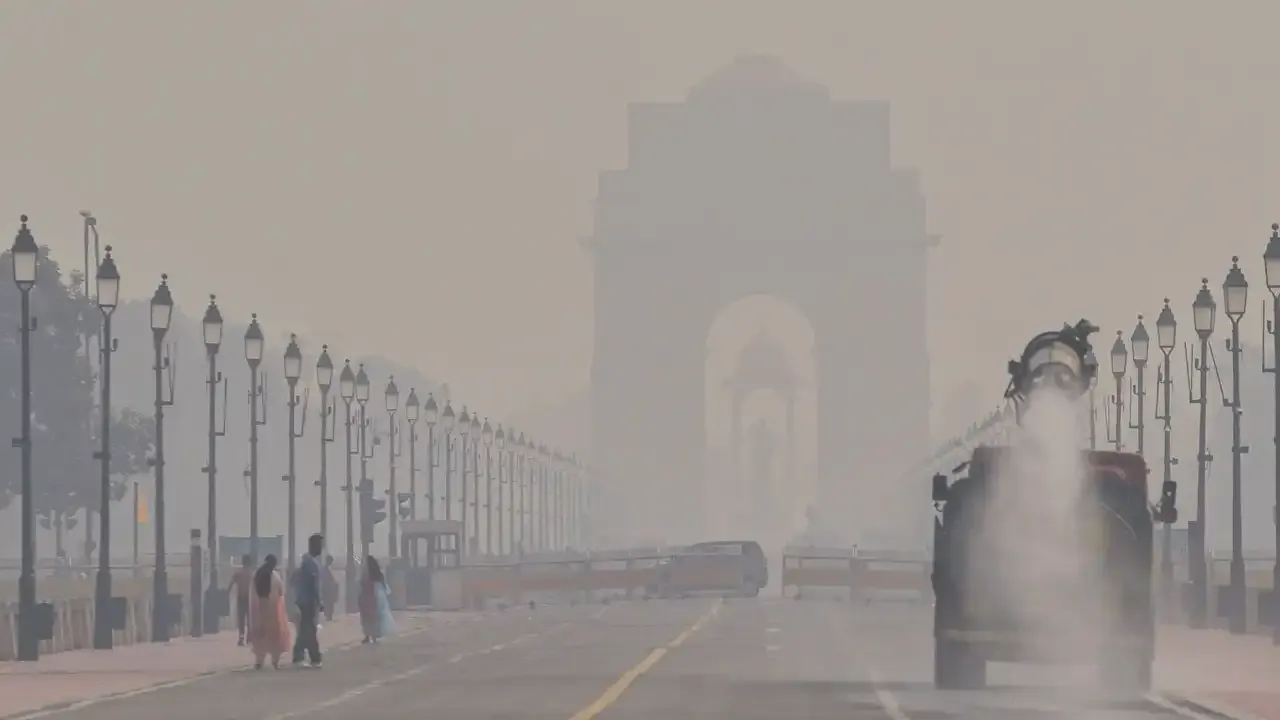
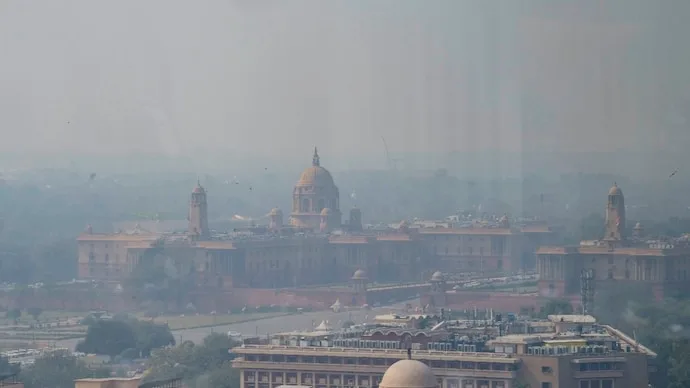
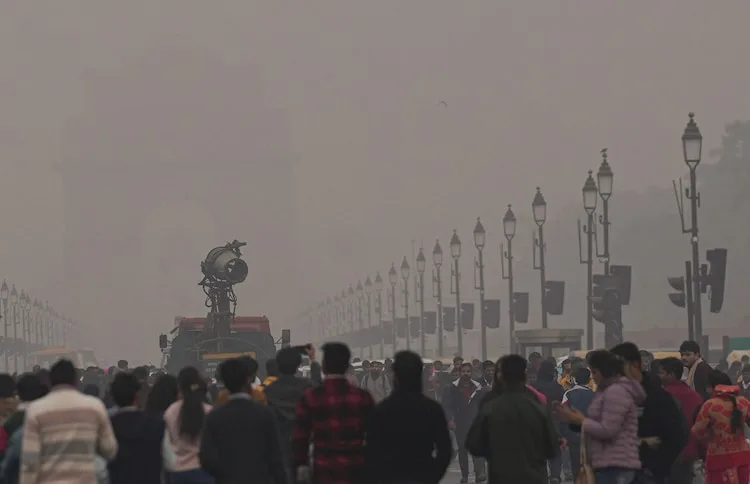
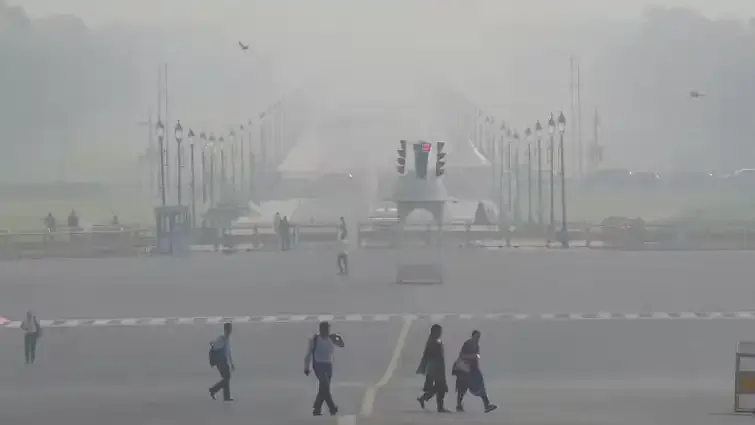
NEW DELHI, November 10, 2026: Delhi woke up to another polluted morning on Tuesday, although clearer skies and better visibility offered some relief from the dense fog that had covered parts of the capital a day earlier.
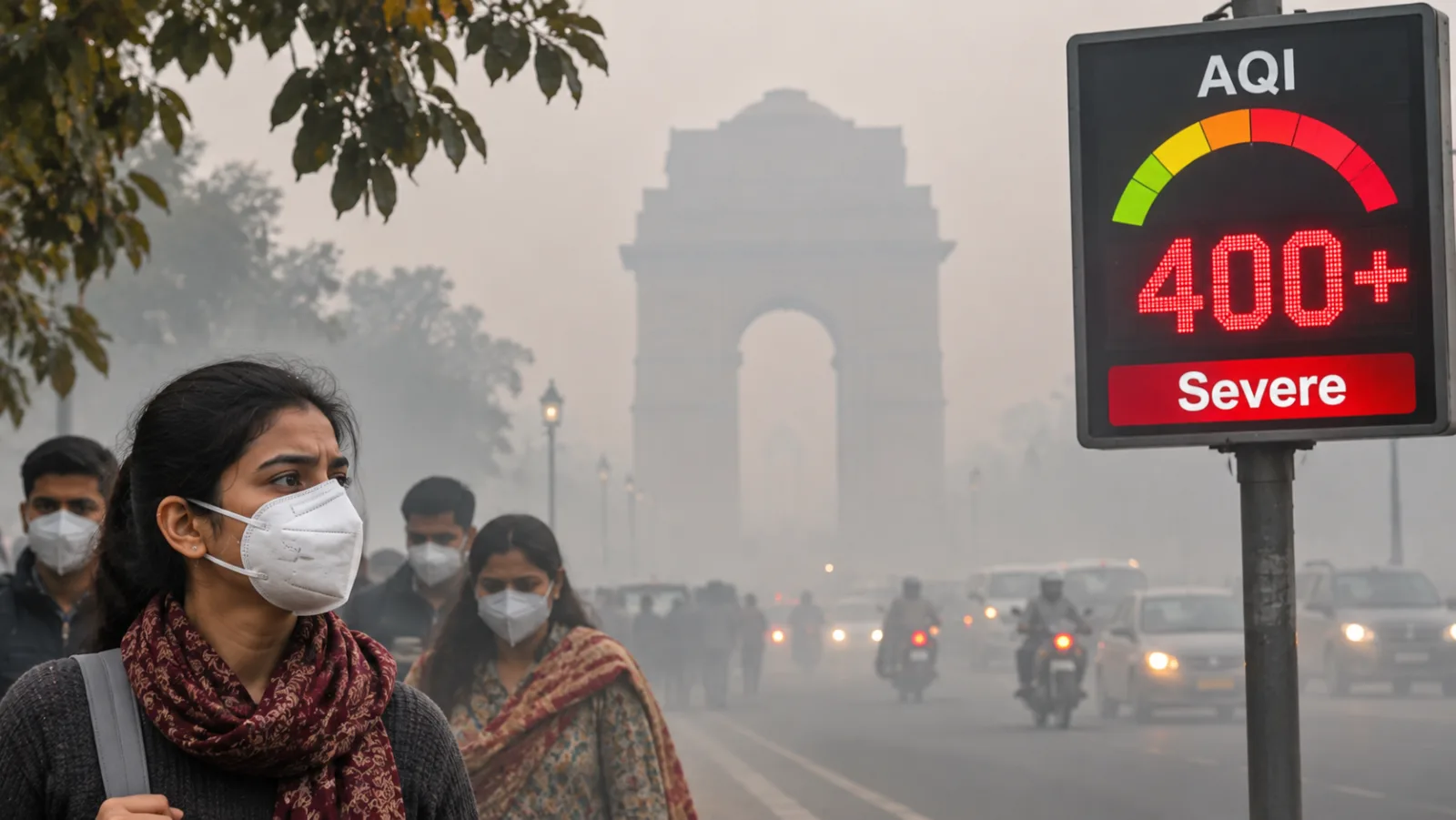
The city's Air Quality Index (AQI) stood at 304 at 8 am, placing it in the very poor category. The reading was lower than the 370 recorded at the same time on Monday, but fine particulate pollution continued to affect most monitoring locations.
According to data from the Central Pollution Control Board (CPCB), PM2.5 remained the leading pollutant across much of Delhi. The slight improvement in air quality followed several days of elevated pollution levels around Diwali.

Delhi AQI Today: Pollution Levels Show a Gradual Decline
Delhi's 24-hour average AQI was recorded at 344 on Monday, November 9, with the national capital experiencing widespread smog and reduced visibility.
Conditions improved through Tuesday morning.
At 8 am, the city's rolling AQI was 304. By 11 am, the reading had declined further to 293, moving into the poor category.
These readings represent conditions at particular times and should not be confused with the CPCB's final daily AQI bulletin, which is issued at 4 pm.
While the improvement was noticeable, pollution remained high enough to raise health concerns, particularly for residents with respiratory and cardiovascular conditions.
PM2.5 Remains the Main Pollutant Across Delhi
Fine particulate matter continued to dominate air quality readings on Tuesday.
At 9 am, PM2.5 was the leading pollutant at 51 of Delhi's 57 reporting monitoring stations.
PM2.5 consists of airborne particles measuring 2.5 micrometres or less in diameter. Their small size allows them to travel deep into the respiratory system, making prolonged exposure a health concern.
Pollution levels also varied considerably between neighbourhoods.
At least 29 monitoring stations recorded air quality in the poor category during the morning.
Sri Aurobindo Marg and Delhi Cantonment reported comparatively lower AQI readings of 161 and 170, respectively. Both locations were within the moderate category.
Elsewhere, stations such as Pusa, Chandni Chowk and NSUT Jaffarpur recorded substantially higher pollution levels during the early morning hours.
Under the CPCB classification system, an AQI between 201 and 300 is considered poor, while readings from 301 to 400 fall in the very poor category.
Visibility Improves at Safdarjung and Palam
Visibility conditions improved considerably at Delhi's two principal airport weather stations.
At Safdarjung, visibility reached 1,000 metres at 8 am on Tuesday. On Monday morning, it had fallen to just 100 metres during an episode of dense fog.
The lowest visibility recorded at Safdarjung on Tuesday was 500 metres at 6.30 am, before conditions improved later in the morning.
Palam reported visibility of 800 metres, compared with 600 metres on Monday.
Shallow fog was observed at Palam, while Safdarjung reported mist as the morning progressed.
The improvement made conditions less restrictive than Monday's dense fog, although clearer visibility did not mean that air pollution had returned to safe levels.
Delhi Records Above-Normal Minimum Temperatures
Despite the November haze, overnight temperatures remained relatively mild across the national capital.
India Meteorological Department (IMD) data showed that Safdarjung recorded a minimum temperature of 15.7°C, which was 1.4°C above the seasonal normal.
Lodhi Road registered a minimum temperature of 16.4°C, approximately 4.4°C above normal.
Palam recorded 16.5°C, while Ayanagar reported 16.4°C.
At the Ridge weather station, the minimum temperature stood at 16°C, marginally below the seasonal average.
No rainfall was recorded at Delhi's five principal IMD weather stations during the 24 hours ending at 8.30 am on Tuesday.
The IMD has forecast moderate morning fog on several days ahead, with no significant rainfall expected to provide immediate relief.
Farm Fires Continue in Punjab and Haryana
Crop residue burning remains one of the factors being monitored during Delhi's annual winter pollution season.
According to satellite data cited by Hindustan Times, NASA detected 3,577 farm fire incidents in Punjab and Haryana between October 1 and November 9.
Of these, 3,240 detections were recorded in Punjab and 337 in Haryana.
The data showed 324 detections on November 9 alone.
For the corresponding period in the previous year, the satellite recorded 3,629 incidents.
However, satellite observations do not capture every fire. Changes in the timing of agricultural burning can affect detection rates, especially when fires occur after a satellite has passed over the region.
The figures therefore cannot be treated as a complete count of all crop burning activity or as a direct measure of its contribution to Delhi's pollution on a particular day.
Vehicle emissions, road dust, industrial activity, local burning and weather conditions also influence the capital's air quality.
GRAP Stage III Restrictions Remain in Force
Delhi and the surrounding National Capital Region remain subject to Stage III restrictions under the Graded Response Action Plan.
The Commission for Air Quality Management (CAQM) invoked the measures on November 6 following worsening pollution conditions.
The restrictions include additional controls on dust-generating activities, certain construction work and polluting vehicles, subject to the applicable exemptions and enforcement rules.
Authorities are continuing to monitor pollution levels as weather conditions remain unfavourable for the dispersal of pollutants.
Will Delhi's Air Quality Improve in the Coming Days?
The immediate outlook offers limited reassurance.
Forecasts from the Air Quality Early Warning System indicate that Delhi could continue experiencing very poor air quality as relatively weak winds restrict the dispersal of pollutants.
The IMD has also forecast moderate fog during the coming mornings, with little prospect of rainfall in the immediate period.
Residents, particularly children, older people and those with existing respiratory conditions, are advised to follow official air quality advisories and reduce unnecessary exposure during periods of elevated pollution.
Tuesday's improvement is a positive change from Monday's readings. But with PM2.5 still prominent across the city and winter conditions beginning to settle in, Delhi's pollution problem remains far from resolved.



Conversation
Be kind and stay on topic. Comments are moderated; abuse, spam and personal attacks are removed. Report a problem