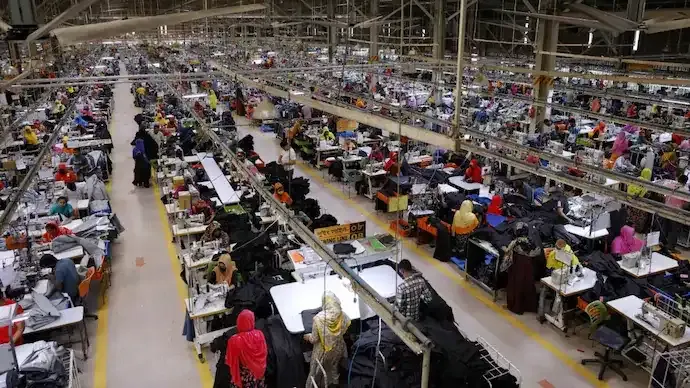
Bangladesh’s textile sector is facing the prospect of a nationwide shutdown as domestic millers warn that spinning units across the country may suspend operations from February 1 if the government does not withdraw duty-free yarn import facilities. The warning reflects mounting pressure on the interim administration to address what mill owners describe as an existential crisis for local textile manufacturing.
At the centre of the dispute is the bonded warehouse system, which allows duty-free imports of yarn—primarily cotton yarn from India and polyester yarn from China—for use in export-oriented garment production. Domestic millers argue that this policy has tilted the market heavily in favour of imports, leaving local spinning units unable to compete on price.
The crisis has intensified after the Ministry of Commerce formally recommended the withdrawal of zero-duty benefits to the National Board of Revenue. Mill owners say the delay in implementing corrective measures has worsened financial stress across the sector, already grappling with energy shortages and rising costs.
According to the Bangladesh Textile Mills Association, low-cost Indian yarn has flooded the domestic market, resulting in unsold inventory worth more than Tk 12,000 crore. The association claims that over 50 spinning mills have already shut down, leading to widespread job losses and increasing pressure on remaining units struggling to service bank loans.
The situation has been compounded by a prolonged gas crisis. Industry estimates suggest that the textile sector has incurred losses of nearly $2 billion over the past few months due to erratic gas supply, higher energy prices, and production disruptions. Many mills report operating at barely half their installed capacity, while repeated requests for subsidised and uninterrupted gas supply have gone unanswered.
Government data indicates that Bangladesh imported nearly 70 crore kilograms of yarn in 2025, spending close to $2 billion. Around 78 per cent of these imports reportedly originated from India, underscoring the scale of dependence on foreign suppliers.
Millers have placed a series of demands before the government, including immediate withdrawal of duty-free yarn imports—particularly in the 10 to 30 count cotton segment—reduced VAT collection during the crisis period, lower interest rates on bank loans, and a structured dialogue to stabilise the sector. They warn that a shutdown of spinning mills could impact close to one million workers nationwide, raising concerns about social unrest and economic disruption.
However, garment exporters have pushed back strongly against these demands. The Bangladesh Garment Manufacturers and Exporters Association argues that domestic yarn production is insufficient and significantly more expensive than imported alternatives. Exporters say international apparel brands prefer Indian yarn due to its consistency and quality, and removing duty-free access would weaken Bangladesh’s competitiveness in global markets.
Indian exporters have echoed this view, warning that restricting bonded imports would increase production costs for Bangladeshi garment manufacturers and potentially hurt export volumes. They argue that the bonded facility is critical for maintaining price competitiveness in the international apparel trade.
As the standoff continues, Bangladesh’s textile and apparel industry—one of the country’s largest employers and a key source of foreign exchange—finds itself at a critical juncture. Without a balanced policy response that addresses both domestic manufacturing concerns and export competitiveness, industry stakeholders warn that prolonged instability could deepen economic strain and threaten livelihoods across the sector.
Prev Article
India Plans Major EU Car Tariff Cut Ahead of Landmark Free Trade Agreement
Next Article
Apple to Launch Gemini-Powered Siri in February, Full AI Chatbot Planned for WWDC 2026