

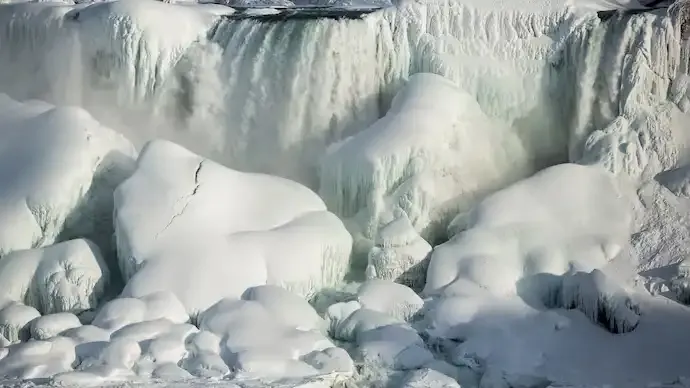

Niagara Falls transformed into a dramatic winter landscape in late January 2026 as extreme cold conditions led to spectacular ice formations across the iconic natural wonder. While the powerful waterfalls never freeze entirely due to the massive volume of flowing water, sub-zero temperatures created towering ice cliffs, frozen mist, and snow-covered surroundings that attracted tourists from around the world.
Visitors braved freezing weather to witness partially frozen cascades, with trees, railings, and nearby structures coated in thick layers of ice. Photographs and videos captured the falls enveloped in mist that crystallised into intricate icy patterns, turning the area into what many described as an otherworldly winter scene.
Polar vortex disruption behind extreme freeze
Scientists say the unusual conditions were driven by a disruption in the polar vortex — a band of strong winds that normally traps frigid air around the Arctic. A sudden stratospheric warming event weakened this system, allowing cold Arctic air to plunge southwards across North America. As temperatures dropped to nearly -20°C in some regions, prolonged cold combined with high moisture from the falls accelerated ice buildup.

Despite the dramatic appearance, experts note that the core water flow of Niagara Falls remains too powerful to freeze solid. Instead, the freezing occurs along the edges where spray and mist accumulate and solidify over time. This phenomenon is rare but not unprecedented, typically occurring during intense cold waves.
Climate patterns and shifting winters
Meteorologists link the 2026 event to broader winter weather instability seen across the Northern Hemisphere. Climate researchers suggest that warming in the Arctic may weaken the polar vortex more frequently, increasing the chances of sudden cold outbreaks in mid-latitude regions. These fluctuations can lead to extreme contrasts — intense cold in some areas despite rising global temperatures overall.
The frozen spectacle at Niagara Falls coincided with widespread winter extremes across North America, Europe, and parts of Asia. Severe cold waves and heavy snowfall disrupted travel, while unusual weather patterns also influenced conditions in regions far from the Arctic.
Global ripple effects, including India
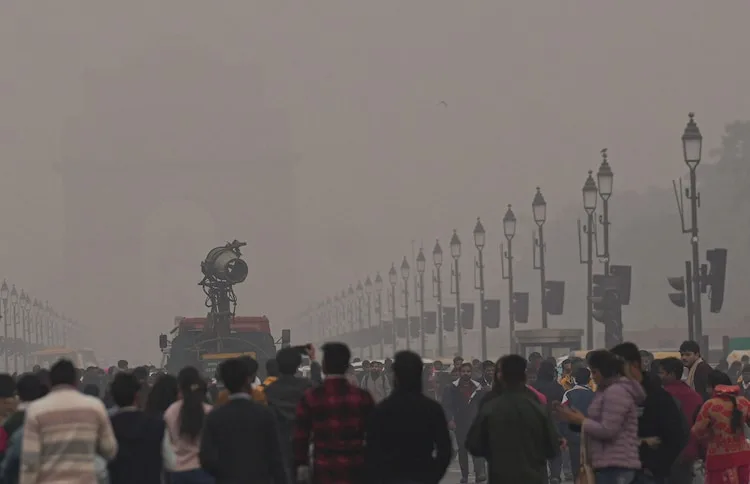
The same atmospheric shifts contributed to unusually harsh winter conditions in parts of India during early 2026. Northern and northwestern regions experienced colder-than-normal nights, dense fog, and prolonged cold spells, reflecting how polar disruptions can influence weather thousands of kilometres away.
Experts emphasise that events like the partially frozen Niagara Falls highlight the growing unpredictability of global climate systems. As extreme weather becomes more frequent, scientists continue to study how polar vortex instability and atmospheric changes interact to produce sudden cold snaps and dramatic natural phenomena.
For tourists and weather enthusiasts, however, the icy transformation of Niagara Falls remains a rare visual spectacle — a reminder of nature’s power and the complex climate forces shaping winter landscapes around the world.



Conversation
Be kind and stay on topic. Comments are moderated; abuse, spam and personal attacks are removed. Report a problem