
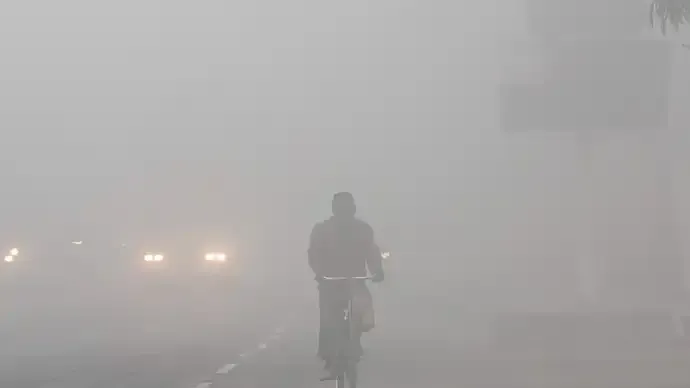
Winter has tightened its grip on the national capital once again, with Delhi waking up to dense fog that sharply reduced visibility and disrupted normal life across the city. Several areas reported visibility dropping below 50 metres in the early hours, creating hazardous conditions for commuters and significantly affecting road, rail and air traffic.
According to the India Meteorological Department (IMD), moderate to dense fog was observed across multiple parts of Delhi, including Dhaula Kuan, Akshardham, Dwarka and Mother Teresa Crescent Marg. The thick fog layer lingered well into the morning, complicating the start of the workweek for thousands of residents.
Meteorologists attribute the sudden intensification of fog to a combination of winter-specific weather factors. Light rainfall on Sunday played a key role by lowering surface temperatures and increasing moisture levels near the ground. Minimum temperatures hovered between 10°C and 12°C, slightly above the seasonal average, but high relative humidity—ranging between 90 and 97 per cent during early morning hours—created ideal conditions for condensation.
Another major contributor has been the influence of an active western disturbance. This system brought cloud cover and sustained moisture over north India, limiting overnight heat loss from the surface and preventing the fog from dispersing quickly. Experts explain that during winter nights, cooling of the ground causes the air near the surface to cool below its dew point, resulting in fog formation. Residual moisture from recent rainfall intensified this process, leading to a rapid and widespread fog build-up.
Delhi’s chronic air pollution further worsened the situation. With Air Quality Index (AQI) levels ranging from moderate to poor—between 196 and 278 in several areas—pollutants acted as condensation nuclei, trapping moisture and turning fog thicker and more persistent. This interaction between pollution and weather often results in smog-like conditions, severely restricting visibility and keeping pollutants close to the ground.
The impact of the fog was felt most acutely at Indira Gandhi International Airport, where low-visibility procedures under CAT III operations were implemented to allow aircraft to land using instrument guidance. While this system enables flights to operate during dense fog, delays and rescheduling remained a concern. Road traffic across the city slowed considerably, with authorities urging motorists to exercise caution during early morning travel.
Looking ahead, the IMD has forecast that shallow to moderate fog is likely to persist during night and early morning hours over the next few days. Daytime conditions are expected to remain partly cloudy, with maximum temperatures staying subdued at around 21°C. Another western disturbance is likely to approach later in the week, which could bring intermittent light rain or drizzle and prolong foggy spells.
The recurring fog episodes underline the complex interaction between meteorological conditions and environmental factors in Delhi. While winter fog is a natural phenomenon, high pollution levels significantly intensify its effects, making visibility poorer and air quality worse. As winter continues, residents are advised to remain alert, plan travel carefully, and follow advisories issued by weather and traffic authorities.



Conversation
Be kind and stay on topic. Comments are moderated; abuse, spam and personal attacks are removed. Report a problem