



Bangladesh has renewed pressure on India to resolve the long-pending Teesta water-sharing dispute, while stressing that the issue should not damage the two neighbours' broader relationship.
Bangladesh Water Resources Minister Shahiduddin Chowdhury Anee said Dhaka wants India to consider Bangladesh's interests while pursuing its own priorities on the river.
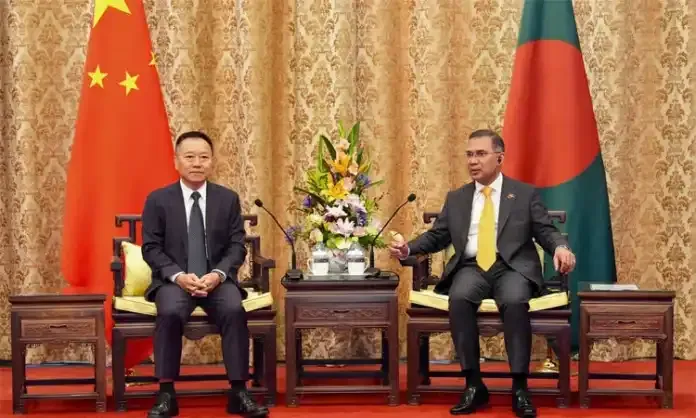
The renewed push comes as Bangladesh moves forward with a proposed Teesta River Comprehensive Management and Restoration Project with China's support, aimed at tackling flooding, river erosion and dry-season water shortages in northern Bangladesh.

Bangladesh wants Teesta deal without harming India ties
Speaking at a seminar in Dhaka on sustainable management of the Teesta River, Anee said Bangladesh does not want its relationship with India to deteriorate because of the unresolved water-sharing issue.
He stressed that India and Bangladesh are friendly neighbours and argued that both countries should take each other's interests into account.
The minister's remarks come amid renewed efforts by Dhaka to build domestic support for a long-term solution to the Teesta dispute.
Bangladesh has conducted consultations with experts and stakeholders since the February election to assess the proposed restoration project and determine how it can be implemented.
Why is the Teesta River important?
The Teesta River originates in the Himalayas and flows through Sikkim and West Bengal before entering Bangladesh, where it eventually joins the Jamuna, the country's name for the Brahmaputra.
The river is strategically important to both countries.
For northern Bangladesh, the Teesta is crucial for:
- Agriculture and irrigation
- Livelihoods of farming communities
- Managing floods and river erosion
- Dry-season water availability
In India's West Bengal, the river supports irrigation and power generation, while several hydropower projects are located in its upper catchment.
This competing dependence has made the Teesta one of the most difficult issues in India-Bangladesh water relations.
Why has the Teesta agreement remained unresolved?
India and Bangladesh have discussed sharing Teesta waters since the 1980s.
An interim arrangement reached in 1983 proposed allocating 39% of the water to India and 36% to Bangladesh, while leaving 25% unallocated.
A draft interim agreement was later finalised in 2011. However, it could not be signed after the West Bengal government raised concerns about water availability in the state.
The absence of a long-term agreement has since remained a major source of friction in bilateral water cooperation.
China-backed Teesta project adds strategic dimension
Bangladesh is simultaneously exploring a major Teesta river restoration and management project with Chinese support.
The proposed project is intended to address recurring flooding, riverbank erosion and water shortages across several northern districts.
During Prime Minister Tarique Rahman's visit to Beijing in June, China committed to expediting the technical feasibility study for the project.
The development gives the Teesta dispute a wider strategic dimension because India has long viewed major Chinese involvement in projects close to its northeastern frontier with sensitivity.
India has said its position on the proposed project has already been conveyed to Bangladesh.
External Affairs Ministry spokesperson Randhir Jaiswal said India's overall approach would take into account developments related to the project.
Teesta dispute separate from Ganges water treaty
The Teesta issue should not be confused with the Ganges Water Sharing Treaty between India and Bangladesh.
The two countries signed the Ganges treaty in 1996 for a period of 30 years. The agreement is scheduled to expire in December 2026.
India and Bangladesh share 54 transboundary rivers, with water-related issues discussed through the Joint Rivers Commission.
While the Ganges treaty established a formal water-sharing framework, the Teesta has remained unresolved.
What happens next?
Bangladesh's latest push suggests that Dhaka wants progress on the Teesta issue while avoiding a deterioration in relations with New Delhi.
At the same time, the proposed China-backed restoration project could increase the urgency for India and Bangladesh to clarify their respective positions.
For Bangladesh, the issue is closely linked to the livelihoods of millions of people in the north. For India, any agreement has to take into account the water requirements of West Bengal and other stakeholders.
The challenge for both sides will therefore be to find a formula that addresses Bangladesh's dry-season concerns without compromising water availability in India's eastern region.






Conversation
Be kind and stay on topic. Comments are moderated; abuse, spam and personal attacks are removed. Report a problem