Shopping cart
Your cart empty!


Your cart empty!
Terms of use dolor sit amet consectetur, adipisicing elit. Recusandae provident ullam aperiam quo ad non corrupti sit vel quam repellat ipsa quod sed, repellendus adipisci, ducimus ea modi odio assumenda.
Lorem ipsum dolor sit amet consectetur adipisicing elit. Sequi, cum esse possimus officiis amet ea voluptatibus libero! Dolorum assumenda esse, deserunt ipsum ad iusto! Praesentium error nobis tenetur at, quis nostrum facere excepturi architecto totam.
Lorem ipsum dolor sit amet consectetur adipisicing elit. Inventore, soluta alias eaque modi ipsum sint iusto fugiat vero velit rerum.
Sequi, cum esse possimus officiis amet ea voluptatibus libero! Dolorum assumenda esse, deserunt ipsum ad iusto! Praesentium error nobis tenetur at, quis nostrum facere excepturi architecto totam.
Lorem ipsum dolor sit amet consectetur adipisicing elit. Inventore, soluta alias eaque modi ipsum sint iusto fugiat vero velit rerum.
Dolor sit amet consectetur adipisicing elit. Sequi, cum esse possimus officiis amet ea voluptatibus libero! Dolorum assumenda esse, deserunt ipsum ad iusto! Praesentium error nobis tenetur at, quis nostrum facere excepturi architecto totam.
Lorem ipsum dolor sit amet consectetur adipisicing elit. Inventore, soluta alias eaque modi ipsum sint iusto fugiat vero velit rerum.
Sit amet consectetur adipisicing elit. Sequi, cum esse possimus officiis amet ea voluptatibus libero! Dolorum assumenda esse, deserunt ipsum ad iusto! Praesentium error nobis tenetur at, quis nostrum facere excepturi architecto totam.
Lorem ipsum dolor sit amet consectetur adipisicing elit. Inventore, soluta alias eaque modi ipsum sint iusto fugiat vero velit rerum.
Do you agree to our terms? Sign up
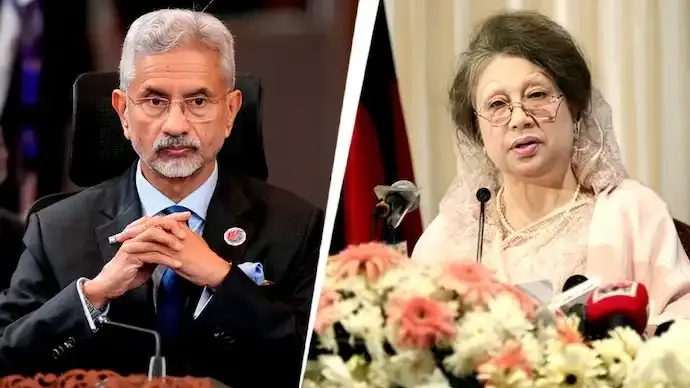
India’s External Affairs Minister S Jaishankar is set to travel to Dhaka on December 31 to attend the state funeral of former Bangladesh Prime Minister Khaleda Zia, a move widely seen as a significant diplomatic gesture at a time of visibly strained relations between India and Bangladesh.
Khaleda Zia, who served as Bangladesh’s Prime Minister twice and led the Bangladesh Nationalist Party, passed away earlier this week, leaving behind a deeply polarised political landscape in the country. Her death coincides with a crucial political moment, marked by the return of her son and BNP’s de facto leader, Tarique Rahman, to Bangladesh after 17 years in exile ahead of national elections.
Jaishankar’s presence at the funeral is being interpreted as New Delhi’s attempt to reset engagement with Bangladesh, following a turbulent phase in bilateral ties. Relations between the two neighbours have remained tense since the ouster of Sheikh Hasina’s government in a student-led uprising last year, an event that fundamentally altered Dhaka’s political direction and unsettled regional diplomacy.
During her tenure between 1991–1996 and 2001–2006, Khaleda Zia was often viewed in New Delhi as a counterweight to the Awami League’s traditionally close alignment with India. Her governments prioritised diversifying Bangladesh’s foreign policy, notably strengthening ties with China. During her second term, Beijing emerged as Bangladesh’s principal supplier of military hardware, a development that caused strategic unease in India.
The current geopolitical environment has further heightened India’s concerns. With Bangladesh under the interim administration led by Muhammad Yunus, New Delhi has remained cautious about Dhaka’s foreign policy signals, particularly amid fears of growing proximity to both China and Pakistan. Against this backdrop, Jaishankar’s attendance at the funeral is being seen as a carefully calibrated move to keep diplomatic channels open without overt political alignment.
Tarique Rahman, widely considered the frontrunner in the upcoming Bangladeshi elections, has recently attempted to project a balanced foreign policy outlook. In public remarks, he questioned the authority of an interim government to make long-term foreign policy decisions without a popular mandate. At a rally in Dhaka, Rahman emphasised Bangladesh’s independent path, stating that the country would not align itself exclusively with either India or Pakistan, underlining a “Bangladesh first” approach.
He has also distanced himself from radical political forces, including Jamaat-e-Islami, and criticised its historical stance during the 1971 Liberation War. These statements have been closely watched in New Delhi as possible indicators of Bangladesh’s future diplomatic orientation.
Jaishankar’s visit, therefore, carries symbolic as well as strategic weight. While officially a condolence visit, it reflects India’s recognition of Bangladesh’s political transition and its intent to remain engaged with all major stakeholders during this period of uncertainty.
As South Asia navigates shifting alliances and internal political churn, the decision to send India’s External Affairs Minister to Dhaka underscores New Delhi’s broader diplomatic approach—balancing principles with pragmatism, and maintaining dialogue even amid disagreement.
97
Published: Dec 30, 2025

All India Story is your trusted source for comprehensive and up-to-the-minute news coverage across India. Bringing you the latest on politics, business, technology, entertainment, sports, and more, we are dedicated to keeping you informed with accurate, engaging, and insightful stories from every corner of the nation.