



Outgoing Bangladesh interim chief Muhammad Yunus has stirred fresh diplomatic debate with India following remarks in his farewell speech that referenced India’s northeastern region, often known as the “Seven Sisters.” His comments, delivered during a 25-minute address marked by strong nationalistic messaging, have renewed scrutiny over bilateral ties that weakened during his 18-month tenure.
Yunus suggested that Bangladesh could offer significant economic opportunities to the region by providing access to maritime routes. He highlighted Bangladesh’s geographic advantage, stating that its coastline could serve as a gateway to global markets for neighboring landlocked areas.
Observers noted that Yunus mentioned the northeastern states without explicitly referring to India, a move interpreted by many as diplomatically sensitive.

Economic Pitch and Regional Connectivity Narrative
During the speech, Yunus said Bangladesh could help boost prosperity in the northeastern region as well as neighboring Nepal and Bhutan through improved connectivity and access to sea routes.
Analysts view the statement as an attempt to position Bangladesh as a regional trade gateway. However, references to the northeastern region have historically been sensitive, with India firmly opposing any external framing that appears to separate the region from the country.
Yunus previously raised similar remarks during an overseas visit last year, drawing criticism from Indian officials and political leaders.
China Ties and Strategic Balancing
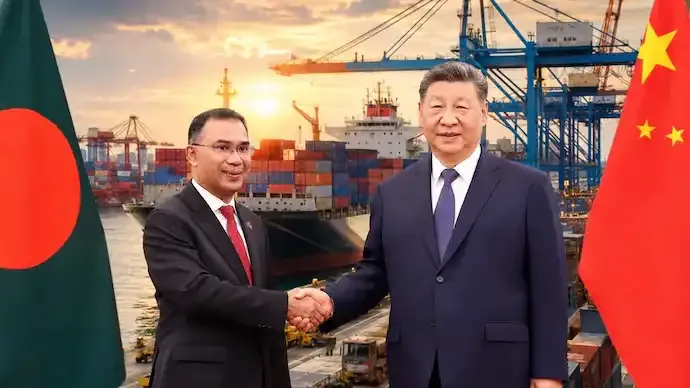
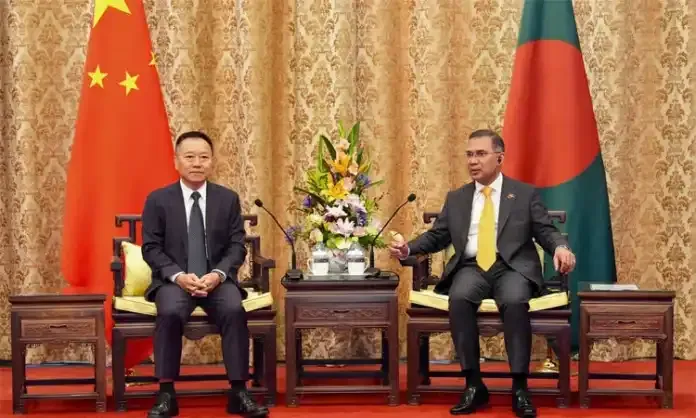
China featured prominently in Yunus’s farewell address, where he called for maintaining “strategic balance” in foreign relations and highlighted progress in cooperation projects.
He cited developments such as the Teesta River restoration initiative and a planned international hospital project in Nilphamari. The Teesta project has drawn attention due to its proximity to the Siliguri Corridor, a strategically vital link connecting India’s northeastern states with the rest of the country.
Earlier this year, the Yunus administration allowed Chinese officials to visit the project site, a move closely watched by regional observers.
Assertion of Foreign Policy Independence
In his address, Yunus emphasized that Bangladesh would pursue an independent foreign policy guided by national interests.
He stated that the country was no longer “submissive” and would act with confidence in safeguarding its sovereignty and strategic priorities. The remarks have been interpreted by some observers as signaling a shift away from perceived foreign policy alignments of previous administrations.
Legacy Debate and Future Relations
Yunus’s tenure has been marked by debates over foreign policy direction, internal stability, and relations with regional partners. Critics argue that ties with India experienced strain during his leadership, while supporters say he sought to diversify diplomatic and economic partnerships.
His departure comes at a pivotal moment, with a new government preparing to take office and expectations rising for a possible reset in India–Bangladesh relations.
Diplomatic observers say the future trajectory of ties will depend on balancing regional connectivity, economic cooperation, and mutual security concerns.






Conversation
Be kind and stay on topic. Comments are moderated; abuse, spam and personal attacks are removed. Report a problem