

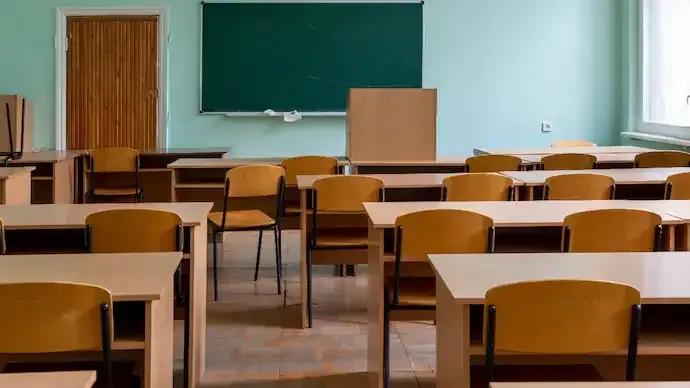

The Bihar government's ambitious initiative to establish 211 new government degree colleges across the state has significantly expanded access to higher education, particularly in rural areas. However, the rollout has also exposed several challenges, including a shortage of teachers, temporary campuses, and inadequate infrastructure.
While the new institutions have begun admitting students, ground reports indicate that many colleges are yet to become fully operational due to the absence of permanent buildings and essential academic resources.
Government's Expansion Drive
The new colleges were inaugurated by Chief Minister Samrat Chaudhary on July 15, 2026, through a virtual event.

The initiative aims to ensure that students, especially those in rural and underserved regions, can pursue undergraduate education closer to home without relocating to major cities.
The government has described the move as one of Bihar's largest higher education expansion programmes in recent years.
Temporary Campuses Instead of Permanent Buildings
One of the most significant challenges facing the newly opened colleges is the lack of permanent infrastructure.
Many institutions are currently operating from:
- Intermediate colleges
- Government schools
- Existing educational institutions
- Other temporary government buildings
Several campuses are still awaiting construction of permanent academic blocks.
Basic facilities such as libraries, classrooms, furniture, drinking water, and sanitation infrastructure are also being developed in phases at many locations.
Teacher Shortage Across Colleges
Another major concern is the shortage of regular teaching staff.
Although admissions have begun for undergraduate programmes in subjects including:
- History
- Hindi
- English
- Political Science
- Sociology
- Economics
many colleges are functioning with only a handful of faculty members.
Most institutions are currently being managed by:
- Acting principals
- Teachers on deputation
- University officials
- Temporary administrative staff
Officials have said regular appointments will be made in the coming months.
Ground Reality Across Districts
Purnia
Several newly established colleges in Purnia have started admissions, but infrastructure remains incomplete.
One institution enrolled over a hundred students but was functioning with only two faculty members. Although a library room exists, books have not yet been supplied.
Muzaffarpur
In Muzaffarpur's Bochahan block, the new degree college is operating from a middle school building.
Students have enrolled in multiple subjects, but some departments currently do not have dedicated teachers. Existing school infrastructure is being shared until permanent arrangements are completed.
Saran
The newly established college in Ekma is functioning from an Intermediate College campus.
Construction work continues on permanent facilities, while admissions have already begun. Administrative responsibilities are currently being handled by officials serving on deputation.
Siwan
Several new colleges have been opened across Siwan district.
Many institutions have only a limited number of teachers despite offering multiple undergraduate subjects. Students have welcomed easier access to higher education but expressed concerns regarding faculty availability.
Gopalganj
The Government Degree College in Manjha has admitted students but is operating without a permanent campus.
While teachers are available for a few subjects, several departments are awaiting faculty appointments before regular classes can begin.
Government Responds to Concerns
Bihar Higher Education Minister Sanjay Singh 'Tiger' acknowledged that several colleges are functioning without adequate infrastructure or sufficient teaching staff.
According to the minister, the government chose to begin admissions first so that students would not lose an academic year.
He said recruitment of faculty, construction of permanent buildings, and development of educational facilities are being carried out in phases and will continue over the coming months.
Balancing Access and Quality
Education experts note that expanding higher education opportunities in rural areas is an important step toward improving enrolment and accessibility.
However, they also emphasise that quality education depends on more than admissions alone. Adequate faculty, laboratories, libraries, classrooms, and student support services are essential for ensuring meaningful learning outcomes.
The success of Bihar's expansion initiative will ultimately depend on how quickly the state addresses these infrastructure and staffing challenges while maintaining academic standards.
Key Highlights
- Bihar has launched 211 new government degree colleges across the state.
- Many institutions are operating from temporary campuses.
- Several colleges currently face shortages of regular teachers.
- Infrastructure such as libraries, classrooms, and furniture is still under development at many locations.
- Admissions have already begun in multiple undergraduate subjects.
- The state government says recruitment and infrastructure development will continue in phases.
Frequently Asked Questions (FAQs)
Why has Bihar opened 211 new degree colleges?
The initiative aims to improve access to undergraduate education, especially for students in rural and remote areas.
Are all the new colleges fully operational?
No. Many colleges are currently functioning from temporary campuses while permanent infrastructure is being developed.
What challenges are the new colleges facing?
Several institutions lack permanent buildings, sufficient teachers, libraries, and other basic academic facilities.
Which subjects are currently being offered?
Most colleges have begun admissions in subjects such as History, Hindi, English, Political Science, Sociology, and Economics.
What has the Bihar government said about the shortages?
The government has acknowledged the shortage of teachers and infrastructure, stating that recruitment and construction work are being carried out in phases.
Will permanent teachers be appointed?
According to the Higher Education Department, regular faculty appointments are planned as part of the phased implementation of the project.



Conversation
Be kind and stay on topic. Comments are moderated; abuse, spam and personal attacks are removed. Report a problem