

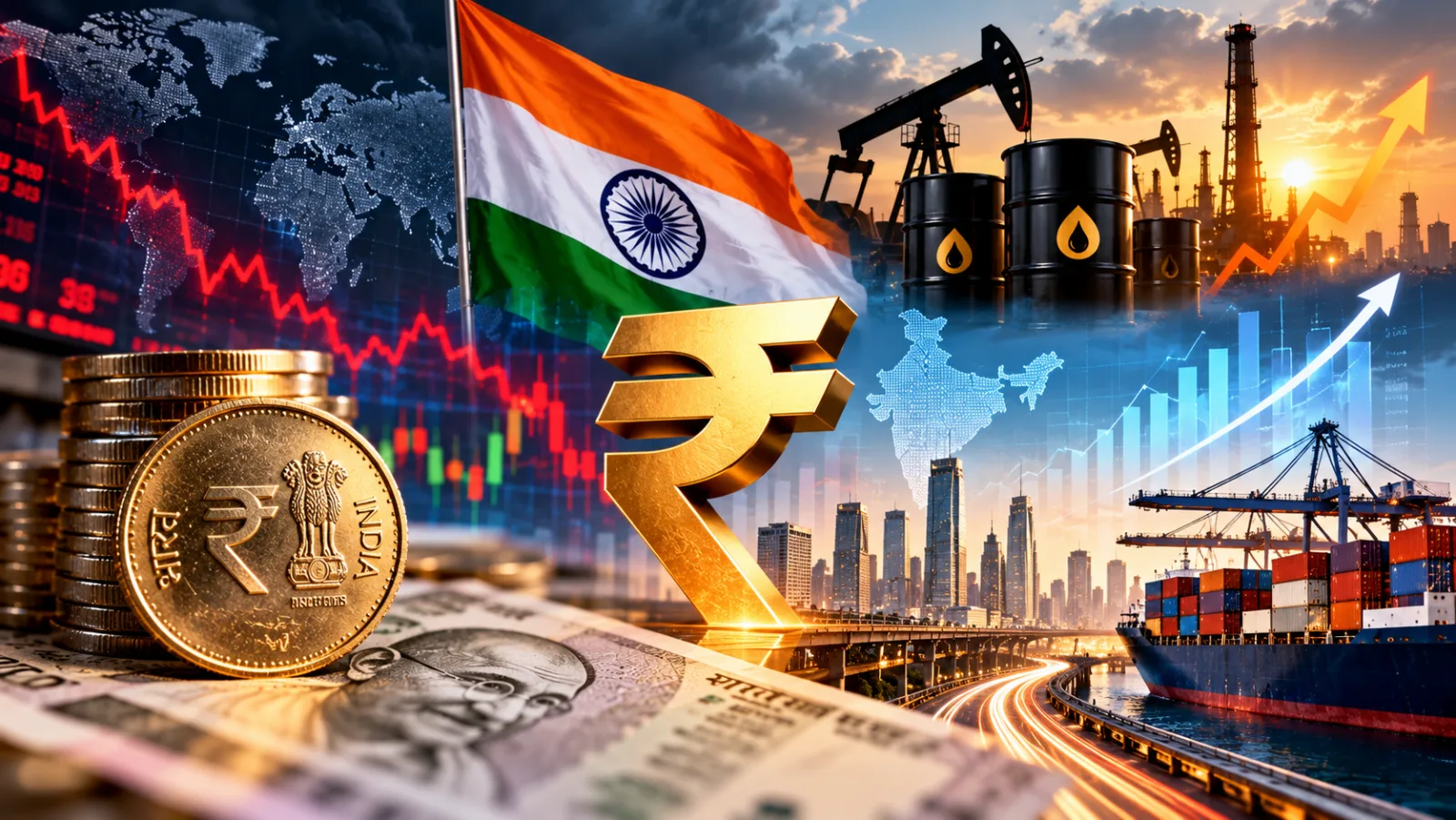

India’s economic outlook faces several interconnected challenges, including agricultural uncertainty linked to El Niño, pressure on the rupee from global energy shocks and capital outflows, and the risk of prolonged disruption to international oil supplies. These pressures highlight the need for a balanced policy response that protects economic stability while supporting long-term growth.
Currency volatility remains a key concern as global developments influence capital flows and energy import costs. Allowing the exchange rate to adjust to market conditions can serve as a primary defence against external shocks. Foreign exchange intervention, meanwhile, can be reserved for periods of disorderly market movements or when inflation expectations become unanchored.
Oil Supply Risks Put Pressure on India’s Economy
Potential disruptions around the Strait of Hormuz remain a major concern because of the region’s importance to international energy supplies. Elevated crude oil prices can increase India’s import bill, add to inflationary pressures and complicate economic management.

The challenge is further intensified by limited fiscal buffers, which can restrict the government’s ability to shield households and businesses from sustained increases in global energy prices.
Diversifying energy imports and accelerating investment in renewable power are therefore important priorities. Expanding alternative energy sources could help reduce exposure to international oil market disruptions and strengthen long-term energy security.
El Niño Raises Agricultural Concerns
El Niño-related weather risks present another challenge, particularly for agriculture. Unfavourable weather conditions can affect crop production, rural incomes and food prices, potentially adding to inflationary pressures.
Managing these risks requires attention to agricultural resilience alongside broader economic policies. The interaction between weather-related supply disruptions and higher energy costs could make economic management more complicated.
Trade Agreements Can Help Cushion Global Fragmentation
Bilateral trade agreements can provide opportunities to diversify export markets and strengthen economic relationships as global trade becomes increasingly fragmented. Deeper regional integration could further expand access to markets, support investment and create opportunities for businesses.
However, trade agreements alone may not be sufficient to sustain strong economic growth. Domestic reforms remain essential to improving productivity and attracting foreign direct investment.
Domestic Reforms Remain Critical for Growth
Reforms across factor markets, particularly land and labour, are important to improving the investment climate. Structural improvements in the ease of doing business could help businesses expand, encourage investment and support employment generation.
Taken together, energy diversification, flexible currency management, stronger regional trade links and sustained domestic reforms could help India navigate external shocks while building a more resilient foundation for long-term economic expansion.





Conversation
Be kind and stay on topic. Comments are moderated; abuse, spam and personal attacks are removed. Report a problem