

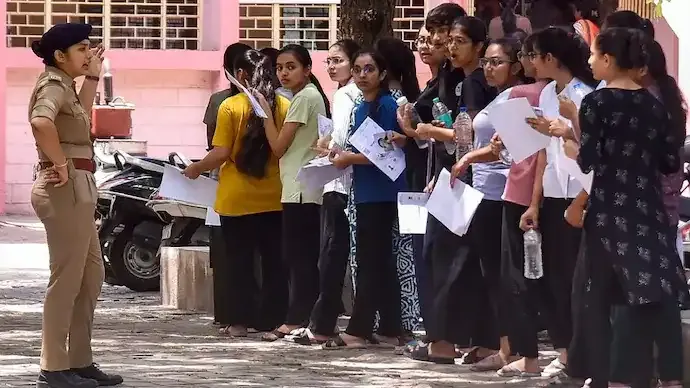

The conduct of the National Eligibility cum Entrance Test (NEET) will come under parliamentary scrutiny once again as the Parliamentary Standing Committee on Health and Family Welfare prepares to review the examination process and the functioning of key health regulators during its meeting scheduled for July 16.
The committee is expected to examine issues related to the administration of the country's largest medical entrance examination and evaluate the role of regulatory bodies operating under the Ministry of Health and Family Welfare, including the National Medical Commission (NMC).
The review comes amid continued efforts to strengthen transparency and accountability in India's competitive examination system following concerns raised over the NEET paper leak controversy and examination management in recent years.

Parliamentary Committee to Review NEET Examination
The Parliamentary Standing Committee on Health and Family Welfare has listed the functioning of regulatory bodies under the Ministry of Health as one of the key agenda items for its upcoming meeting.
Among the subjects expected to be discussed is the overall conduct of the NEET examination, which serves as the gateway for admission to undergraduate medical courses across India.
The committee is chaired by Rajya Sabha MP Ram Gopal Yadav.
The meeting is scheduled to take place on July 16, where members are likely to assess existing regulatory mechanisms and identify areas requiring improvement.
Why Is NEET Under Fresh Review?
NEET has remained under intense public and institutional scrutiny over the past year following allegations of irregularities, including the paper leak controversy.
The episode prompted widespread demands for reforms in examination security, transparency and governance.
The upcoming parliamentary review is expected to examine whether existing regulatory systems are adequate to ensure:
- Fair examinations
- Secure question paper handling
- Transparent evaluation processes
- Strong institutional accountability
- Public confidence in national entrance examinations
Although several reforms have already been initiated, lawmakers are expected to assess whether additional measures are necessary.
What Is the National Medical Commission?
The National Medical Commission (NMC) is the statutory regulator responsible for overseeing medical education and professional standards in India.
The Commission plays a key role in:
- Regulating medical colleges
- Maintaining standards of medical education
- Approving institutions and courses
- Framing policies related to medical education
- Ensuring quality in healthcare education
Given NEET's role as the primary entrance examination for undergraduate medical admissions, the committee is also expected to review the broader functioning of the NMC.
Role of the Ministry of Health
The Ministry of Health and Family Welfare oversees several regulatory bodies connected with medical education and healthcare administration.
The parliamentary committee's discussion is expected to evaluate how these institutions coordinate with examination authorities and whether existing regulatory frameworks require strengthening.
The objective is to improve governance and maintain public trust in India's medical education system.
Background: NEET Examination
The National Eligibility cum Entrance Test (NEET-UG) is India's single entrance examination for admission to:
- MBBS courses
- BDS programmes
- AYUSH undergraduate courses
- Other medical programmes where applicable
Every year, millions of students appear for the examination, making it one of the country's largest and most competitive entrance tests.
Because of its scale, even minor irregularities can affect a large number of candidates, making examination integrity a matter of national importance.
Focus Areas Likely to Be Discussed
While the committee's deliberations will determine the final scope of discussion, key areas expected to receive attention include:
Examination Conduct
Members may review how the examination is administered, monitored and evaluated to ensure fairness and transparency.
Regulatory Oversight
The functioning of health regulators, particularly the National Medical Commission, is expected to be examined to assess institutional accountability.
Examination Security
The committee may discuss safeguards designed to prevent paper leaks, impersonation and other examination malpractices.
Student Confidence
Lawmakers are also likely to consider measures that can strengthen public confidence in national entrance examinations.
Possible Impact on Students
The committee meeting itself will not affect ongoing admissions or examination results.
However, its recommendations could influence future policy decisions relating to:
- Examination security
- Regulatory reforms
- Medical education governance
- Admission processes
- Institutional accountability
Any major recommendations may subsequently be considered by the government for implementation.
About the Parliamentary Standing Committee
Parliamentary Standing Committees play an important role in examining government policies, reviewing the functioning of ministries and making recommendations to improve governance.
Although their recommendations are generally advisory in nature, they often contribute significantly to policy reforms and legislative discussions.
The Health and Family Welfare Committee regularly reviews issues relating to healthcare, medical education and public health administration.
Featured Snippet
The Parliamentary Standing Committee on Health and Family Welfare will review the conduct of the NEET examination and the functioning of the National Medical Commission during its meeting on July 16. The discussion comes amid continued focus on examination reforms and stronger regulatory oversight following concerns over NEET-related irregularities.
Key Highlights
- A Parliamentary Standing Committee will review NEET examination conduct on July 16.
- The meeting will examine the functioning of health regulators under the Ministry of Health.
- The National Medical Commission is expected to be part of the review.
- The committee is chaired by Rajya Sabha MP Ram Gopal Yadav.
- The review follows continued scrutiny of examination governance after the NEET controversy.
- Discussions may focus on examination transparency, accountability and regulatory reforms.
- The committee's recommendations could influence future policy decisions.
Conclusion
The upcoming parliamentary review reflects continued efforts to strengthen India's medical entrance examination system through greater transparency and regulatory accountability. While the July 16 meeting is not expected to result in immediate policy changes, its findings and recommendations could shape future reforms aimed at improving examination security, governance and public confidence in NEET.
FAQs
1. When will the Parliamentary Committee review NEET?
The Parliamentary Standing Committee on Health and Family Welfare is scheduled to discuss NEET on July 16, 2026.
2. Which committee is reviewing NEET?
The Parliamentary Standing Committee on Health and Family Welfare will conduct the review.
3. Who chairs the committee?
The committee is chaired by Rajya Sabha MP Ram Gopal Yadav.
4. What is the National Medical Commission?
The National Medical Commission (NMC) is India's statutory regulator responsible for medical education and professional standards.
5. Why is NEET being reviewed?
The review follows continued discussions on examination governance, transparency and regulatory oversight after concerns raised over NEET-related irregularities.
6. Will the committee meeting affect NEET admissions?
No. The meeting is a policy review and does not directly affect current admissions or examination results.
7. What is the purpose of the review?
The committee aims to evaluate examination conduct, regulatory functioning and possible improvements to strengthen the integrity of the medical entrance examination system.
8. Can the committee make policy changes?
The committee generally makes recommendations to the government, which may consider them while formulating future policies.








Conversation
Be kind and stay on topic. Comments are moderated; abuse, spam and personal attacks are removed. Report a problem