

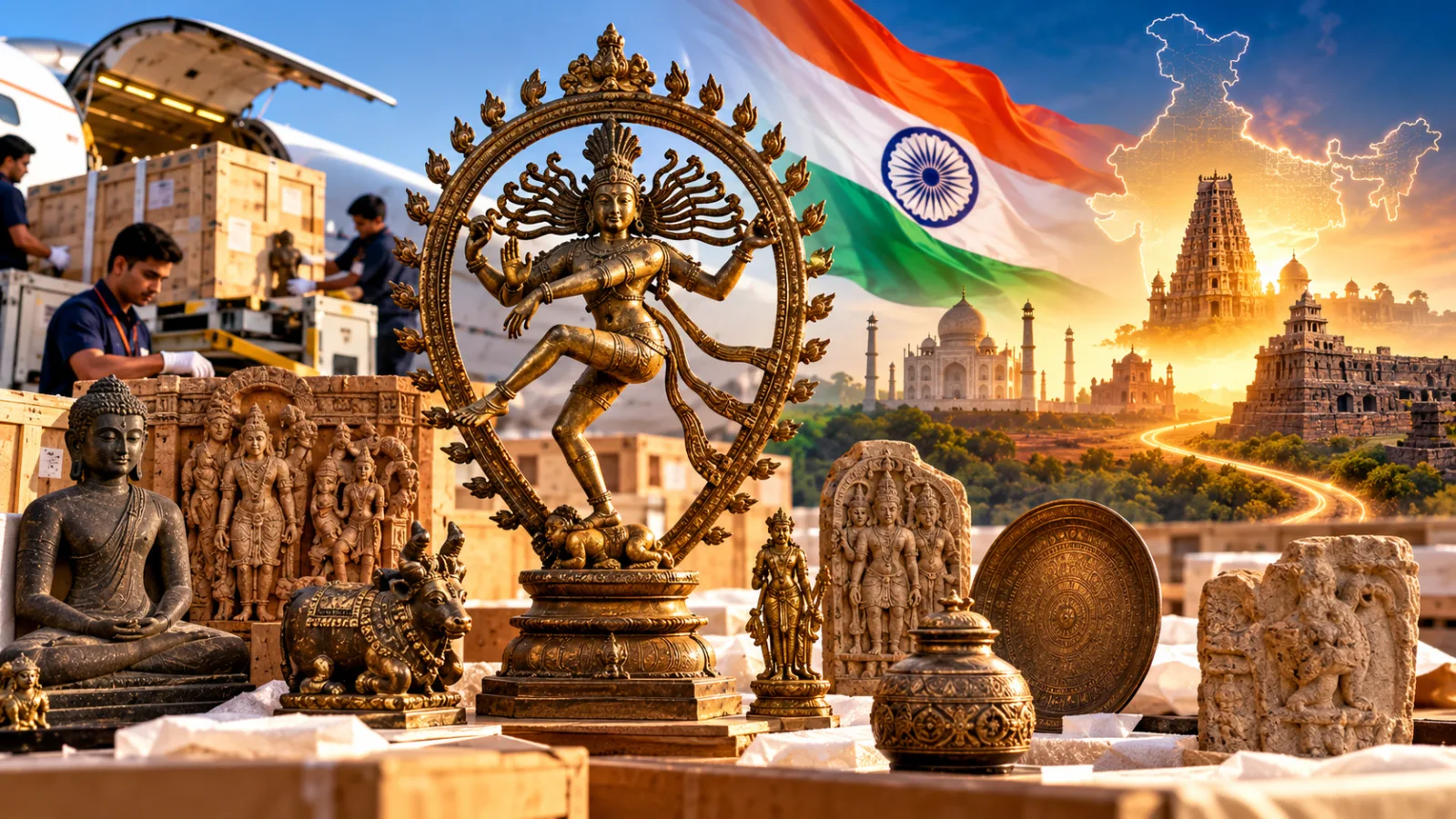

India’s cultural renaissance was a key theme of the address, which highlighted the transformation of major spiritual and cultural landmarks across the country. The speaker referred to Kashi Vishwanath Dham, the Shri Ram Temple in Ayodhya, Mahakal Mahalok in Ujjain, and redevelopment efforts associated with Kedarnath and Badrinath.
The address also highlighted the installation of Adi Shankaracharya’s statue as part of efforts to celebrate India’s spiritual and philosophical legacy.
According to the speech, more than 650 stolen ancient idols have been repatriated to India from abroad over the past 12 years. The speaker also referred to the recognition of numerous cultural centres as UNESCO World Heritage Sites, presenting these developments as part of a wider effort to preserve and promote the country’s heritage.

Swami Chinmayananda and Vivekananda Rock Memorial Remembered
The address recalled the contributions of Swami Chinmayananda and the creation of the Vivekananda Rock Memorial, an initiative associated with Eknath Ranade.
These examples were presented as reminders of the role played by spiritual leaders and cultural institutions in shaping national consciousness, inspiring younger generations and strengthening India’s connection with its philosophical traditions.
The speech linked these legacies with the centenary of the Chinmaya Mission, placing the organisation’s milestone within a broader national conversation about culture, education and development.
Mother-Tongue Education, Science and Technology Emphasised
The speaker stressed the importance of education in the mother tongue alongside modern science and technology. The address presented these priorities as complementary elements of national progress, emphasising the need to preserve linguistic and cultural identity while preparing citizens for a rapidly changing world.
The message also called for greater self-reliance and national unity, warning against forces that could divide society. It connected cultural confidence with the broader goal of building a stronger and more cohesive nation.
Chinmaya Mission Centenary Linked to Viksit Bharat 2047
The address connected the Chinmaya Mission’s centenary with India’s goal of completing 100 years of independence in 2047. Both milestones were framed around a shared aspiration: building a developed India, or Viksit Bharat.
The speaker’s message placed cultural preservation, education, technological advancement and national unity within this long-term vision. It underscored the importance of drawing strength from India’s heritage while working towards a future shaped by innovation, self-reliance and collective responsibility.
Relevant Link: UNESCO World Heritage Centre





Conversation
Be kind and stay on topic. Comments are moderated; abuse, spam and personal attacks are removed. Report a problem