
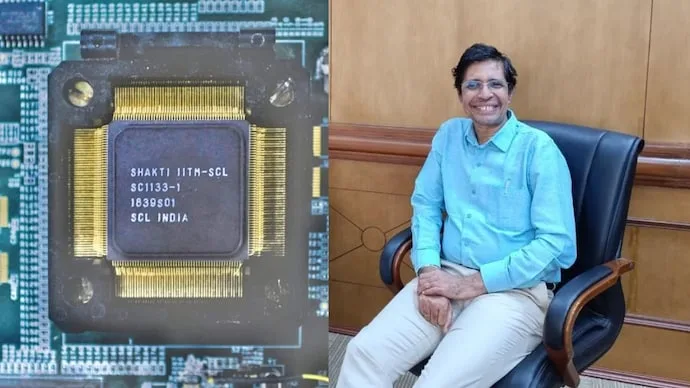
The Shakti microprocessor project from IIT Madras faced a challenge that went beyond chip design: convincing people that an Indian-developed processor could actually work and be adopted at scale. IIT Madras Director V Kamakoti said building this trust took more effort than solving the engineering problems involved in developing the processor.
Shakti is a family of processors designed in India and based on the open RISC-V instruction set architecture. RISC-V provides a freely available framework for designing processors, allowing developers to build chips without relying on proprietary instruction-set licences from overseas companies.
Why Shakti matters to India
Microprocessors are central to computing devices and systems, including computers, smartphones, satellites and defence equipment. Developing indigenous processor technology is therefore closely connected with technological self-reliance.
According to Kamakoti, the challenge was not simply demonstrating that Indian researchers could design a processor. The larger task was persuading funders, industry partners and other stakeholders that the project could successfully move from research to practical deployment.
He described two forms of trust as essential: researchers must believe their project can reach completion, while those providing funding and support must also have confidence in the technology.
IIT Madras reputation helped build confidence
Kamakoti attributed part of the confidence surrounding Shakti to the expertise of its researchers and IIT Madras' institutional reputation.
The institute's history of working on complex research and supporting projects that appeared difficult initially helped provide credibility when the processor project needed external support.
That trust also connects with IIT Madras' broader startup ecosystem. Its Research Park has incubated more than 590 companies, according to Kamakoti, with the combined valuation of these ventures estimated by him at around ₹83,000 crore.
From research to India's chip ambitions
Kamakoti said young founders supported through the ecosystem are generally strong technically, while mentorship is often needed to help them turn technical capabilities into products that people and businesses will adopt.
The experience of Shakti also highlights a broader challenge for India's semiconductor ambitions. Building fabrication facilities and investing in manufacturing infrastructure are important, but indigenous technology also needs confidence from the ecosystem around it.
As India expands its semiconductor capabilities, the Shakti journey demonstrates that developing domestic technology involves more than engineering. Researchers must also establish credibility, attract support and demonstrate that locally developed solutions can move successfully from laboratories into real-world applications.


Conversation
Be kind and stay on topic. Comments are moderated; abuse, spam and personal attacks are removed. Report a problem