

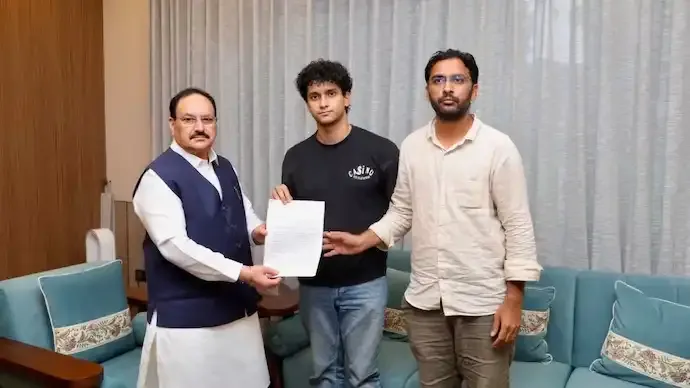

The Cockroach Janata Party (CJP) has sharply criticised its discussions with the Centre over the NEET-UG paper leak protests, claiming the meetings yielded no concrete outcome and accusing Union Health Minister JP Nadda of misrepresenting what transpired.
The criticism came after two rounds of talks between the government and a CJP delegation amid the party's 'Sansad Chalo' protest in New Delhi, where demonstrators demanded accountability over alleged irregularities in competitive examinations.
CJP Says No Progress Was Made
CJP spokesperson Ashutosh Ranka, who was part of the delegation that met JP Nadda, described the discussions as a "waste of time."

According to the party, the delegation spent several hours waiting for meetings that ultimately produced no assurance on its core demands.
The criticism followed a social media post by JP Nadda stating that the talks had taken place in a cordial atmosphere and that the protesters had submitted a written memorandum to the government.
Ranka disputed that characterisation, alleging the discussions did not result in any meaningful progress.
What Did the Government Say?
According to government sources, the first meeting took place in the morning, during which the CJP delegation presented its concerns.
The minister reportedly requested that the demands be submitted in writing. A second meeting later in the day followed the submission of the memorandum.
Officials said no commitment was made on the demands raised during either meeting. Instead, the government appealed to protesters to withdraw their agitation and cooperate with authorities to restore normalcy.

CJP's Main Demands
The memorandum submitted by the CJP reportedly included three principal demands:
- Release of activist Sonam Wangchuk without conditions.
- Resignation of Union Education Minister Dharmendra Pradhan.
- Compensation of ₹1 crore for the families of NEET aspirants who allegedly died by suicide following the paper leak controversy.
The party maintains that broader reforms are necessary to restore public confidence in the examination system.
Protest Continues in Delhi
The CJP's protest began at Jantar Mantar in early June and has expanded in recent weeks.
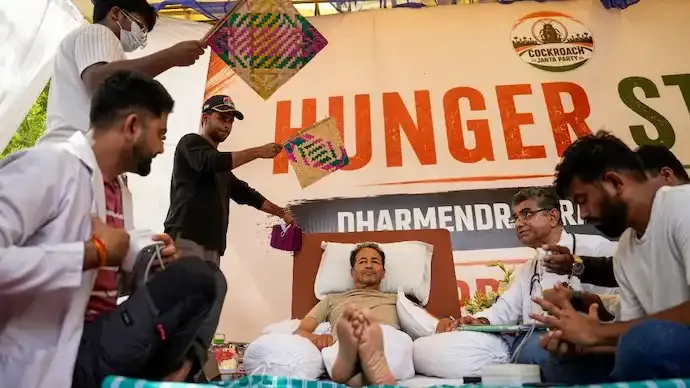
The agitation gained further attention after environmental activist Sonam Wangchuk joined the protest and later began a hunger strike. Following concerns over his health, he was shifted to a hospital for medical care.
The party says it will continue its campaign until meaningful action is taken on examination reforms and accountability.
Government Defends Its Response
Government sources have defended the Centre's handling of the NEET paper leak controversy.
Officials said:
- A re-examination was conducted after the paper leak surfaced.
- Action has been initiated against those allegedly involved.
- Entrance examination and counselling processes have continued as scheduled.
The government also maintained that law enforcement agencies were instructed to exercise restraint during the demonstrations and avoid unnecessary force.
Officials further argued that millions of students successfully appeared for national entrance examinations this year and that ongoing admissions indicate the examination process has largely continued without disruption.
Debate Over Examination Reforms Continues
The disagreement between the government and the CJP reflects the broader debate over transparency and accountability in India's competitive examination system.
While the Centre maintains that prompt corrective measures were taken after the NEET paper leak, protest organisers argue that systemic reforms and greater accountability remain necessary to prevent similar incidents in the future.
Key Highlights
- CJP described its talks with Health Minister JP Nadda as unproductive.
- The party alleged the government gave no assurance on its three principal demands.
- JP Nadda said the discussions were cordial and urged protesters to end their agitation.
- The CJP continues to demand accountability over the NEET paper leak.
- The government says a re-examination was conducted and action has been initiated against those responsible.
- The protest has continued in New Delhi amid calls for examination reforms.
Frequently Asked Questions (FAQs)
Why did the CJP criticise the talks with the government?
The party said the discussions produced no assurance on its key demands and described the meetings as unproductive.
What were the CJP's main demands?
The party sought the release of Sonam Wangchuk, the resignation of Education Minister Dharmendra Pradhan, and compensation for families of NEET aspirants who allegedly died by suicide after the paper leak controversy.
What did JP Nadda say about the meeting?
JP Nadda stated that the discussions were held in a cordial atmosphere and requested protesters to end their sit-in after submitting a written memorandum.
What is the government's position on the NEET paper leak?
The government says it acted swiftly by conducting a re-examination, initiating action against those allegedly involved, and ensuring the admission process continued.
Where is the CJP protest taking place?
The protest began at Jantar Mantar in New Delhi and later expanded through the party's 'Sansad Chalo' campaign.
Will the protests continue?
The CJP has indicated that it will continue its agitation until its demands regarding examination reforms and accountability are addressed.





Conversation
Be kind and stay on topic. Comments are moderated; abuse, spam and personal attacks are removed. Report a problem