
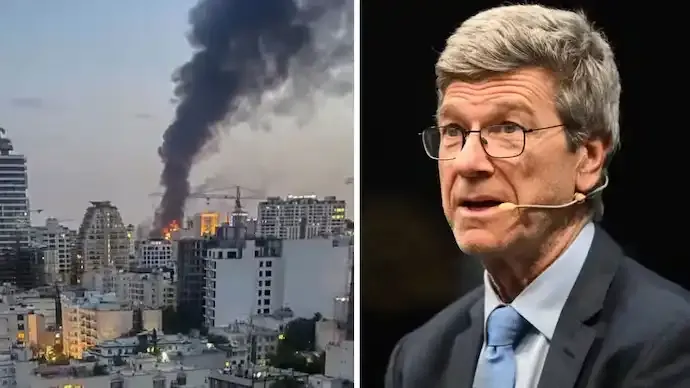
Amid escalating tensions in West Asia, a strong warning has been issued regarding the safety of key cities in the United Arab Emirates (UAE). A leading economist has cautioned that strategic decisions taken by the UAE during the ongoing conflict could expose major urban centres like Dubai and Abu Dhabi to serious risks.
The statement comes at a time when geopolitical uncertainty in the region continues to intensify, raising concerns across global political and economic circles.
Concerns Over Strategic Involvement
The warning highlights the potential consequences if the UAE becomes directly involved in the conflict. Experts believe that participation or alignment in a regional war could put critical infrastructure and high-value economic zones at risk.
Dubai and Abu Dhabi, known for their global financial, tourism, and trade significance, could become vulnerable in the event of escalation.
Economic Hubs Under Potential Threat
Dubai and Abu Dhabi have developed into major international hubs over the years, attracting investments, businesses, and tourists from around the world. Their rapid growth and global connectivity make them vital to the UAE’s economy.
However, this prominence also increases their exposure during geopolitical conflicts, as any disruption could have far-reaching consequences for global markets.
Impact on Global Economy
Any instability in the Gulf region can significantly affect global trade and energy markets. The UAE plays a crucial role in international logistics, aviation, and financial services.
If tensions escalate further, it could disrupt not only regional stability but also global economic activity, particularly in sectors linked to oil, shipping, and finance.
Call for Caution and Neutrality
The warning emphasises the importance of careful decision-making and strategic neutrality during times of conflict. Avoiding direct involvement could help minimise risks and protect key economic assets.
Experts suggest that maintaining stability should remain a priority for countries in the region to safeguard both national and global interests.
Growing Uncertainty in West Asia
The broader situation in West Asia remains uncertain, with increasing military activity and shifting alliances. This has led to heightened concerns about the potential for wider regional escalation.
Countries in the region are closely monitoring developments while evaluating their strategic positions.
What Lies Ahead
As tensions continue, the focus remains on whether diplomatic efforts can prevent further escalation. The decisions made in the coming days could significantly influence the stability of the region.
For the UAE, balancing security concerns with economic priorities will be crucial in navigating this challenging situation.




Conversation
Be kind and stay on topic. Comments are moderated; abuse, spam and personal attacks are removed. Report a problem