

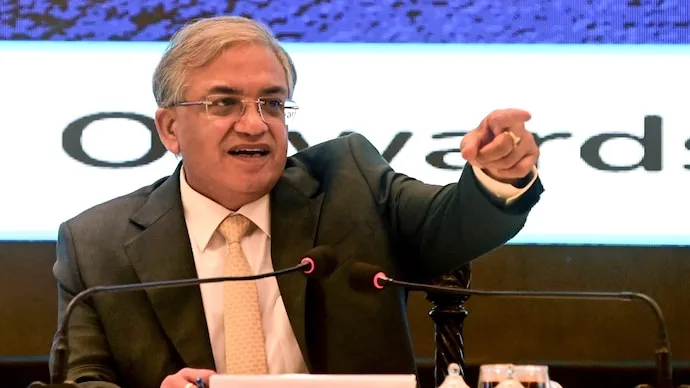

The Election Commission of India (ECI) has denied allegations of unilateral decision-making by Chief Election Commissioner Gyanesh Kumar, telling the Supreme Court that all three orders concerning the Special Intensive Revision (SIR) of electoral rolls were approved unanimously by the three-member Commission.
In an affidavit responding to petitions challenging the CEC’s functioning and changes linked to voter registration forms, the poll body said the allegations relied on a single media report. It maintained that Gyanesh Kumar and the two Election Commissioners had also unanimously approved the affidavit filed before the court.
ECI Explains Decision-Making Process
The Commission said the three SIR orders, issued in June 2025, October 2025 and May 2026, were unanimous decisions. According to the affidavit, files are generally examined by one Election Commissioner before being reviewed by the other and placed before the CEC. Urgent approvals may be obtained electronically and recorded on the file later.

The ECI clarified that suggestions, observations and queries raised during internal discussions do not constitute formal decisions under Section 18 of the Chief Election Commissioner and Other Election Commissioners Act, 2023. It also denied releasing or authorising the release of internal notes or files to the media.
Form 6 and Voter Registration Clarifications
Addressing concerns over Form 6, used for voter registration, the ECI said the prescribed form itself had not been amended. It explained that the declaration required for the SIR process was a separate document.
However, the Commission acknowledged that the online presentation could be interpreted as an amendment. From October 21, the online application was to be separated into Form 6 and a distinct declaration to match the physical application format.
The ECI also said booth-level officers would collect documents from voters whose details could not be mapped during the revision. Hearings would generally be reserved for exceptional cases and, where possible, conducted online.
ECINet Safeguards and Goa Voter Discrepancies
The Commission said no voter could be added to or removed from electoral rolls without an order from the Electoral Registration Officer. It also announced that experts from the Indian Institutes of Technology and the Indian Institute of Science had been brought together to examine safeguards within the ECINet system.
On the case involving 97 voters in Goa initially reported as excluded, the ECI said 88 had already been enrolled, six were abroad and three held Portuguese passports.
Work Allocation Dispute and Supreme Court Plea
The affidavit addressed a July 28 work allocation order issued by an Additional Secretary on deputation to the Commission. The ECI said the order was never implemented after the two Election Commissioners issued a joint direction on July 30. Reports also stated that Election Commissioners Sukhbir Singh Sandhu and Vivek Joshi had written to the Cabinet Secretary about the changes, though the letters’ contents remain undisclosed.
The Commission opposed the plea seeking to restrain Gyanesh Kumar from discharging his functions, arguing that the request was not maintainable and referring to the removal process applicable to a Supreme Court judge.
The ECI said its initial response was brief because of the Dussehra vacation and sought permission to file a detailed, point-by-point reply.





Conversation
Be kind and stay on topic. Comments are moderated; abuse, spam and personal attacks are removed. Report a problem