

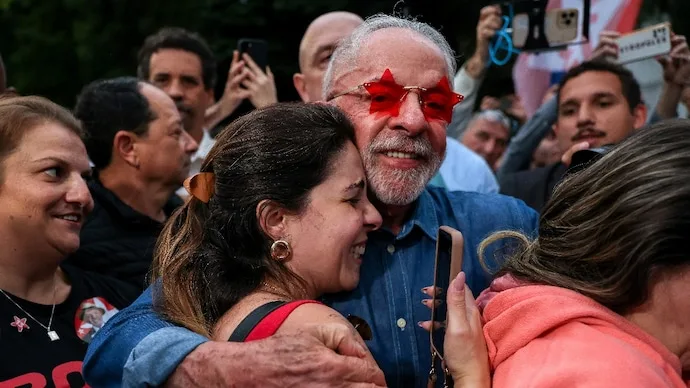

Brazilian President Luiz Inacio Lula da Silva has secured an unprecedented fourth presidential term at the age of 80, defeating Senator Flavio Bolsonaro, the eldest son of former president Jair Bolsonaro. The Lula fourth presidential term victory defied opinion polls and offered a setback to the broader right-wing movement gaining ground across Latin America.
Lula, who previously served as president from 2003 to 2011 before returning to power in 2022, overcame public concerns over rising prices, corruption scandals and his government’s performance. Flavio Bolsonaro had finished first in the election’s opening round and campaigned to revive his father’s far-right political movement.
Political observers suggested that voters favoured familiarity over an uncertain alternative. Lula’s campaign focused on poverty reduction, inequality, unemployment, literacy and environmental protection, while warning that a Bolsonaro-led government could reduce welfare spending and reverse social gains.

Lula’s Victory Challenges Latin America’s Right-Wing Shift
The result also represents a setback for US President Donald Trump’s administration, which had supported the Bolsonaro family’s return to power. Lula is expected to remain an influential counterweight to the growing number of right-wing governments across Latin America.
His political career has been marked by repeated comebacks. Lula was jailed between 2018 and 2019 on corruption charges that were later overturned, allowing him to contest the 2022 election.
Conservative Congress Could Limit Lula’s Agenda
Despite winning another term, Lula faces a difficult legislative landscape. Brazil has elected its most conservative Congress since the country returned to democracy in the 1980s.
The Liberal Party and its allies could control more than 280 seats in the lower house and up to 50 seats in the Senate, potentially restricting Lula’s ability to pass legislation, build coalitions and advance policy priorities.
His campaign promises include free nationwide public transport on weekends, subject to congressional approval, and a 15 per cent increase in the country’s flagship welfare programme. Delivering these commitments could prove difficult without support from lawmakers.
Economic Pressures Complicate Lula’s Fourth Term
Lula’s next term begins amid high interest rates, rising public debt and growing household borrowing. The government forecasts economic growth of 2.3 per cent next year, while public debt has climbed above 82 per cent of gross domestic product.
His administration will need to balance welfare commitments with pressure to control public spending. A conservative legislature is also expected to push for business-friendly structural reforms, potentially creating further disagreements over social programmes and economic policy.








Conversation
Be kind and stay on topic. Comments are moderated; abuse, spam and personal attacks are removed. Report a problem