

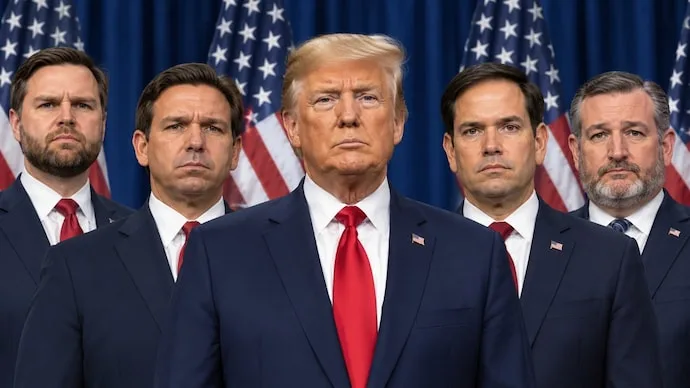

The Republican Party after the 2026 midterm elections faces a difficult political transition following sweeping Democratic victories that changed the balance of power in Washington. Democrats have reportedly gained control of both the House of Representatives and the Senate, leaving President Donald Trump with a more challenging legislative environment for the remaining two years of his presidency.
The results also exposed divisions within Republican ranks, with prominent leaders and potential presidential contenders beginning to assess the party’s future beyond Trump.
The election verdict reflected voter dissatisfaction over several issues, including the economy, the war in Iran, tariffs and the administration’s governance. Trump had urged voters to treat the midterms as a referendum on his presidency, but the outcome delivered a major setback to his party.

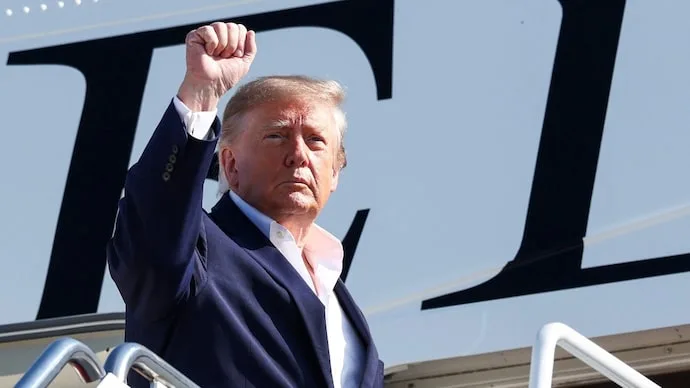
Although Trump remains in office until January 2029 and cannot constitutionally seek a third term, his influence over the Republican Party could face growing challenges.
Democrats Gain Congressional Oversight Powers
Democrats reportedly flipped seven Senate seats and more than two dozen House seats, according to projections cited in the supplied report. Their victories included major upsets in Texas, Kansas, South Carolina, Iowa, North Carolina and Ohio.
With control of both chambers, Democrats will gain greater authority over congressional committees, investigations and subpoenas. They will also be better positioned to scrutinise administration policies and delay or block certain presidential appointments.
House Democratic leader Hakeem Jeffries is positioned to become Speaker when the new Congress convenes in January, while Chuck Schumer is expected to return to the role of Senate Majority Leader.
Trump retains executive powers and the presidential veto, but the Republican period of unified congressional control is set to end in January 2027.
JD Vance and Ted Cruz Signal Republican Discontent
Vice-President JD Vance, widely viewed as a potential successor to Trump, faces questions about his political future following the party’s losses. His close association with the administration could complicate efforts to establish an independent leadership profile.
Secretary of State Marco Rubio, Florida Governor Ron DeSantis and Texas Senator Ted Cruz are also among the Republican figures discussed as possible contenders in the post-Trump political landscape.
Cruz described the election outcome as a "blue tsunami" and a "Watergate-level repudiation". He argued that Republicans had lost support among voters who had previously backed the party.
He identified affordability, corruption, the Iran war and tariffs as major concerns. Cruz also called for rebuilding the Republican coalition by reconnecting with blue-collar workers, young voters, farmers, rural communities and Hispanic voters.
At the same time, he warned that Democrats could use their congressional majority to pursue investigations and impeachment proceedings against Trump and members of his administration.
Who Will Shape the Republican Party After Trump?
The leadership contest may extend beyond individual presidential ambitions. Political organisations, donor networks and grassroots groups are also positioning themselves to influence the movement’s future.
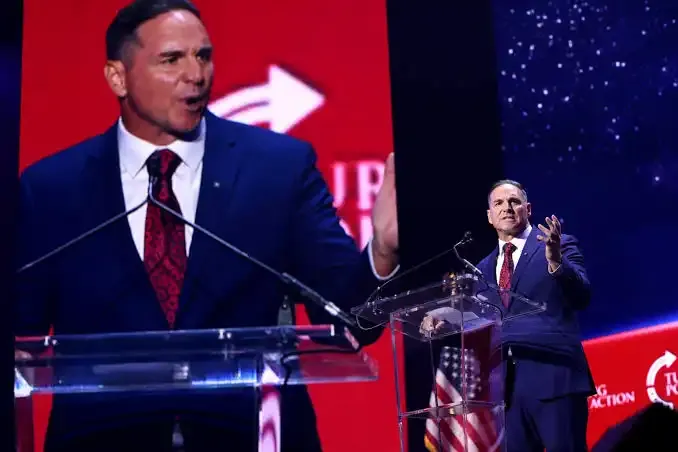
One example is the Rockbridge Network, founded by conservative strategist Chris Buskirk. The organisation seeks to connect wealthy donors, political strategists, data analysts and grassroots activists.
Its associated fundraising group, Turnout for America, reportedly spent $34.5 million on grassroots efforts during the 2024 presidential campaign.
Buskirk describes his political philosophy as "aristopopulism", combining the economic influence of wealthy entrepreneurs with the electoral appeal of working-class voters.
2028 Presidential Race Could Reshape Republican Politics
The midterm defeat has brought the 2028 presidential contest into sharper focus. Republicans must decide whether to continue with Trump's populist nationalist approach or adopt a broader strategy to attract voters beyond his core supporters.
However, Trump's influence is unlikely to disappear immediately. He retains the presidency, a loyal political following and the ability to shape debates within the party.
The coming years could therefore determine whether the Republican movement continues under Trump's influence or develops a new leadership structure capable of carrying its political agenda forward.
Read more: All India Story






Conversation
Be kind and stay on topic. Comments are moderated; abuse, spam and personal attacks are removed. Report a problem