

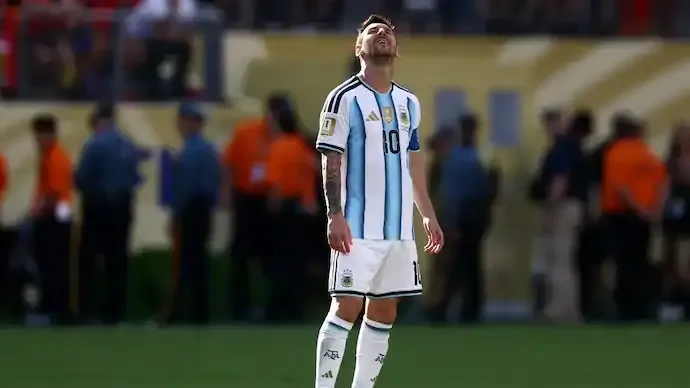

For much of the FIFA World Cup 2026, Lionel Messi once again proved why he remains one of football's greatest players, producing decisive performances that guided Argentina to another World Cup final.
However, in the title clash against Spain, the Argentine captain found himself unusually subdued as Spain's disciplined tactical setup denied him the time and space that had defined his tournament.
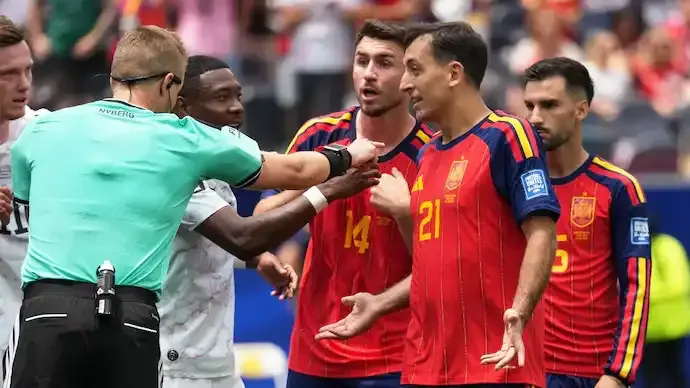
Spain's 1-0 victory after extra time was not built on aggressive man-marking or constant fouling. Instead, it was the result of a well-organised collective system that limited Messi's influence throughout the match.

Spain Focused on Controlling Space, Not Chasing Messi
Rather than assigning a defender solely to Messi, Spain trusted their positional discipline.
Whenever the Argentine captain dropped deep to receive possession, Spain maintained their compact defensive shape and quickly closed passing lanes, preventing him from turning toward goal.
As a result, Messi spent much of the match collecting the ball in midfield instead of dangerous attacking areas.
The strategy forced Argentina to build attacks from deeper positions and reduced the opportunities for Messi to create decisive moments.
Messi's Numbers Reflect a Quiet Final
Although Messi remained involved in Argentina's build-up play, his attacking influence was significantly reduced.
According to the match statistics, he recorded:
- 54 touches
- 40 successful passes from 53 attempts (76% accuracy)
- 0 chances created
- 1 shot, which came in the 117th minute
- 13 build-up involvements
- Only one involvement in an attacking sequence
Most of his passes came in central midfield and the left half-space rather than around Spain's penalty area, highlighting how effectively Spain pushed him away from dangerous positions.
Spain's Midfield Controlled the Game
Spain's midfield trio played a crucial role in limiting Argentina's captain.
Rodri consistently shielded the defence by blocking passing lanes into Messi.
Meanwhile:
- Pedri
- Fabián Ruiz
pressed aggressively whenever Messi received possession between the lines.
At the back, Pau Cubarsí balanced stepping into midfield with maintaining Spain's defensive structure, ensuring there was rarely any space for Messi to exploit.
Instead of relying on individual brilliance to stop Argentina's star, Spain succeeded through teamwork and tactical discipline.
Argentina Struggled Without Messi's Creativity
Throughout the tournament, Argentina frequently relied on Messi to unlock tight defences with moments of individual brilliance.
In the final, however, Spain monopolised possession and dictated the tempo.
The Spanish side controlled nearly two-thirds of the ball, completed almost twice as many passes as Argentina and forced Lionel Scaloni's team to spend long periods defending.
Without regular possession in advanced areas, Messi had fewer opportunities to influence the game.
Spain's Tactical Discipline Paid Off
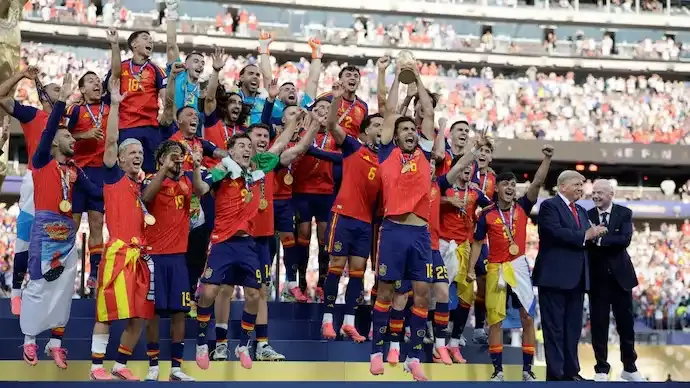
The decisive moment arrived in extra time, when Ferran Torres scored the winning goal to secure Spain's second FIFA World Cup title.
Messi remained on the field until the final whistle, continuing to search for an opening, but Spain's defensive organisation ensured that opportunity never arrived.
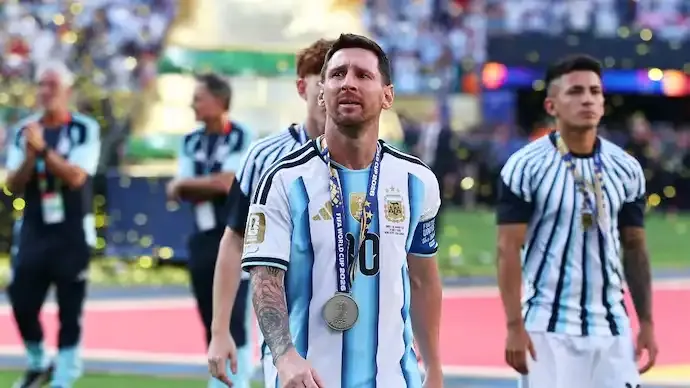
Despite the disappointment, Messi concluded another outstanding World Cup campaign by receiving the Silver Ball, recognising his performances throughout the tournament.
While the final belonged to Spain, Messi's overall contribution during the competition remained one of the standout stories of the 2026 FIFA World Cup.
Key Highlights
- Spain defeated Argentina 1-0 after extra time in the FIFA World Cup 2026 final.
- Lionel Messi was restricted to 54 touches and created no chances.
- Spain relied on collective tactical discipline rather than man-marking Messi.
- Rodri, Pedri, Fabián Ruiz and Pau Cubarsí played key roles in limiting Argentina's captain.
- Ferran Torres scored the winning goal in extra time.
- Messi finished the tournament with the Silver Ball despite Argentina's defeat.
FAQs
How did Spain stop Lionel Messi in the World Cup final?
Spain maintained a compact defensive structure, denied Messi space between the lines and limited his opportunities in attacking areas instead of relying on strict man-marking.
How many shots did Messi have in the final?
Messi registered one shot, which came in the 117th minute of the match.
Did Lionel Messi create any chances against Spain?
No. According to the match statistics, Messi finished the final without creating a single chance.
Who scored for Spain in the FIFA World Cup 2026 final?
Ferran Torres scored the winning goal in extra time to give Spain a 1-0 victory over Argentina.
Did Messi win an individual award at the tournament?
Yes. Lionel Messi received the Silver Ball in recognition of his performances throughout the FIFA World Cup 2026.



Conversation
Be kind and stay on topic. Comments are moderated; abuse, spam and personal attacks are removed. Report a problem