

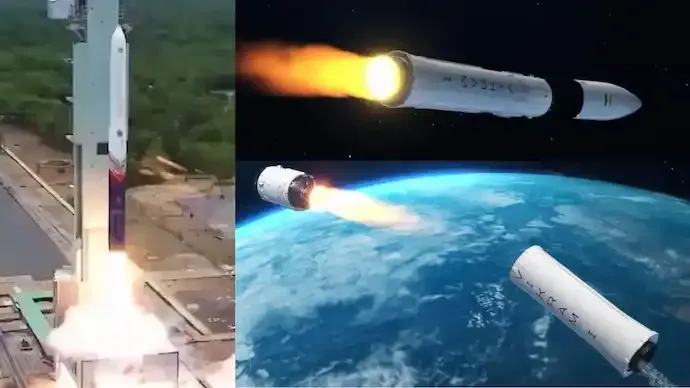

India's private space sector achieved a historic milestone when Skyroot Aerospace's Vikram-1 successfully reached orbit during Mission Aagaman, making it the country's first privately developed orbital launch vehicle. The landmark mission not only showcased India's growing capabilities in commercial space exploration but also highlighted the crucial role played by Telangana's startup ecosystem, particularly T-Hub, in nurturing one of the nation's most successful deep-tech startups.
The successful launch has positioned India among a select group of countries with private orbital launch capability and reinforced Hyderabad's reputation as a leading destination for innovation, aerospace, and space technology.
Vikram-1 Creates History for India's Private Space Industry
Launched from the Satish Dhawan Space Centre, Sriharikota, on July 18, Vikram-1 successfully placed its payload into a 450-kilometre orbit during its maiden mission, Mission Aagaman.

With this achievement, Skyroot Aerospace became the first Indian private company to design, develop, and launch an indigenous orbital-class rocket capable of placing payloads into space. The mission is being hailed as a turning point for India's rapidly expanding commercial space industry.
How T-Hub Supported Skyroot Aerospace's Journey
Founded in 2018 by former ISRO scientists Pawan Kumar Chandana and Naga Bharath Daka, Skyroot Aerospace began its entrepreneurial journey at T-Hub, Telangana's flagship startup incubator.
During its early growth phase, T-Hub provided the startup with:
- Mentorship from industry experts
- Access to investors and funding opportunities
- Business development support
- Startup networking and collaboration opportunities
- Strategic guidance for scaling advanced technology ventures
As the company transitioned from concept development to rocket manufacturing, it also leveraged T-Works, Telangana's state-supported prototyping facility, enabling engineers to rapidly design, build, and test critical rocket components.
Skyroot also benefited from Telangana's broader innovation ecosystem, which includes:
- WE-Hub for entrepreneurship support
- TASK (Telangana Academy for Skill and Knowledge)
- RICH (Research and Innovation Circle of Hyderabad)
- Telangana State Innovation Cell (TSIC)
Together, these institutions have played a significant role in promoting deep-tech innovation and startup growth across the state.
Skyroot's Journey Before Vikram-1
Skyroot first made headlines in November 2022 with the successful launch of Vikram-S, India's first privately developed rocket. The launch came shortly after the Government of India opened the country's space sector to private participation.
The company's growth accelerated rapidly over the following years.
In May 2026, Skyroot became India's first space-tech unicorn, achieving a valuation of more than $1.1 billion.
The successful orbital flight of Vikram-1 now marks the company's biggest achievement, demonstrating that Indian private companies possess the capability to independently develop orbital launch vehicles for commercial and scientific missions.
Political Leaders Praise the Historic Achievement
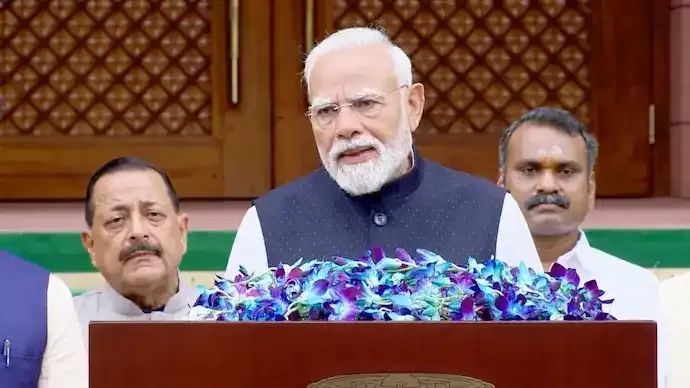
The successful launch received widespread appreciation from political leaders and industry stakeholders.
Former Telangana IT and Industries Minister K.T. Rama Rao (KTR) congratulated the Skyroot Aerospace team and credited Telangana's innovation ecosystem for fostering world-class startups.
During his tenure, several flagship initiatives, including T-Hub and T-Works, were expanded to strengthen entrepreneurship, innovation, and technology-driven industries across the state.
What Vikram-1 Means for India's Future Space Economy
Industry experts believe Vikram-1's successful mission could significantly accelerate India's private space ambitions.
The milestone is expected to:
- Attract greater domestic and international investment into India's space sector.
- Encourage the growth of startups focused on satellite technology, propulsion systems, launch vehicles, and aerospace manufacturing.
- Strengthen Hyderabad's position as one of India's leading aerospace and deep-tech innovation hubs.
- Boost India's competitiveness in the rapidly growing global commercial space industry.
Skyroot Aerospace's journey—from a startup incubated at T-Hub to becoming India's first private company to place a payload into orbit—demonstrates how strategic government support, innovation infrastructure, and entrepreneurial talent can combine to create globally competitive space technology.
Key Highlights
- Skyroot Aerospace's Vikram-1 became India's first privately built rocket to successfully reach orbit.
- The rocket placed its payload into a 450 km orbit during Mission Aagaman.
- Skyroot was incubated at Telangana's T-Hub after being founded in 2018 by former ISRO scientists.
- T-Hub, T-Works, WE-Hub, TASK, RICH, and TSIC supported the company's growth.
- Skyroot launched India's first private rocket, Vikram-S, in 2022.
- In May 2026, Skyroot became India's first space-tech unicorn with a valuation exceeding $1.1 billion.
- Experts believe Vikram-1's success will boost private investment and innovation in India's commercial space sector.
Frequently Asked Questions (FAQs)
What is Vikram-1?
Vikram-1 is an indigenously developed orbital launch vehicle built by Skyroot Aerospace. It is India's first privately developed rocket to successfully place a payload into orbit.
What is Mission Aagaman?
Mission Aagaman is the maiden orbital launch mission of Skyroot Aerospace's Vikram-1 rocket, which successfully achieved a 450-kilometre orbit.
What is T-Hub?
T-Hub is Telangana's flagship startup incubator that provides mentorship, funding access, business support, and networking opportunities to startups across various sectors, including deep technology.
How did T-Hub help Skyroot Aerospace?
T-Hub supported Skyroot during its early years by offering mentorship, investor access, business guidance, and connections within Telangana's innovation ecosystem. The company also used T-Works for prototyping and testing rocket components.
Who founded Skyroot Aerospace?
Skyroot Aerospace was founded in 2018 by former ISRO scientists Pawan Kumar Chandana and Naga Bharath Daka.
Why is Vikram-1 important for India?
Vikram-1 marks India's entry into the league of countries with private orbital launch capability and demonstrates the growing strength of the country's commercial space industry.
What was Skyroot's achievement before Vikram-1?
In November 2022, Skyroot successfully launched Vikram-S, India's first privately built rocket. In May 2026, it also became India's first space-tech unicorn.







Conversation
Be kind and stay on topic. Comments are moderated; abuse, spam and personal attacks are removed. Report a problem