

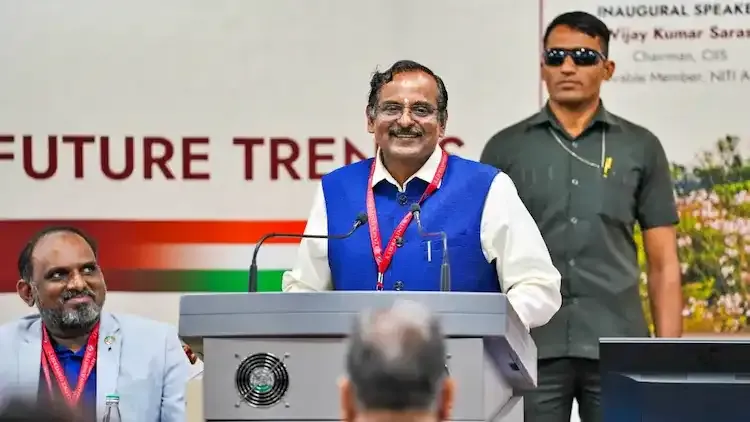

India's ambitious space programme is facing a new challenge—not failed missions or technological setbacks, but the growing departure of experienced scientists from the Indian Space Research Organisation (ISRO).
According to recent developments, more than 100 scientists have either resigned or taken voluntary retirement over the past few months. The trend has prompted the Department of Space (DoS) to introduce stricter rules governing resignations, particularly for scientists working on flagship missions such as Gaganyaan.
The development has sparked discussions about why highly skilled scientists are choosing to leave India's premier space agency at a time when the country's space ambitions are expanding rapidly.

Private Space Sector Offers Better Opportunities
One of the biggest reasons behind the talent shift is the rapid growth of India's private space industry.
Since the government opened the space sector to private participation in 2020, several startups have emerged as major players in satellite technology, launch vehicles and space-based services.
Companies such as Skyroot Aerospace, Agnikul Cosmos, Pixxel, Bellatrix Aerospace, Dhruva Space, and Digantara are offering attractive career opportunities to experienced aerospace professionals.
Compared to traditional government jobs, these companies often provide:
- Higher salaries
- Employee stock options (ESOPs)
- Faster career progression
- Greater workplace flexibility
- Leadership roles at an earlier stage
- Opportunities to work on cutting-edge technologies
These factors have made private firms increasingly attractive to scientists looking for faster professional growth.
Former ISRO Veterans Are Building the Ecosystem
The private space sector has also benefited from the experience of former ISRO scientists and senior officials.
Many retired ISRO professionals now mentor or lead private aerospace companies, helping create an ecosystem where young scientists can continue working on advanced space technologies outside the government sector.
This expanding network has opened career opportunities that were largely unavailable just a few years ago.
Mission Delays and Organisational Challenges
Apart from better compensation, organisational issues within ISRO are also believed to be contributing to the departures.
Several major missions have experienced delays, including:
- Gaganyaan G1 Test Flight
- SSLV-L1
- GSLV-F17
- Industry-built PSLV-N1
The agency has also faced setbacks following recent PSLV mission issues, delaying launch schedules further.
Some current and former officials have reportedly expressed concerns over increasingly centralised decision-making, suggesting that technical and administrative approvals have become slower, affecting operational efficiency.
Experts Suggest Employment Model Reforms
Space policy experts believe ISRO could benefit from adopting more flexible employment structures similar to agencies such as NASA and the European Space Agency (ESA).
These organisations combine:
- Permanent employees
- Contract professionals
- Project-based specialists
Such hybrid models allow agencies to retain institutional expertise while bringing in specialised talent for mission-specific work.
Experts argue that as India's private space industry matures, ISRO can focus more on strategic areas such as:
- Human spaceflight
- Deep-space exploration
- Mission architecture
- Advanced research and development
- Reusable launch systems
- Future propulsion technologies
Department of Space Tightens Exit Rules
To slow the growing exodus, the Department of Space issued a memorandum on July 14, requiring resignations and voluntary retirement requests from scientists involved in critical national missions to receive departmental approval.
Scientists working on flagship programmes like Gaganyaan will no longer be able to leave through routine administrative approvals.
Although the number of departures represents only a small portion of ISRO's workforce of over 14,600 employees, experts believe the impact is significant because many departing scientists possess years of specialised mission experience gained through programmes such as:
- Chandrayaan-3
- SpaDeX
- Gaganyaan
Replacing such expertise is not as simple as recruiting new graduates.
A Changing Space Ecosystem
For decades, ISRO was the primary destination for India's brightest aerospace engineers.
Today, India's space sector has evolved into a broader ecosystem where private companies offer competitive salaries, faster innovation cycles and diverse career opportunities.
As the country's commercial space industry continues to expand, ISRO's challenge will not only be attracting talented scientists but also retaining experienced professionals while maintaining leadership in strategic national missions.
Key Highlights
- More than 100 ISRO scientists have resigned or taken voluntary retirement in recent months.
- Better salaries and faster career growth in private space startups are major reasons behind the departures.
- Mission delays and organisational challenges have also contributed to the talent shift.
- The Department of Space has tightened resignation rules for scientists working on flagship missions like Gaganyaan.
- Experts suggest ISRO adopt more flexible employment models similar to NASA and ESA.
FAQs
Why are scientists leaving ISRO?
Scientists are reportedly leaving due to better salaries, faster career growth, leadership opportunities, and flexible work environments offered by private space companies, along with organisational challenges within ISRO.
How many scientists have left ISRO recently?
More than 100 scientists have reportedly resigned or taken voluntary retirement over the past few months.
Which private space companies are attracting ISRO talent?
Companies including Skyroot Aerospace, Agnikul Cosmos, Pixxel, Bellatrix Aerospace, Dhruva Space, and Digantara are among those expanding rapidly and hiring experienced professionals.
What action has the Department of Space taken?
The Department of Space has introduced stricter approval requirements for resignations and voluntary retirement of scientists working on critical national missions such as Gaganyaan.
Will these resignations affect India's space programme?
While the number of departures is relatively small compared to ISRO's overall workforce, experts say the loss of experienced scientists could impact mission continuity because of their specialised expertise.








Conversation
Be kind and stay on topic. Comments are moderated; abuse, spam and personal attacks are removed. Report a problem