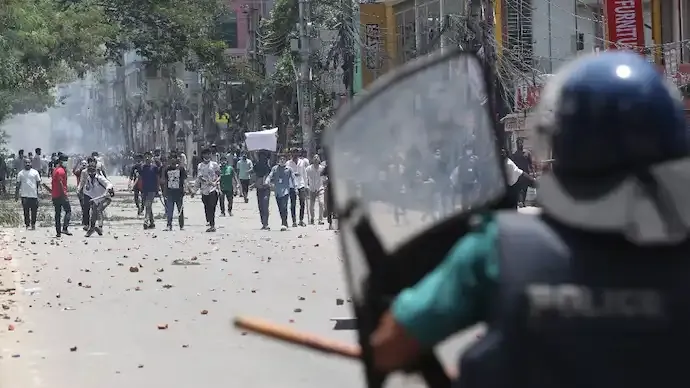
A special tribunal in Bangladesh has sentenced three senior police officials to death for their role in the violent crackdown on street protests in 2024 that culminated in the fall of the former government. The ruling marks a major moment in Bangladesh’s post-uprising accountability process and signals a tougher stance against security officials accused of excessive use of force during the unrest.
The verdict was delivered by Bangladesh’s International Crimes Tribunal (ICT-BD), which found the officers guilty of crimes against humanity for their actions during police firing on protesters in Dhaka’s Chankharpul area on August 5, 2024. Six civilians were killed that day as protests reached a boiling point and the government collapsed amid nationwide demonstrations.
Those sentenced to death include Habibur Rahman, the former Dhaka Metropolitan Police commissioner, Sudip Kumar Chakraborty, and Mohammad Akhtarul Islam, who served as an additional deputy commissioner at the time.
The three-judge bench held that the officers exercised direct command authority over forces deployed during the protests and were therefore liable under the doctrine of superior command responsibility. The tribunal ruled that the accused failed to prevent or stop unlawful use of lethal force by their subordinates, despite having the authority and opportunity to do so.
“This tribunal finds the accused guilty of crimes against humanity for ordering, facilitating and allowing indiscriminate firing on unarmed civilians,” the court said, awarding a single sentence of death to each of the three senior officers.
The trial was conducted in absentia for the death-row convicts, who were declared fugitives after failing to appear before the court. Several other police personnel were also convicted in the same case and handed prison sentences ranging from three to six years for their roles in the crackdown. Those officers were present in court during the proceedings.
This ruling marks the second verdict delivered by the restructured International Crimes Tribunal since it was revived following the political upheaval of 2024. Earlier, the tribunal had sentenced former Prime Minister Sheikh Hasina and her ex-home minister to death in absentia, holding them responsible for orchestrating a nationwide crackdown on student-led protests.
The court has repeatedly described the 2024 unrest as a defining chapter in Bangladesh’s political history, noting that security agencies were deployed with “unlawful intent” to suppress dissent through fear and violence. According to tribunal findings, hundreds were killed or injured during weeks of protests over governance, quotas and economic distress.
The chief prosecutor indicated that the state may challenge parts of the verdict, arguing that some punishments awarded to lower-ranking officers were inadequate given the gravity of the crimes. Legal proceedings are expected to continue, with appeals likely once fugitives are apprehended or new evidence emerges.
Since the collapse of the previous government, Bangladesh’s interim administration has pledged to pursue accountability through legal mechanisms rather than political retaliation. However, human rights groups remain divided, with some welcoming the verdict as long-overdue justice, while others raise concerns over due process and trials conducted in absentia.
As Bangladesh attempts to turn the page after one of its most turbulent periods in decades, the tribunal’s ruling underscores a broader effort to redefine the relationship between the state, its security forces and civil society — a process that will shape the country’s democratic trajectory in the years ahead.
Prev Article
Gregory Bovino Removed From US Border Patrol Role After Minneapolis Shooting Fallout
Next Article
Israel Recovers Last Hostage’s Remains, Clearing Path for Next Phase of Gaza Ceasefire