

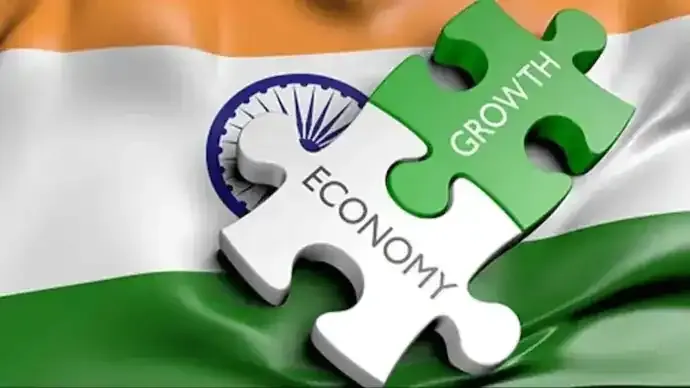
India is emerging as one of the most influential engines of global economic expansion, contributing nearly 20 percent of overall global growth, according to Borge Brende, President of the World Economic Forum. Speaking on the sidelines of the Davos 2026 meetings, Brende described India as the fastest-growing large economy in the world, underlining its rising strategic and economic importance.
At a time when the global geopolitical environment is increasingly fractured, Brende said India stands out for its economic confidence, policy continuity, and ability to sustain growth despite global headwinds. According to him, while the world is navigating its most complex geopolitical phase since 1945, global economic growth has remained resilient, crossing the 3 percent mark, largely supported by emerging economies — with India playing a central role.
India’s Expanding Role in the Global Economy
Brende noted that India’s contribution to global growth is no longer marginal or cyclical but structural. With strong domestic demand, expanding infrastructure, rising manufacturing output, and rapid digital adoption, India has become a stabilising force for the world economy at a time when many advanced economies are facing slower growth and demographic pressures.
He emphasised that India’s growth story is increasingly driven by internal strengths rather than external dependence, reflecting what he called “rising economic self-confidence”. This shift, Brende said, places India in a unique position to shape future global economic trends.
Geopolitics More Fragmented, Cooperation Still Possible
While acknowledging that global geopolitics are becoming more fragmented — marked by trade disputes, security tensions, and strategic competition — Brende stressed that cooperation remains possible in a highly competitive world.
Referring to recent tensions between Europe and the United States over Greenland and renewed trade friction among major powers, he said economic decoupling remains limited because global interdependence is still deep. In this context, India’s balanced foreign policy approach and expanding global partnerships position it as a key bridge between economic blocs.
Trade, Technology and the India–EU Opportunity
Brende also highlighted the growing momentum behind an India–European Union trade agreement, describing it as a potentially transformative deal that could unlock new investment flows, enhance supply chain resilience, and boost bilateral trade.
He pointed out that frontier technologies — particularly artificial intelligence, digital platforms, and advanced manufacturing — are emerging as the next major drivers of global growth. India’s expanding tech ecosystem and digital public infrastructure, he said, give it a strong advantage in leveraging these technologies at scale.
Global Risks Remain Elevated
Despite his optimistic assessment of India’s role, Brende cautioned that global risks remain elevated. He flagged concerns around rising global debt levels, financial fragility, and the increasing threat of black swan events, including cyber warfare and technology-driven disruptions.
On the geopolitical front, he expressed guarded optimism about the possibility of progress in resolving the Ukraine conflict in 2026, noting that any de-escalation would significantly improve global economic sentiment.
India’s Moment on the Global Stage
Brende’s remarks reinforce the growing consensus among global institutions that India is no longer just an emerging market, but a core driver of global growth and stability. With nearly one-fifth of global economic expansion now coming from India, its policy choices, reform momentum, and global engagement are set to have an outsized impact on the world economy in the years ahead.




Conversation
Be kind and stay on topic. Comments are moderated; abuse, spam and personal attacks are removed. Report a problem