



India’s economy grew 7.8% year-on-year in the April-June quarter of 2026-27, comfortably beating the Reserve Bank of India’s 7% forecast and highlighting continued strength despite global disruptions, high energy prices and the West Asia conflict.
The latest data released by the Ministry of Statistics and Programme Implementation showed that manufacturing and services were the key drivers of growth. Manufacturing expanded 9.2% in the June quarter, compared with 8.3% in the same period a year earlier, while the services sector grew 10%, up from 8% a year ago.
Chief Economic Adviser V Anantha Nageswaran described the performance as evidence of continued resilience in the Indian economy. Prime Minister Narendra Modi called the 7.8% growth figure a major achievement, while Finance Minister Nirmala Sitharaman said government reforms and economic management were supporting growth.

The June-quarter growth was, however, slower than the revised 8.6% expansion recorded in January-March. The previous quarter's growth estimate was also revised upward from 7.8%.
The latest figure was significantly higher than the 6.9% growth recorded in the April-June quarter of the previous year.
The stronger-than-expected performance has already prompted some economists to raise their forecasts for India's full-year growth. CareEdge Ratings increased its estimate for 2026-27 by 30 basis points to 7.3%, compared with the RBI's current full-year projection of 6.7%.
At the same time, the strong growth outlook could create a challenge for monetary policymakers if inflation continues to rise.

The RBI kept its repo rate unchanged at 5.25% on August 5. However, analysts have warned that faster economic growth, rising inflation, relatively low real interest rates and elevated oil prices could strengthen the case for a rate increase later this year.
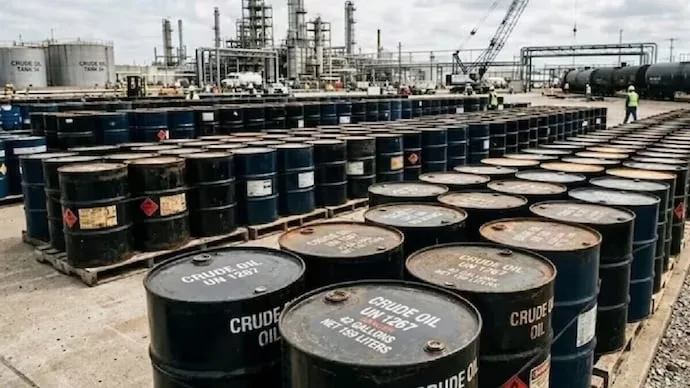
The West Asia conflict remains an important risk. Nageswaran said disruptions could last longer than initially expected and warned that crude oil prices may not fall materially and sustainably below $80 a barrel if supplies remain vulnerable.
Higher prices for petroleum products such as diesel and natural gas could also affect consumer spending in major economies, potentially creating indirect risks for global growth.
India's investment activity provided another major boost to the economy during the quarter. Gross fixed capital formation, a measure of investment, grew 11.9% in real terms, compared with 5.8% in the first quarter of 2025-26.
In nominal terms, investment growth was even stronger at 20.4%. The share of gross fixed capital formation in GDP increased to 34.3% during April-June, compared with 31.4% in the corresponding quarter last year.
Economists said the investment increase could be an important factor in making India's growth more broad-based. Private investment was reportedly supported by activity in areas such as data centres, power and metals.
Services also remained a major contributor. Financial, real estate, information technology, professional services and ownership of dwellings recorded 12.1% growth during the quarter, compared with 8.8% in the same period of 2025-26.
Gross value added, another measure of economic activity, increased 8.2% in April-June, compared with 7% a year earlier.
The latest national accounts data also included revisions to previous years. GDP growth for 2023-24, 2024-25 and 2025-26 was revised upward by 10 basis points each to 7.3%, 7.2% and 7.8%, respectively.
The revisions followed the incorporation of updated datasets, including the new output Producer Price Index, revised Index of Industrial Production data and the Banking Services Price Index.
Despite the strong first-quarter performance, economists expect India's growth momentum to moderate during the second half of 2026-27. The RBI's current projections put growth at 6.4% in July-September, 6.5% in October-December and 6.8% in January-March 2027.
For the full financial year, the RBI has retained its growth forecast at 6.7%.
The latest GDP figures therefore present a mixed picture for policymakers. India's growth remains stronger than expected, supported by manufacturing, services and investment, but persistent energy-price pressures and rising inflation could make the monetary policy outlook more challenging in the months ahead.







Conversation
Be kind and stay on topic. Comments are moderated; abuse, spam and personal attacks are removed. Report a problem