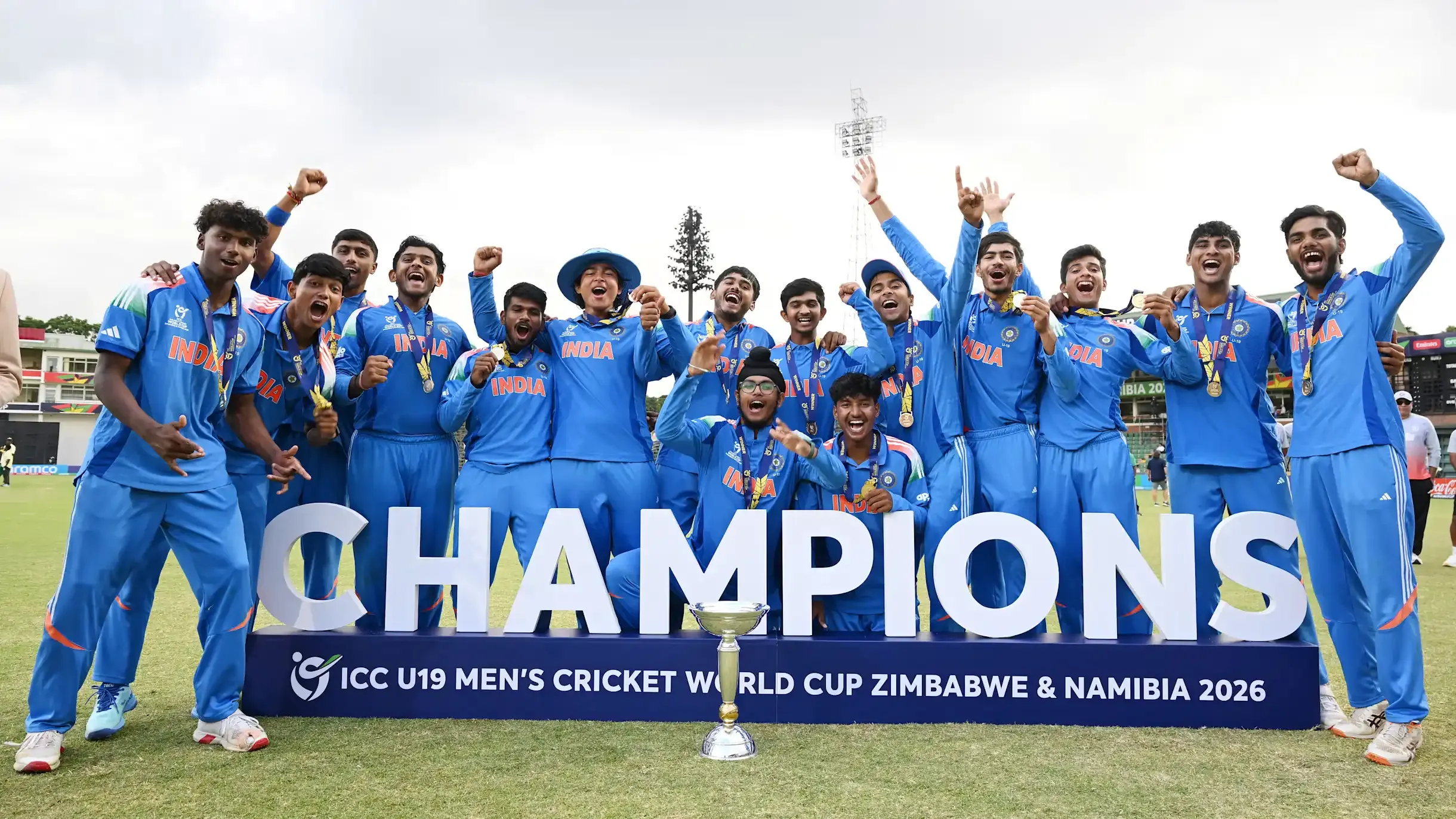
India’s Under-19 World Cup victory was not just another junior title. It felt like the arrival of a fearless generation led by explosive performances from players such as Vaibhav Sooryavanshi, whose unforgettable 175 in the final turned the tournament into a statement of dominance. This triumph showcased a team that combined aggression, discipline and remarkable maturity far beyond its age group.
From the early matches to the grand finale, India’s young cricketers played with clarity of purpose. Their approach was modern, data-driven and fearless, reflecting how youth cricket in India has evolved into a serious pathway toward international success.
Vaibhav Sooryavanshi: The Face of a New Era
At just 14, Vaibhav Sooryavanshi emerged as the defining star of the tournament. His 175-run knock in the final against England was not merely a big score; it was a display of calculated aggression. Fifteen sixes, crisp boundaries and complete control over the pace of the innings showed a player who already understands high-pressure cricket.
Throughout the tournament, Sooryavanshi played the role of an aggressor while also anchoring crucial phases. He adapted quickly to conditions, accelerated when needed and demonstrated a rare ability to read bowlers early. Such performances suggest that India’s next generation is arriving earlier, sharper and more confident than ever before.
Team Effort Behind the Headlines
While Sooryavanshi’s innings captured global attention, the victory was built on a collective effort. The Indian batting lineup consistently delivered starts, allowing the team to maintain pressure on opponents. Players like Aaron George and the middle-order unit contributed important runs during challenging moments, ensuring India rarely lost momentum.
The bowling attack played an equally vital role. Seamers struck early breakthroughs, while the spinners controlled the middle overs with disciplined lines and clever variations. Fielding standards were exceptional, turning half-chances into match-defining moments.
This balance between individual brilliance and team structure defined India’s campaign.
Leadership, Strategy and Mental Strength
One of the standout aspects of this World Cup was the team’s composure. The leadership group maintained calm during tense phases, allowing players to express themselves freely. Strategic decisions—whether field placements, bowling rotations or batting order adjustments—reflected strong preparation.
The coaching staff deserves credit for building a culture that prioritised clarity over pressure. Instead of burdening young players with expectations, the environment encouraged fearless cricket backed by tactical awareness.
This blend of freedom and structure is becoming the hallmark of India’s youth teams.
What This Victory Means for Indian Cricket
India’s Under-19 success reinforces the strength of its domestic pipeline. Junior tournaments, academies and early exposure to high-performance training have created cricketers who think like professionals from a young age.
This win also signals a shift in mindset. Today’s youth cricketers are comfortable blending traditional technique with modern T20-style aggression. They are physically fitter, mentally resilient and technologically aware, analysing match situations with remarkable precision.
For Indian cricket, the triumph is more than a trophy—it is proof that the future bench strength remains strong.
The Road Ahead for the Young Champions
History shows that Under-19 success is only the beginning. The real challenge lies in transitioning from youth dominance to consistent senior-level performance. Players like Vaibhav Sooryavanshi will now face increased scrutiny, higher expectations and tougher competition.
Careful management of workload, exposure to domestic leagues and gradual integration into senior squads will be crucial. If nurtured correctly, several members of this squad could shape India’s cricketing future for the next decade.
Prev Article
Pakistan Begin T20 World Cup Amid ICC Rift, Rain Threat and Boycott Fallout
Next Article
India vs Pakistan T20 World Cup Match Uncertain as ICC, PCB Hold Talks Over Boycott Threat