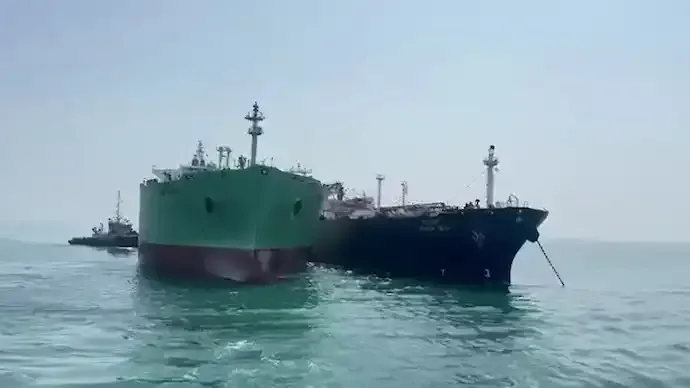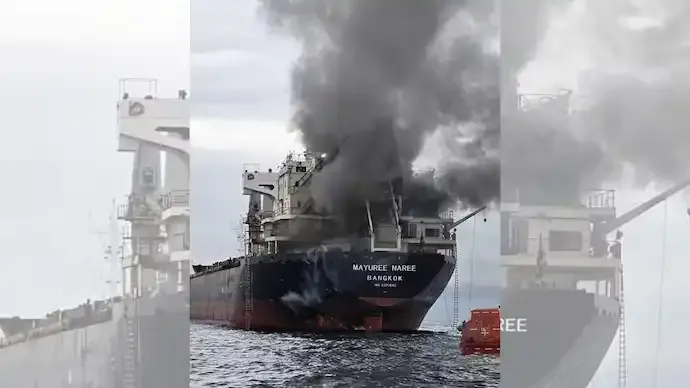
A dramatic maritime emergency unfolded in the Gulf of Oman after a tanker carrying 24 Indian seafarers was struck during a US military operation, triggering a fire onboard and prompting desperate distress calls from the crew. The incident involved the Palau-flagged tanker MT Marivex, which reportedly suffered significant damage following the strike, forcing crew members to seek immediate assistance as the vessel began taking on water.
Fortunately, all 24 Indian crew members were successfully rescued with assistance from Omani authorities, and no fatalities or serious injuries have been reported. The incident has once again highlighted the growing risks faced by commercial shipping vessels operating in the increasingly volatile waters of the Gulf region.
Crew Sent Urgent Distress Calls After Strike
According to reports, crew members aboard the MT Marivex issued repeated SOS messages after the vessel was struck. The distress calls described a rapidly deteriorating situation, with a fire breaking out onboard and damage causing the ship to take on water.
In messages sent to maritime authorities and nearby vessels, crew members reportedly warned that the tanker was sinking and requested urgent rescue assistance. The emergency communications reflected the panic and uncertainty experienced by the sailors as they struggled to assess the extent of the damage.
The tanker's condition reportedly worsened after the impact, raising concerns about the safety of everyone onboard and the possibility of a larger maritime disaster.
US Military Confirms Strike
Reports indicate that the United States military confirmed carrying out the operation, stating that the vessel had allegedly violated restrictions linked to Washington's blockade measures involving Iranian ports. US authorities said communication had taken place with the vessel before the action occurred.
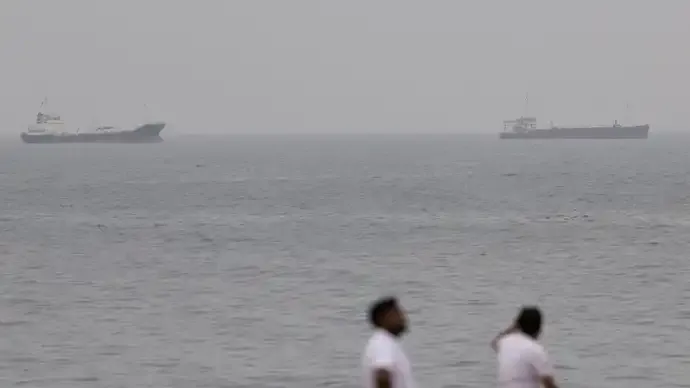
The incident has attracted international attention because it involved a commercial vessel staffed entirely by Indian nationals. Maritime analysts note that commercial shipping routes through the Gulf of Oman and the Strait of Hormuz remain among the world's most strategically important waterways.
The tanker was reportedly not carrying cargo at the time of the incident, reducing the risk of a major environmental disaster.
Oman Leads Rescue Operation
Following the distress alerts, Omani authorities launched a rescue operation to evacuate the crew. Working alongside relevant maritime agencies, rescue teams successfully brought all 24 Indian sailors to safety.
Indian authorities confirmed that all crew members were accounted for and safe. The swift response by Oman helped prevent what could have become a much more serious tragedy at sea.
The rescue operation has been widely praised by maritime organizations and shipping officials monitoring developments in the region.
Concerns Over Seafarer Safety
The incident has renewed concerns regarding the safety of merchant sailors operating in conflict-prone waters. Shipping unions and maritime organizations have repeatedly warned that commercial vessels are increasingly being exposed to geopolitical tensions beyond their control.
Industry representatives argue that seafarers should not become unintended victims of military confrontations and regional disputes. The latest attack has reignited discussions about stronger protections for civilian shipping and crew members navigating international waters.
With thousands of Indian seafarers employed on international vessels, incidents like these continue to be closely monitored by both the shipping industry and government authorities.
Growing Tensions in Gulf Shipping Routes
The Gulf of Oman and the Strait of Hormuz remain critical corridors for global energy supplies and international trade. Any disruption in these waters can have significant implications for shipping, energy markets, and regional stability.
Recent months have witnessed heightened tensions involving military operations, sanctions enforcement, and maritime security concerns. The attack on MT Marivex is likely to add to ongoing debates regarding the safety of commercial navigation in the region.
While all 24 Indian crew members escaped unharmed, the incident serves as a reminder of the risks faced by seafarers working in one of the world's most sensitive maritime zones.