
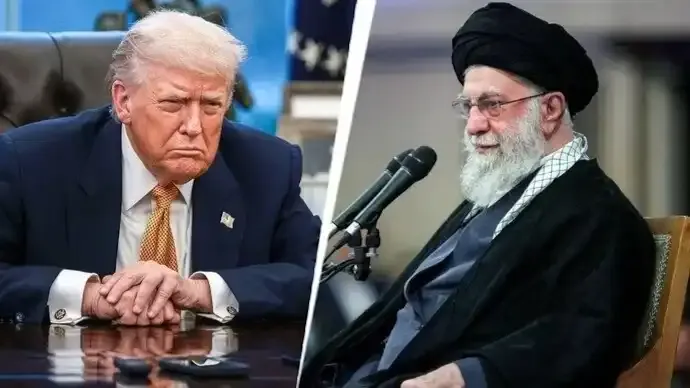
Tensions between Iran and the United States have escalated sharply after Tehran issued a stark warning that any attack on Supreme Leader Ayatollah Ali Khamenei would amount to an all-out war against the Iranian nation. The warning comes amid reports that the death toll linked to nationwide unrest has crossed 5,000, deepening concerns about the rapidly deteriorating situation.
Iranian President Masoud Pezeshkian said in a post on X that Iran’s response to what he described as “any unjust aggression” would be harsh and regrettable. He stressed that targeting the country’s supreme leader would be seen not merely as an attack on an individual, but as a direct assault on Iran’s sovereignty and people, inevitably triggering a full-scale conflict.
The remarks were widely seen as a response to statements by US President Donald Trump, who has repeatedly warned of possible intervention if violence against protesters continues. In recent comments, Trump suggested it may be time for “new leadership” in Iran, adding fuel to already volatile relations between Washington and Tehran.
Iranian leaders have accused the US and its allies, particularly Israel, of orchestrating unrest inside Iran. President Pezeshkian blamed long-standing hostility and economic sanctions for worsening living conditions, arguing that external pressure has played a major role in fuelling public anger and instability.
Despite the sharp rhetoric, mixed signals have emerged from both sides. Trump recently acknowledged that Iranian authorities had temporarily halted planned executions of hundreds of detainees, even as the US moved additional military assets into the region. However, Washington has not outlined any concrete next steps, keeping the international community guessing about its intentions.
Iran’s leadership, meanwhile, has doubled down. Ayatollah Khamenei labelled Trump a “criminal” and acknowledged that several thousand people had died during the unrest, while insisting that violence was driven by foreign-backed terrorists and rioters rather than genuine domestic dissent.
The protests initially erupted in Tehran, starting at the Grand Bazaar over economic grievances before rapidly spreading nationwide. Demonstrations soon took on a political character, with protesters openly challenging clerical rule. Participants reportedly came from across society, including shopkeepers, students, and working-class families, cutting across income and social divisions.
Authorities responded with a heavy security crackdown, deploying forces across major cities and imposing repeated internet shutdowns. While large-scale demonstrations have eased in recent days, reports of deaths, arrests, and alleged abuses have continued to surface. Internet monitoring groups have noted intermittent restorations of connectivity, followed by fresh disruptions.
Adding to fears of further escalation, Iran’s judiciary has indicated that executions linked to the unrest could still proceed. Officials said certain acts have been classified as “Mohareb,” an Islamic legal designation meaning waging war against God, which carries the death penalty. This has raised alarm among human rights observers, who warn that such measures could inflame tensions further.
Some of the heaviest clashes have reportedly occurred in Iran’s Kurdish regions, where officials claim armed groups attempted cross-border incursions from Iraq. Tehran has repeatedly blamed foreign actors for the violence, rejecting claims that the unrest reflects deep-rooted domestic dissatisfaction.
As rhetoric hardens on both sides, fears are growing that miscalculation could push the standoff into open conflict. With Iran warning that any strike on its supreme leader would mean war, the crisis now stands at a critical and dangerous juncture for the wider Middle East.



Conversation
Be kind and stay on topic. Comments are moderated; abuse, spam and personal attacks are removed. Report a problem