Shopping cart
Your cart empty!


Your cart empty!
Terms of use dolor sit amet consectetur, adipisicing elit. Recusandae provident ullam aperiam quo ad non corrupti sit vel quam repellat ipsa quod sed, repellendus adipisci, ducimus ea modi odio assumenda.
Lorem ipsum dolor sit amet consectetur adipisicing elit. Sequi, cum esse possimus officiis amet ea voluptatibus libero! Dolorum assumenda esse, deserunt ipsum ad iusto! Praesentium error nobis tenetur at, quis nostrum facere excepturi architecto totam.
Lorem ipsum dolor sit amet consectetur adipisicing elit. Inventore, soluta alias eaque modi ipsum sint iusto fugiat vero velit rerum.
Sequi, cum esse possimus officiis amet ea voluptatibus libero! Dolorum assumenda esse, deserunt ipsum ad iusto! Praesentium error nobis tenetur at, quis nostrum facere excepturi architecto totam.
Lorem ipsum dolor sit amet consectetur adipisicing elit. Inventore, soluta alias eaque modi ipsum sint iusto fugiat vero velit rerum.
Dolor sit amet consectetur adipisicing elit. Sequi, cum esse possimus officiis amet ea voluptatibus libero! Dolorum assumenda esse, deserunt ipsum ad iusto! Praesentium error nobis tenetur at, quis nostrum facere excepturi architecto totam.
Lorem ipsum dolor sit amet consectetur adipisicing elit. Inventore, soluta alias eaque modi ipsum sint iusto fugiat vero velit rerum.
Sit amet consectetur adipisicing elit. Sequi, cum esse possimus officiis amet ea voluptatibus libero! Dolorum assumenda esse, deserunt ipsum ad iusto! Praesentium error nobis tenetur at, quis nostrum facere excepturi architecto totam.
Lorem ipsum dolor sit amet consectetur adipisicing elit. Inventore, soluta alias eaque modi ipsum sint iusto fugiat vero velit rerum.
Do you agree to our terms? Sign up
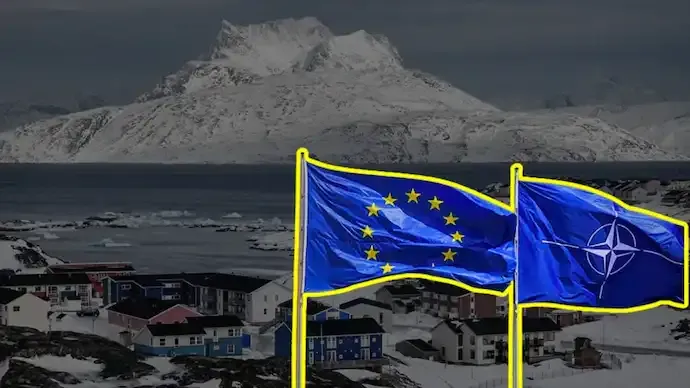
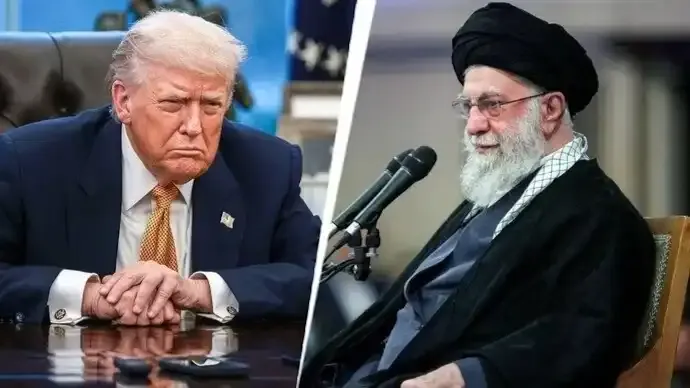
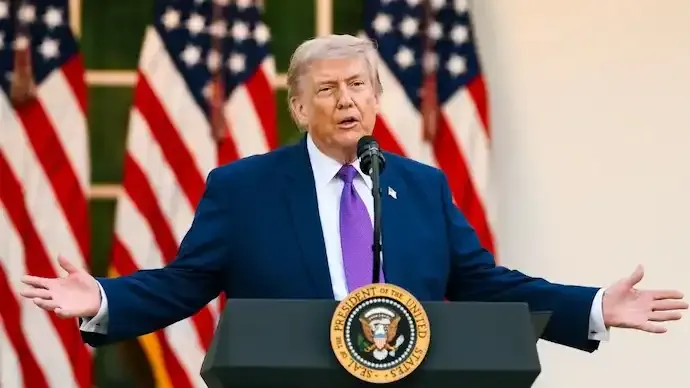
Europe has taken its first collective military step in response to repeated threats by US President Donald Trump over Greenland, but the scale of the deployment has raised serious questions about the continent’s preparedness to defend strategic territory without American backing. While European leaders have voiced strong political support for Denmark and its sovereignty over Greenland, the actual military commitment remains strikingly limited.
As part of what has been termed a “reconnaissance mission,” several European nations have agreed to send small military contingents to Greenland. The United Kingdom and the Netherlands are each sending one military officer, while Finland and Sweden have committed two personnel each. Norway has also dispatched two soldiers. Germany and France have contributed larger teams, but the total non-Danish European deployment stands at an estimated 37 personnel.
The move comes amid escalating rhetoric from Trump, who has repeatedly argued that Greenland is vital to US national security due to alleged Russian and Chinese activity in the Arctic. Denmark’s Arctic commander, however, has publicly dismissed claims of hostile naval presence near Greenland, calling the idea of armed confrontation between NATO allies “hypothetical.”
The deployment is taking place under Operation Arctic Endurance, a NATO military exercise led by Denmark but notably excluding the United States. The operation is intended to assess the feasibility of increased European military presence in the Arctic rather than to serve as a full-fledged defence mission. Danish Defence Minister Troels Lund Poulsen has described the exercise as a way to strengthen cooperation and operational capability in the Arctic region.
Denmark remains the largest contributor, with around 150 troops already stationed in Greenland under its Joint Arctic Command. These include the elite Sirius Dog Sled Patrol, a 14-member unit responsible for enforcing Danish sovereignty across Greenland’s remote terrain. However, their limited equipment underscores the symbolic nature of the current posture rather than any readiness for large-scale conflict.
Not all NATO members have participated. Poland, Italy, and Turkey—countries with comparatively strong militaries—have declined to send troops. Italian officials reportedly described the operation as irrational, while Poland stated it would not deploy forces to Greenland.
The Greenland episode has reignited debate over Europe’s broader defence capability. Decades of reduced military spending following the Cold War left many European states heavily reliant on the US for deterrence and large-scale military operations. The Russia-Ukraine war exposed these vulnerabilities, highlighting Europe’s difficulty in sustaining prolonged conflict without American support.
Although several countries have announced major defence investments—France increasing its military budget, Poland planning a massive force expansion, Finland maintaining high readiness, and Germany rebuilding the Bundeswehr—analysts remain sceptical. Studies suggest Europe would struggle to rapidly deploy even 50,000 troops, a stark contrast to the hundreds of thousands involved in modern conflicts.
With the US signalling that Europe must take greater responsibility for its own security, the limited troop deployment to Greenland has become emblematic of a deeper strategic dilemma. While politically unified against Trump’s threats, Europe’s modest military response has underscored how far it still is from defending key interests independently in an era of rising geopolitical tension.
87
Published: Jan 19, 2026

All India Story is your trusted source for comprehensive and up-to-the-minute news coverage across India. Bringing you the latest on politics, business, technology, entertainment, sports, and more, we are dedicated to keeping you informed with accurate, engaging, and insightful stories from every corner of the nation.