



The newly signed India–European Union Free Trade Agreement has emerged as a central talking point in Assam’s election campaign, with Union Home Minister Amit Shah projecting the deal as a game-changer for the state’s tea economy. Addressing a rally in Dibrugarh, one of India’s largest tea-producing regions, Shah said the agreement would ensure that tea from Assam reaches European households without facing tariffs.
Speaking at the Khanikar Parade Ground, Shah said the India-EU trade pact would allow tea shipments from Assam to enter all 27 European Union member states with zero import duties. According to him, this would significantly benefit tea growers, exporters and labourers across Upper Assam, a region that plays a decisive role in the state’s electoral arithmetic.
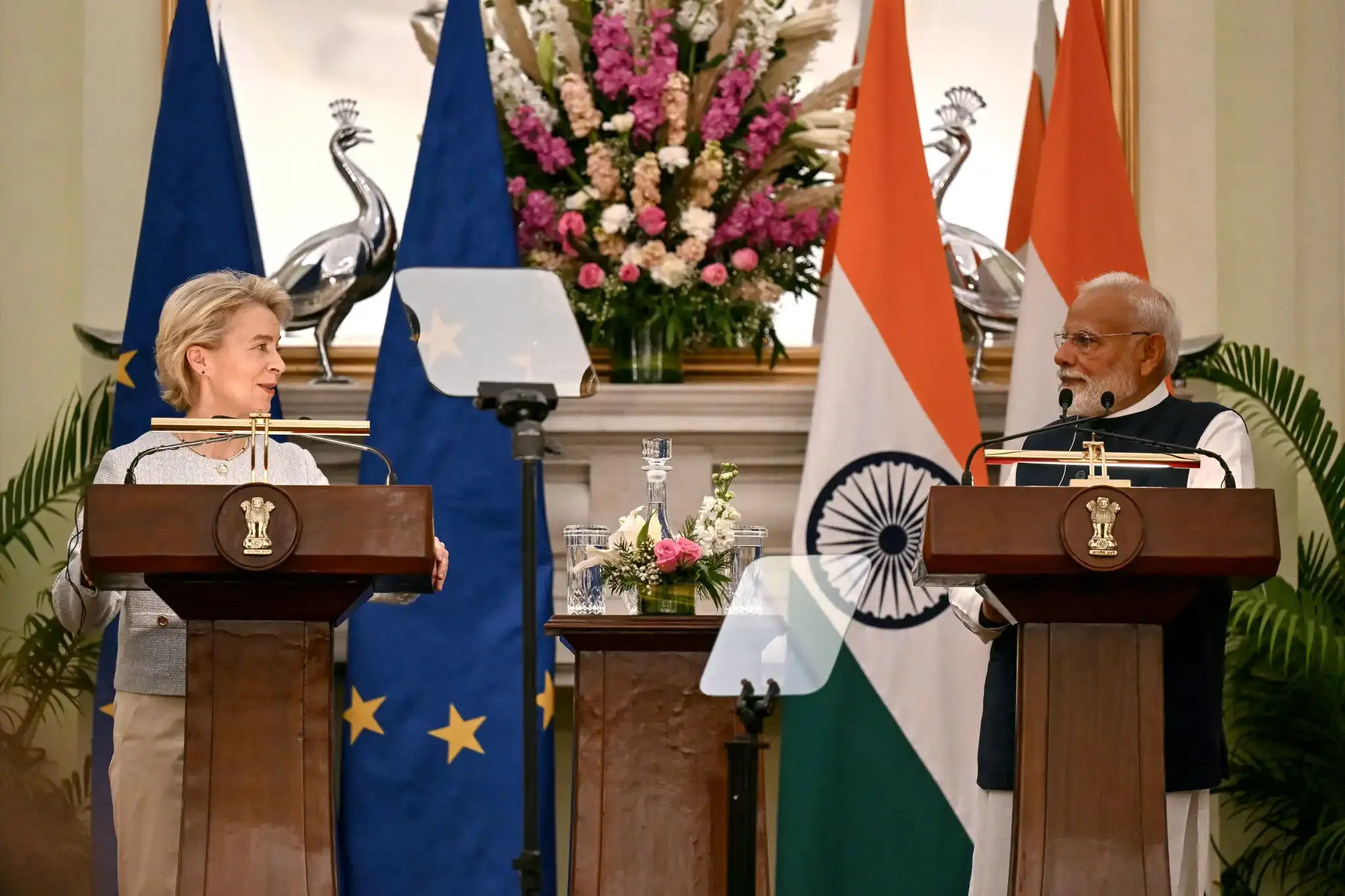
“A few days ago, India and the EU sealed the Free Trade Agreement. Its biggest benefit will be felt here in Dibrugarh. Tea from Assam’s gardens will now be poured into cups across Europe,” Shah said, adding that Prime Minister Narendra Modi had taken Assam tea to the global stage through the pact.

With Assam Assembly elections expected in the coming months, the BJP has sharpened its focus on Upper Assam, where tea garden communities form a substantial voting bloc. Dibrugarh, often referred to as the “tea capital of Assam”, has been identified by Chief Minister Himanta Biswa Sarma as the state’s second administrative capital, adding further political weight to Shah’s visit.
Beyond rhetoric, Shah also laid foundation stones for development projects worth Rs 825 crore, including the proposed second Assembly complex, signalling the BJP’s intent to decentralise governance and reinforce its development narrative ahead of the polls.
Upper Assam is not only the heart of the tea industry but also the traditional stronghold of the Ahom community, which is politically influential across districts such as Sivasagar, Charaideo, Jorhat, Golaghat, Dibrugarh and Tinsukia. Many of these districts are major tea-producing centres. While the Ahoms were once core supporters of the Congress, electoral trends in recent years suggest a gradual shift towards the BJP, driven by economic promises and welfare initiatives.
By linking the India-EU FTA directly to tea growers’ incomes and export opportunities, the BJP appears to be consolidating support among tea garden workers and associated communities. The strategy also complements outreach efforts aimed at the Ahoms, a demographic that has played a crucial role in recent Assembly and Lok Sabha outcomes.
Economically, the stakes are significant. Assam accounts for over half of India’s total tea production and produces more than 600 million kilograms annually. Assam Orthodox Tea also holds a Geographical Indication (GI) tag and enjoys strong demand in European markets, particularly in countries such as Germany and Poland. Zero-duty access under the FTA is expected to enhance competitiveness against rivals like Sri Lanka, Kenya and China.
The India-EU FTA, finalised after nearly two decades of negotiations, is being described as one of the most ambitious trade deals India has signed. Once operational, possibly by 2027, it will eliminate tariffs on over 99% of India’s exports by value to the EU.
For Assam, the BJP is framing the agreement not just as a trade milestone, but as a political promise — one that ties global diplomacy to local livelihoods in an election-bound state.





Conversation
Be kind and stay on topic. Comments are moderated; abuse, spam and personal attacks are removed. Report a problem