

India and the European Union are set to formally announce the conclusion of negotiations on a comprehensive Free Trade Agreement (FTA) today, marking a historic breakthrough after nearly two decades of discussions. The agreement, often described by policymakers as the “mother of all deals,” is expected to significantly reshape trade, investment and strategic cooperation between New Delhi and Brussels.
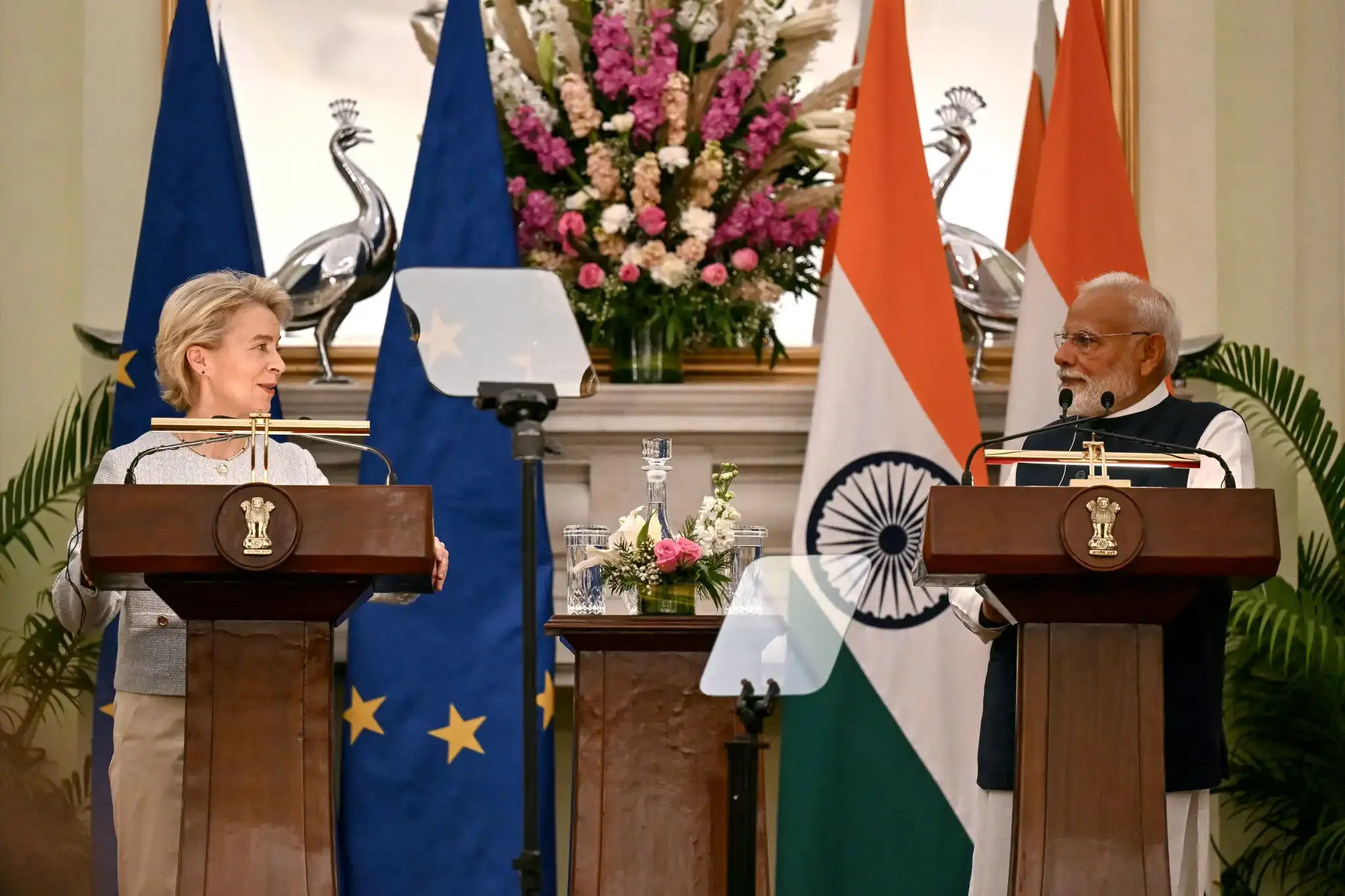
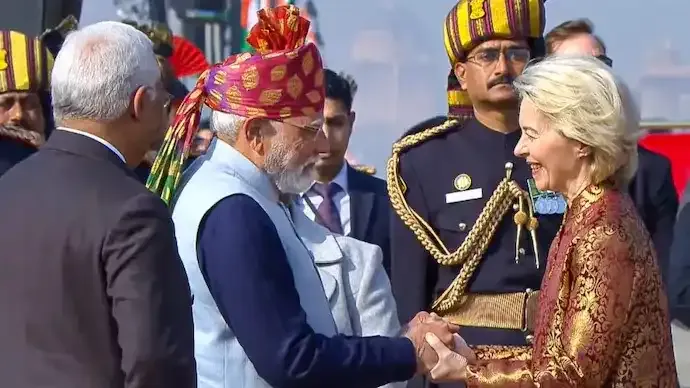
The announcement will be made at a high-level summit in New Delhi, hosted by Prime Minister Narendra Modi, with the participation of Ursula von der Leyen and Antonio Costa. Alongside the trade pact, the summit is also expected to finalise a strategic defence partnership and a framework to enhance the mobility of skilled professionals.
The FTA brings to a close negotiations that began in 2007 and were stalled for years due to differences over market access, tariffs and regulatory standards. Its conclusion is being seen as a major geopolitical and economic milestone, especially at a time when global trade is facing disruption due to protectionist policies and higher tariffs in several major economies.
Officials have indicated that the agreement covers 24 chapters, spanning trade in goods, services and investment, while parallel negotiations on investment protection and Geographical Indications (GI) are also nearing completion. Legal vetting of the text is currently underway, with the pact expected to be formally signed later this year and come into force in early 2027, subject to approvals.
In India, the agreement will require clearance from the Union Cabinet, while on the European side it must be ratified by the European Parliament, a process that could take several months.
Major Boost for Trade and Export Diversification
The India–EU FTA is expected to deliver substantial tariff relief for Indian exporters, particularly in labour-intensive sectors such as textiles, garments, leather, footwear, gems and jewellery, chemicals and engineering goods. At present, while the EU’s average tariff on Indian goods stands at around 3.8 per cent, duties on several labour-intensive products are close to 10 per cent.
India, on the other hand, maintains higher average tariffs on EU goods, especially in sensitive sectors such as automobiles, pharmaceuticals, chemicals and plastics. Under the FTA, both sides are expected to eliminate or significantly reduce duties on more than 90 per cent of traded goods, while also easing market access in services including telecommunications, transport, accounting and professional services.
The pact is expected to help Indian exporters diversify markets, reduce dependence on traditional destinations and lower reliance on China for critical supply chains.
Strategic Significance in a Shifting Global Order
Beyond trade volumes, the agreement is viewed as a strategic response to growing global uncertainty. With exporters facing sharply higher tariffs in some markets, the India–EU FTA offers a stable and predictable framework for long-term economic cooperation.
The European Union is India’s largest trading partner in goods, with bilateral trade touching over $136 billion in the last financial year. Services trade between the two sides has also crossed $83 billion, highlighting the depth of the economic relationship.
India’s key exports to the EU include petroleum products, electronics, textiles, machinery, pharmaceuticals, auto components and agricultural products, while major imports range from industrial machinery and aircraft to medical devices, chemicals and advanced technology equipment.
The agreement is also expected to reinforce India’s broader trade strategy. Since 2014, the government has concluded major trade pacts with partners including Australia, the UAE, the UK, the EFTA bloc and Mauritius, positioning the India–EU deal as one of the most ambitious among them.
As global trade realigns, the India–EU FTA is set to become a cornerstone of India’s economic diplomacy, strengthening its role as a reliable manufacturing, services and strategic partner on the world stage.



Conversation
Be kind and stay on topic. Comments are moderated; abuse, spam and personal attacks are removed. Report a problem