



NASA has called off its ambitious attempt to rescue the Neil Gehrels Swift Observatory after the spacecraft designed to save it encountered persistent technical problems in orbit.
The Link spacecraft, developed by Katalyst Space, was supposed to rendezvous with Swift, capture the ageing observatory and raise it into a higher orbit. However, failures involving its reaction wheels and cold-gas thruster system have made the original rescue plan unfeasible.
Swift, which has spent more than two decades studying some of the universe's most powerful explosions, is now expected to eventually re-enter Earth's atmosphere and burn up.

Link spacecraft will no longer rescue Swift
NASA and Katalyst Space announced that Link will not attempt to capture or raise the Swift Observatory.

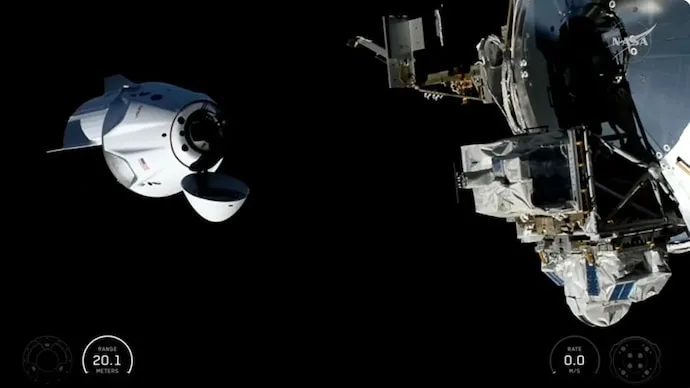
Instead, the spacecraft will continue its mission by attempting to rendezvous with Swift and operate nearby. The objective is to collect engineering data and demonstrate technologies that could help shape future missions designed to inspect, repair or service satellites in orbit.
The mission was considered a major test of commercial satellite-servicing technology, as rescuing an existing spacecraft that was never designed for in-orbit servicing presents significant technical challenges.
What went wrong with the Link spacecraft?
Link was launched on July 3, 2026, aboard a Northrop Grumman Pegasus XL rocket over the Marshall Islands.
Initial checks appeared successful, and NASA said the spacecraft's power and propulsion systems had been commissioned. An early issue involving one of its reaction wheels was addressed through software modifications and operational changes.

However, more serious problems soon emerged.
By July 28, two of Link's three reaction wheels were no longer functioning properly, while its cold-gas thruster system had also lost some capability. The failures caused the spacecraft to spin, affecting communication and its ability to maintain proper orientation in space.
Engineers attempted to stabilise Link using a series of thruster burns. The spacecraft's spin rate was reduced from around 9 degrees per second to below 4 degrees per second by July 31.
Despite those efforts, the control problems continued, forcing NASA and Katalyst Space to abandon the original plan to capture and reposition Swift.
Why was NASA trying to save Swift?
The Neil Gehrels Swift Observatory was launched on November 20, 2004, with an original mission designed to last only around two years.
Instead, Swift continued operating for more than two decades.
The space observatory was built primarily to detect and study gamma-ray bursts, among the most energetic explosions in the universe. It carries instruments capable of observing gamma rays, X-rays, ultraviolet radiation and visible light.
One of Swift's key strengths is its ability to rapidly turn towards a newly detected gamma-ray burst and observe its fading afterglow. These observations have helped scientists study exploding stars, neutron star mergers and other extreme cosmic events.
Why is Swift falling towards Earth?
Swift's orbit has been gradually declining, with increased solar activity adding to atmospheric drag in Earth's upper atmosphere.
NASA had hoped that Link could extend the observatory's operational life by moving it into a higher orbit.
The agency awarded Katalyst Space the contract in September 2025 to design, build, test and launch the spacecraft within an unusually short timeframe.
With the rescue mission now abandoned, Swift is expected to continue descending until it eventually re-enters Earth's atmosphere later this year.
Mission may still help future satellite servicing
Although Link will not save Swift, NASA believes the spacecraft could still provide valuable experience for future in-orbit servicing missions.
The planned rendezvous attempt could demonstrate technologies required for spacecraft inspection, navigation and operations near another satellite.
The mission highlights both the promise and difficulty of extending the lives of ageing spacecraft. While NASA's attempt to save one of its longest-serving observatories has fallen short, the lessons from Link could help future missions repair, refuel or reposition satellites rather than allowing them to become space debris or burn up in Earth's atmosphere.
For Swift, however, time is running out.






Conversation
Be kind and stay on topic. Comments are moderated; abuse, spam and personal attacks are removed. Report a problem