

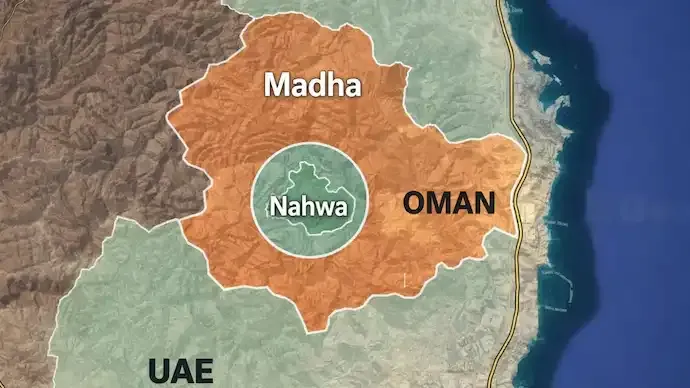

The geography of Oman and the United Arab Emirates is one of the most fascinating in the world. Unlike most nations with clearly defined borders, these two Gulf countries have enclaves within each other, creating a complex and unusual map.

This rare arrangement is the result of historical agreements, tribal influences, and regional politics that evolved over centuries.

What Makes This Geography So Unique?
The most striking feature is that Oman has territory inside the UAE, and within that, the UAE has territory again inside Oman.
This creates a layered structure:
-
Oman enclave inside UAE
-
UAE enclave inside that Omani enclave
This kind of nested geography is extremely rare globally.
Madha: Oman Inside UAE
The primary example is Madha, a small territory belonging to Oman but completely surrounded by the UAE.
Key facts about Madha:
-
It is governed by Oman
-
It lies within UAE territory
-
Residents often interact with both countries
Madha exists due to historical tribal decisions rather than modern political borders.
Nahwa: UAE Inside Oman Inside UAE
Inside Madha lies Nahwa, a small village that belongs to the UAE (specifically the Emirate of Sharjah).
So geographically:
-
Nahwa (UAE) is inside
-
Madha (Oman), which is inside
-
UAE territory
This makes it a second-order enclave, a very rare phenomenon worldwide.
How Did This Happen?
The unusual borders date back to the early 20th century, when local tribes were asked to choose allegiance between Oman and nearby emirates.
Instead of drawing straight borders, decisions were made based on:
-
Tribal loyalty
-
Access to resources
-
Political agreements
As a result, enclaves like Madha and Nahwa were formed.
Strategic Importance of the Region
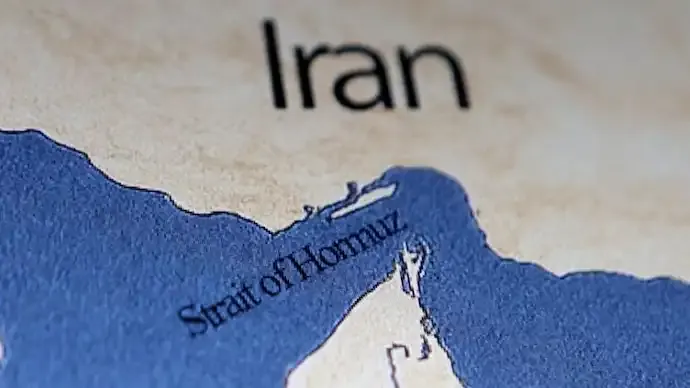
This region lies close to the Strait of Hormuz, one of the world’s most critical shipping routes.
Why it matters:
-
A significant portion of global oil passes through here
-
Ports like Fujairah play a key role in trade
-
Regional stability directly impacts global energy supply
This makes the geography not just unique, but also strategically important.
A Contrast to Global Border Conflicts
At a time when many countries are involved in territorial disputes, Oman and the UAE offer a different perspective.
Despite complex borders:
-
Both countries maintain peaceful relations
-
Movement between enclaves is largely smooth
-
Cooperation outweighs conflict
This reflects how historical complexities can coexist with modern diplomacy.
A Rare Example in World Geography
Globally, such nested enclaves are extremely uncommon. The Oman-UAE case is often studied in geography as an example of:
-
Political compromise
-
Tribal influence on borders
-
Peaceful coexistence despite complexity
Why This Matters Today
Understanding this geography helps explain:
-
Regional politics in the Gulf
-
Strategic importance of border regions
-
How history shapes modern nations
It also highlights that even the most complicated borders can function smoothly when backed by cooperation and mutual respect.








Conversation
Be kind and stay on topic. Comments are moderated; abuse, spam and personal attacks are removed. Report a problem