

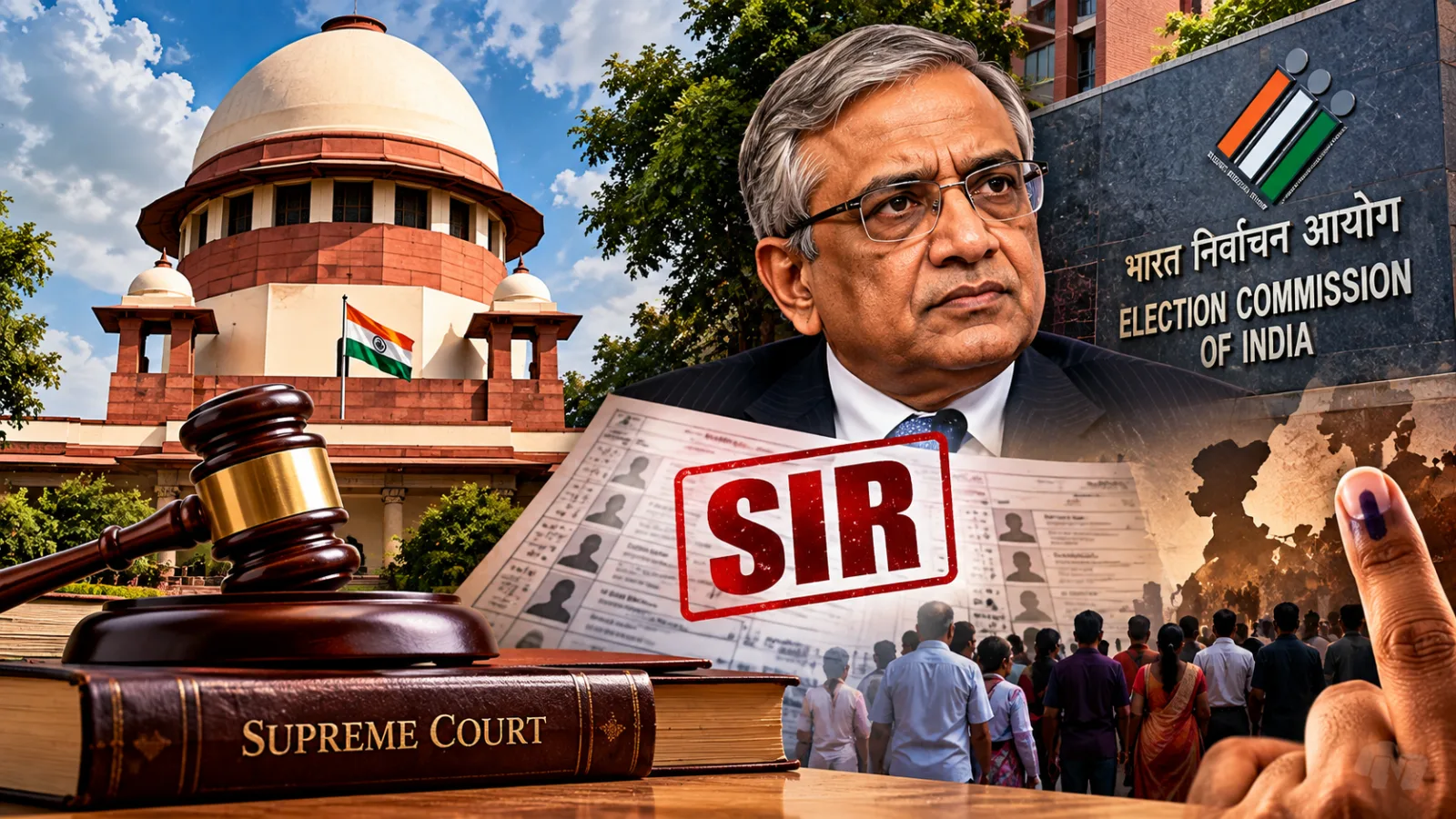

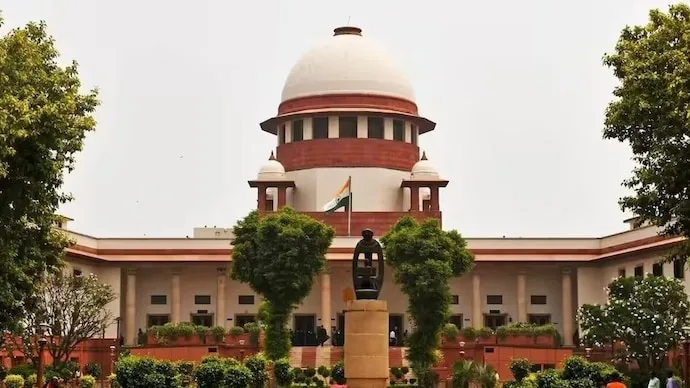
The Supreme Court ECI SIR row hearing has put the Election Commission's decision-making process under scrutiny after petitions alleged that key decisions were taken without the required consensus among the poll panel's three commissioners.
The petitions challenged decisions linked to the Special Intensive Revision (SIR) exercise and changes to voter registration Form 6. The petitioners alleged that the decisions breached statutory provisions under the Election Commission Act requiring decisions to be taken through unanimity or majority consensus.
A bench comprising Chief Justice Surya Kant, Justice Joymalya Bagchi and Justice V. Mohana issued notices to the Election Commission of India, Chief Election Commissioner Gyanesh Kumar and the government.

No Interim Stay on CEC Gyanesh Kumar
The apex court, however, declined to pass an interim order seeking the suspension of CEC Gyanesh Kumar based on media reports.
The court stressed that constitutional bodies are required to function according to the law. It also observed that if any decision is ultimately found to be improper or unlawful, it can be set aside.
The court has given the Election Commission, the election commissioners and the government one week to submit their responses.
Court Seeks Official Records
As part of the proceedings, the Supreme Court has also sought relevant official documents explaining how the disputed decisions were authorised.
The records are expected to include file notings, meeting minutes and other documents relating to the decisions on SIR and Form 6.
The documents could become important in determining whether the Election Commission followed the required statutory decision-making procedure.
The case comes amid continuing political and legal scrutiny of the SIR exercise and its potential impact on electoral rolls. The court's decision to seek official records means the focus will now shift from allegations made in the petitions to the actual process followed by the poll panel.
For now, the Supreme Court has stopped short of interfering with the CEC's position, while making it clear that decisions of constitutional bodies remain subject to legal scrutiny.
Relevant Link: Election Commission of India







Conversation
Be kind and stay on topic. Comments are moderated; abuse, spam and personal attacks are removed. Report a problem