Shopping cart
Your cart empty!


Your cart empty!
Terms of use dolor sit amet consectetur, adipisicing elit. Recusandae provident ullam aperiam quo ad non corrupti sit vel quam repellat ipsa quod sed, repellendus adipisci, ducimus ea modi odio assumenda.
Lorem ipsum dolor sit amet consectetur adipisicing elit. Sequi, cum esse possimus officiis amet ea voluptatibus libero! Dolorum assumenda esse, deserunt ipsum ad iusto! Praesentium error nobis tenetur at, quis nostrum facere excepturi architecto totam.
Lorem ipsum dolor sit amet consectetur adipisicing elit. Inventore, soluta alias eaque modi ipsum sint iusto fugiat vero velit rerum.
Sequi, cum esse possimus officiis amet ea voluptatibus libero! Dolorum assumenda esse, deserunt ipsum ad iusto! Praesentium error nobis tenetur at, quis nostrum facere excepturi architecto totam.
Lorem ipsum dolor sit amet consectetur adipisicing elit. Inventore, soluta alias eaque modi ipsum sint iusto fugiat vero velit rerum.
Dolor sit amet consectetur adipisicing elit. Sequi, cum esse possimus officiis amet ea voluptatibus libero! Dolorum assumenda esse, deserunt ipsum ad iusto! Praesentium error nobis tenetur at, quis nostrum facere excepturi architecto totam.
Lorem ipsum dolor sit amet consectetur adipisicing elit. Inventore, soluta alias eaque modi ipsum sint iusto fugiat vero velit rerum.
Sit amet consectetur adipisicing elit. Sequi, cum esse possimus officiis amet ea voluptatibus libero! Dolorum assumenda esse, deserunt ipsum ad iusto! Praesentium error nobis tenetur at, quis nostrum facere excepturi architecto totam.
Lorem ipsum dolor sit amet consectetur adipisicing elit. Inventore, soluta alias eaque modi ipsum sint iusto fugiat vero velit rerum.
Do you agree to our terms? Sign up
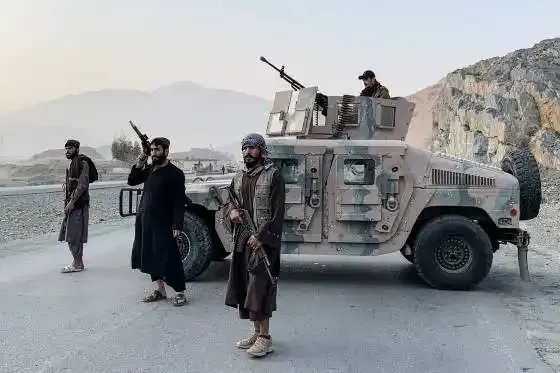
In a significant diplomatic development, a Taliban delegation held closed-door discussions with European Union officials and representatives from 15 EU member states in Brussels. The meeting focused primarily on diplomatic services and the issue of Afghan nationals being returned from Europe, marking one of the most notable direct engagements between the Taliban administration and European representatives since the group's return to power in Afghanistan.
The discussions have generated considerable debate across Europe, highlighting the growing tension between migration management policies and concerns over human rights in Afghanistan.
The meeting reportedly centered on two key issues:
The Taliban delegation described the discussions as relating to a "dignified return process" for Afghans who may be sent back from Europe.
Several European governments are currently facing increasing pressure to address migration challenges and process asylum applications more efficiently. As a result, some countries have been exploring mechanisms for returning individuals whose asylum claims have been rejected or who face legal issues in their host nations.
The question of Afghan returns has become increasingly important across Europe as governments reassess migration and asylum policies.
Some European leaders argue that stronger return mechanisms are necessary to maintain credibility in immigration systems, while critics warn that returning individuals to Afghanistan could expose them to significant risks.
Despite the meeting, no European Union member state formally recognizes the Taliban government as the legitimate government of Afghanistan.
Officials emphasized that hosting discussions does not constitute diplomatic recognition.
European authorities have maintained that:
Belgian authorities also stressed that facilitating the meeting should not be interpreted as granting legitimacy to the Taliban administration.
The talks have attracted criticism from several human rights organizations and advocacy groups.
Critics argue that engagement with the Taliban should prioritize:
Many activists fear that discussions focused primarily on deportations and returns could overshadow ongoing concerns regarding civil liberties and human rights conditions inside Afghanistan.
Although formal recognition remains absent, practical realities have pushed several governments toward limited engagement.
Diplomatic experts note that governments often engage with authorities controlling territory even without formally recognizing them.
Since the Taliban regained control of Afghanistan in 2021, the country has faced significant economic, humanitarian, and political challenges.
International attention has focused on:
These issues continue to influence how foreign governments approach relations with Afghanistan.
The Brussels meeting also reflects differing views within Europe regarding Afghanistan policy.
Some governments favor greater practical engagement to address migration and security concerns, while others remain cautious due to human rights issues.
These divisions are likely to shape future discussions within the European Union.
The Brussels talks may serve as a foundation for future technical discussions on migration and consular matters.
However, significant challenges remain before any broader understanding can be reached.
Future discussions are expected to continue focusing on:
Whether such engagement expands will depend largely on political developments both within Afghanistan and across Europe.
The meeting represents a significant moment in post-2021 relations between Europe and Afghanistan's current authorities.
It highlights the complex balance governments must strike between:
As Europe faces growing migration pressures, the debate over how to engage with the Taliban is likely to remain a major foreign policy issue.
The first reported Brussels talks between a Taliban delegation and EU representatives have brought renewed attention to the challenges surrounding Afghan returns, migration policy, and international engagement with Afghanistan's current rulers. While European governments insist that dialogue does not amount to recognition, human rights advocates remain concerned that practical cooperation could overshadow broader concerns about freedoms and accountability. The discussions underscore the difficult choices policymakers face as they attempt to balance humanitarian obligations, migration management, and diplomatic realities.
Q1. What was discussed during the Brussels talks?
The discussions focused on diplomatic services and the return of Afghan nationals from Europe.
Q2. Does the EU recognize the Taliban government?
No, EU member states do not formally recognize the Taliban government.
Q3. Why are Afghan returns being discussed?
Several European countries are examining migration policies and the handling of rejected asylum applications.
Q4. Why are rights groups concerned?
Human rights organizations fear that engagement may overlook issues such as women's rights and civil liberties in Afghanistan.
Q5. How many EU countries participated in the meeting?
Representatives from 15 EU member states reportedly attended the discussions.
Q6. Does dialogue mean diplomatic recognition?
European officials have stated that communication and practical engagement do not constitute formal recognition.
3
Published: 1h ago

All India Story is your trusted source for comprehensive and up-to-the-minute news coverage across India. Bringing you the latest on politics, business, technology, entertainment, sports, and more, we are dedicated to keeping you informed with accurate, engaging, and insightful stories from every corner of the nation.