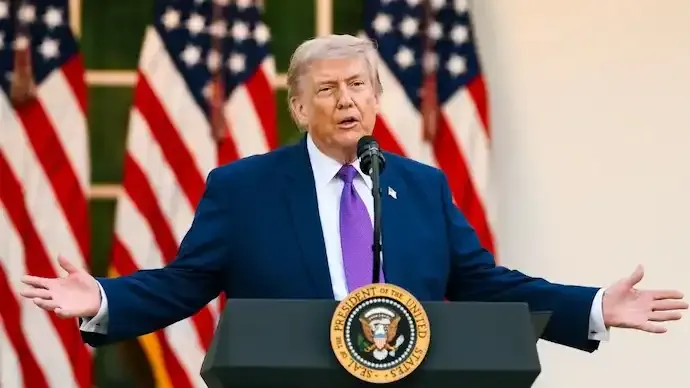
US President Donald Trump has stated that any future peace agreement between the United States and Iran must include international nuclear inspections, emphasizing that verification remains a non-negotiable element of the proposed deal.
The remarks come as diplomatic discussions continue over a possible framework aimed at reducing tensions in West Asia and establishing a long-term understanding between Washington and Tehran.
Trump's comments have highlighted a key disagreement between the two sides regarding the role and scope of international monitoring mechanisms.
Trump Insists on Nuclear Verification
Speaking publicly during ongoing discussions surrounding a potential peace agreement, Trump maintained that Iran would ultimately have to permit inspections by the International Atomic Energy Agency (IAEA).
The President rejected suggestions that Tehran had not accepted inspection-related provisions and insisted that Iranian officials were aware of the conditions being discussed.
According to Trump, verification is essential to ensuring that any agreement remains credible and enforceable.
Why Nuclear Inspections Matter
International nuclear inspections are designed to verify that countries comply with commitments related to nuclear activities.
Objectives of Nuclear Inspections
-
Monitor nuclear facilities
-
Verify compliance with agreements
-
Promote transparency
-
Build international confidence
-
Prevent unauthorized nuclear activities
For decades, inspection mechanisms have been a central component of major nuclear agreements involving Iran.
What Is the IAEA?
The International Atomic Energy Agency serves as the world's primary nuclear monitoring body.
Key Functions of the IAEA
-
Inspect nuclear facilities
-
Monitor nuclear programmes
-
Verify treaty compliance
-
Support peaceful nuclear development
-
Strengthen nuclear safety standards
The agency plays a critical role in international efforts to prevent nuclear proliferation.
Disagreement Between Washington and Tehran
Trump's latest remarks underscore an ongoing dispute regarding verification requirements.
While Washington continues to emphasize inspections and monitoring, Iranian officials have reportedly expressed differing views regarding the scope and structure of any future verification system.
Main Areas of Debate
-
Access for inspectors
-
Monitoring mechanisms
-
Compliance verification
-
Sovereignty concerns
-
Inspection frequency
These issues are often among the most sensitive components of nuclear-related negotiations.
Why Verification Is a Key Issue
International agreements involving nuclear programmes generally rely on verification to ensure commitments are being honored.
Without inspection systems, participating countries may struggle to build trust and confidence in the implementation of agreements.
Diplomatic experts frequently describe verification as one of the foundations of successful arms-control and nuclear-monitoring arrangements.
Broader Context of US-Iran Relations
Relations between the United States and Iran have been marked by decades of political and strategic tensions.
Key issues have included:
-
Nuclear activities
-
Economic sanctions
-
Regional security concerns
-
Diplomatic disputes
-
Military tensions
The latest negotiations represent part of broader efforts to reduce instability and avoid future escalation.
Impact on Regional Stability
The outcome of US-Iran discussions could have significant implications for West Asia.
Potential Areas Affected
-
Energy markets
-
Regional security
-
Diplomatic relations
-
Trade routes
-
International investment
Because Iran plays an important role in regional geopolitics, developments in negotiations are closely watched around the world.
Challenges Facing Negotiators
Despite ongoing discussions, several complex issues remain unresolved.
Major Negotiation Hurdles
-
Inspection arrangements
-
Compliance guarantees
-
Security concerns
-
Political opposition
-
Implementation timelines
Successfully addressing these challenges will be critical if a comprehensive agreement is to emerge.
International Interest in the Talks
Governments and international organizations continue monitoring developments closely.
A potential agreement could influence:
-
Global energy markets
-
Nuclear non-proliferation efforts
-
Regional diplomacy
-
International security frameworks
As a result, negotiations have attracted significant global attention.
What Happens Next?
Diplomatic discussions are expected to continue as negotiators seek common ground on verification mechanisms and broader peace arrangements.
Future talks may focus on:
-
Inspection protocols
-
Monitoring access
-
Compliance procedures
-
Security guarantees
-
Long-term implementation measures
Whether the two sides can bridge remaining differences remains uncertain.
Why This Story Matters
The debate over nuclear inspections goes beyond technical details.
It touches on:
-
International security
-
Nuclear transparency
-
Diplomatic trust
-
Regional stability
-
Global non-proliferation efforts
The outcome could shape future relations between Washington and Tehran and influence broader geopolitical dynamics across West Asia.
Conclusion
Donald Trump's insistence that any US-Iran peace agreement must include international nuclear inspections has highlighted one of the most critical issues facing ongoing negotiations. While Washington views verification as essential for credibility and compliance, disagreements over inspection mechanisms continue to complicate discussions. As diplomatic efforts move forward, the question of nuclear monitoring is likely to remain at the centre of any potential agreement between the two countries.
FAQ SECTION
Q1. What did Donald Trump say about Iran?
Trump said that any future peace agreement with Iran must include international nuclear inspections.
Q2. Which organisation would conduct the inspections?
The inspections would likely involve the International Atomic Energy Agency (IAEA).
Q3. Why are nuclear inspections important?
They help verify compliance with agreements and promote transparency regarding nuclear activities.
Q4. What is the main disagreement between the US and Iran?
A key issue involves the scope and structure of inspection and verification mechanisms.
Q5. What is the IAEA?
The International Atomic Energy Agency is the global body responsible for nuclear monitoring and verification.
Q6. Are US-Iran peace talks still ongoing?
Yes, discussions continue as both sides seek agreement on multiple issues, including inspections and verification.
Prev Article
Europe Heatwave Turns Deadly: 40 Drown in France Amid Record Temperatures
Next Article
France Music Festival Marred by Violence, Mass Arrests and Assault Allegations