



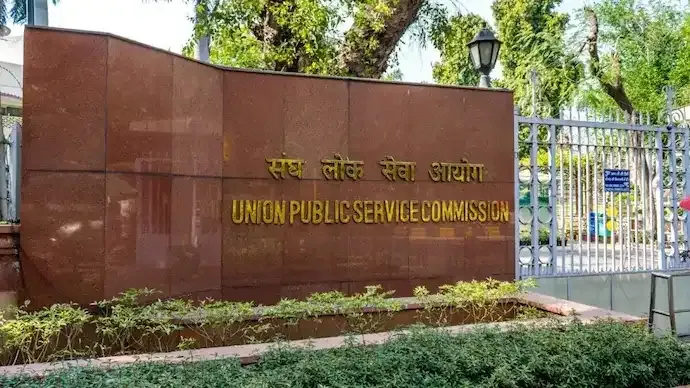
The Central Administrative Tribunal (CAT), Principal Bench, New Delhi, has issued notice to the Union Public Service Commission (UPSC) over a petition challenging eight questions from the Civil Services Examination (CSE) Prelims 2026.
The petition, filed by candidates who appeared for the examination, alleges that Questions 7, 11, 45, 60, 62, 82, 86 and 96 of General Studies Paper-I, Set A, contained factual or legal errors, lacked a sustainable correct answer or went beyond the prescribed syllabus.
The tribunal has asked UPSC and the Union of India to respond to the allegations and the reliefs sought by the petitioners.

The case could be significant for candidates who appeared for UPSC CSE Prelims 2026, particularly because the petitioners have argued that the disputed questions, along with negative marking, could affect candidates' scores by more than 16 marks.
The next hearing is scheduled for October 8, 2026.
Why have UPSC Prelims 2026 questions been challenged?
The case was filed by Sachin Tiwari and others, who appeared for the 2026 Civil Services Preliminary Examination.
The candidates have challenged eight questions from General Studies Paper-I, Set A, arguing that the provisional answer key contained errors or that the questions themselves had fundamental problems.
According to the petition, the objections fall broadly into three categories:
- The answer marked by UPSC allegedly contradicts authoritative sources.
- Some questions allegedly do not have a legally or factually sustainable correct option.
- Certain questions allegedly go beyond the notified syllabus.
The petitioners said they compared the disputed questions and answers with government records, statutory provisions, official documents and other authoritative sources before submitting their objections.
Which 8 UPSC Prelims questions are under challenge?
The petition challenges the following questions:
Question 7, Question 11, Question 45, Question 60, Question 62, Question 82, Question 86 and Question 96.
The petitioners have specifically challenged the answers provided by UPSC for Questions 7, 45, 60, 82, 86 and 96.
For Questions 11 and 62, they have argued that none of the four options provided in the question paper was legally or factually sustainable.
The dispute is therefore not simply about whether candidates disagreed with the answer key. The petition argues that the disputed questions contain objectively verifiable errors or deficiencies.
Candidates had already challenged the answer key
UPSC published the provisional answer key for General Studies Paper-I on May 27, 2026, following the examination.
Candidates were given an opportunity to raise objections through the Commission's designated representation process.
The petitioners said they submitted their objections through the UPSC Question Paper Representation Portal during the prescribed period.
They also sent a detailed representation to UPSC by email on June 2, setting out their question-wise objections and attaching supporting documents and official material.
According to the petition, the candidates did not receive a response explaining whether their objections had been accepted, rejected or otherwise considered.
They subsequently approached the CAT after UPSC announced the Preliminary Examination results.
What are the petitioners asking UPSC to do?
The applicants have sought directions requiring UPSC to reconsider their objections to the disputed questions.
Their demands include:
- Correcting the provisional answer key where an error is established.
- Deleting disputed questions from evaluation where necessary.
- Providing appropriate consequential relief to affected candidates.
- Disclosing how their objections were considered.
- Explaining the reasons if the objections were rejected.
The petitioners have also sought interim disclosure regarding the treatment of their representations.
Importantly, the petition does not seek cancellation or wholesale reopening of the entire examination. Instead, it focuses on eight specific questions.
Could the case affect the UPSC CSE Prelims cutoff?
This is potentially the most important issue for candidates.
The petitioners have estimated that the disputed questions, combined with the effect of negative marking, could have an impact of more than 16 marks.
In a highly competitive examination such as the UPSC Civil Services Examination, a difference of several marks can determine whether a candidate crosses the Preliminary Examination cutoff and proceeds to the Mains stage.
The applicants have therefore argued that incorrect questions or answer-key errors can materially affect candidates' chances of qualifying.
However, the CAT has not ruled that the disputed questions are incorrect. At this stage, the tribunal has only sought UPSC's response to the allegations.
Any change to the answer key, evaluation process or candidates' results would depend on the outcome of the proceedings and any directions issued by the tribunal.
What happens next in the CAT case?
The immediate next step is for UPSC and the Union of India to respond to the petition.
The CAT will then consider the submissions made by the parties before deciding how the matter should proceed.
The next hearing is scheduled for October 8, 2026.
Until the tribunal reaches a decision, the existing UPSC answer key and examination results remain subject to the ongoing legal challenge.
For candidates who appeared for CSE Prelims 2026, the case will therefore be closely watched because any judicial direction concerning the disputed questions could potentially have implications for affected candidates.







Conversation
Be kind and stay on topic. Comments are moderated; abuse, spam and personal attacks are removed. Report a problem