Shopping cart
Your cart empty!
Your cart empty!
Terms of use dolor sit amet consectetur, adipisicing elit. Recusandae provident ullam aperiam quo ad non corrupti sit vel quam repellat ipsa quod sed, repellendus adipisci, ducimus ea modi odio assumenda.
Lorem ipsum dolor sit amet consectetur adipisicing elit. Sequi, cum esse possimus officiis amet ea voluptatibus libero! Dolorum assumenda esse, deserunt ipsum ad iusto! Praesentium error nobis tenetur at, quis nostrum facere excepturi architecto totam.
Lorem ipsum dolor sit amet consectetur adipisicing elit. Inventore, soluta alias eaque modi ipsum sint iusto fugiat vero velit rerum.
Sequi, cum esse possimus officiis amet ea voluptatibus libero! Dolorum assumenda esse, deserunt ipsum ad iusto! Praesentium error nobis tenetur at, quis nostrum facere excepturi architecto totam.
Lorem ipsum dolor sit amet consectetur adipisicing elit. Inventore, soluta alias eaque modi ipsum sint iusto fugiat vero velit rerum.
Dolor sit amet consectetur adipisicing elit. Sequi, cum esse possimus officiis amet ea voluptatibus libero! Dolorum assumenda esse, deserunt ipsum ad iusto! Praesentium error nobis tenetur at, quis nostrum facere excepturi architecto totam.
Lorem ipsum dolor sit amet consectetur adipisicing elit. Inventore, soluta alias eaque modi ipsum sint iusto fugiat vero velit rerum.
Sit amet consectetur adipisicing elit. Sequi, cum esse possimus officiis amet ea voluptatibus libero! Dolorum assumenda esse, deserunt ipsum ad iusto! Praesentium error nobis tenetur at, quis nostrum facere excepturi architecto totam.
Lorem ipsum dolor sit amet consectetur adipisicing elit. Inventore, soluta alias eaque modi ipsum sint iusto fugiat vero velit rerum.
Do you agree to our terms? Sign up
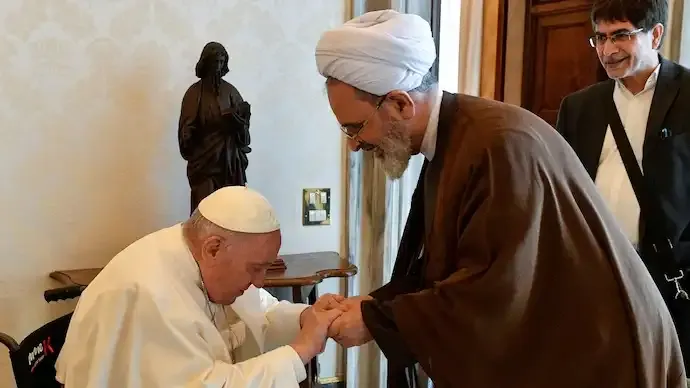
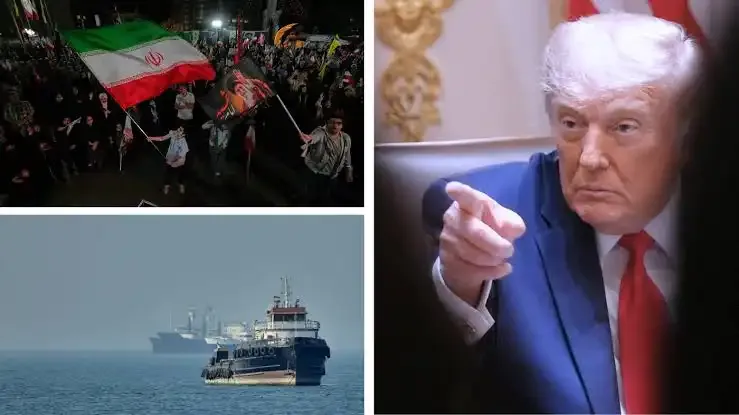
Iran has appointed Ayatollah Alireza Arafi as interim Supreme Leader following the death of Ayatollah Ali Khamenei in US-Israeli airstrikes, marking a historic leadership transition for the Islamic Republic.
Under Iran’s constitution, the selection of a permanent Supreme Leader is the responsibility of the Assembly of Experts — a body of around 90 senior clerics elected every eight years. Until the Assembly formally appoints a successor, a temporary Leadership Council assumes the Supreme Leader’s duties.
Arafi has been named the jurist member of this interim Leadership Council, alongside President Masoud Pezeshkian and Chief Justice Gholamhossein Mohseni Ejei. Together, they are tasked with maintaining continuity and stability during the transition period.
Born in 1959 in Meybod in Iran’s Yazd province, Alireza Arafi comes from a clerical family. He received his religious education in Qom, the country’s most important seminary city and a central hub of Shia scholarship. Over time, he rose to the rank of Mujtahid, a senior clerical status that allows him to issue independent Islamic legal rulings.
Arafi’s rise has largely been institutional rather than political. From 2009 to 2018, he headed Al-Mustafa International University in Qom, an institution that trains clerics from Iran and abroad. During his leadership, the seminary expanded its global outreach and strengthened ties with Shia communities worldwide.
Ayatollah Ali Khamenei gradually elevated Arafi to key positions. He served as Friday prayer leader in Meybod and later in Qom — roles that carry significant symbolic and religious authority.
In 2019, Arafi was appointed to the Guardian Council, one of Iran’s most powerful institutions responsible for vetting legislation and election candidates. This appointment was widely seen as a sign of trust in his ideological alignment with the ruling establishment.
Although he failed to secure a seat in the Assembly of Experts in 2016, he entered the body through a 2021 midterm by-election. In the 2024 elections, he emerged as the top vote-getter in Tehran and later became the Assembly’s second deputy chairman — placing him at the centre of succession discussions.
Iran is observing a 40-day mourning period, during which the Assembly of Experts is expected to deliberate on selecting a permanent Supreme Leader. Arafi’s interim role is designed to ensure continuity of governance and stability in a period of heightened regional tension.
His past speeches reflect a firm stance against Western pressure and strong support for Iran’s military and ideological framework. As the Islamic Republic navigates one of its most critical transitions since 1979, Ayatollah Alireza Arafi now stands at the centre of Iran’s evolving political landscape.
59
Published: Mar 02, 2026

All India Story is your trusted source for comprehensive and up-to-the-minute news coverage across India. Bringing you the latest on politics, business, technology, entertainment, sports, and more, we are dedicated to keeping you informed with accurate, engaging, and insightful stories from every corner of the nation.