
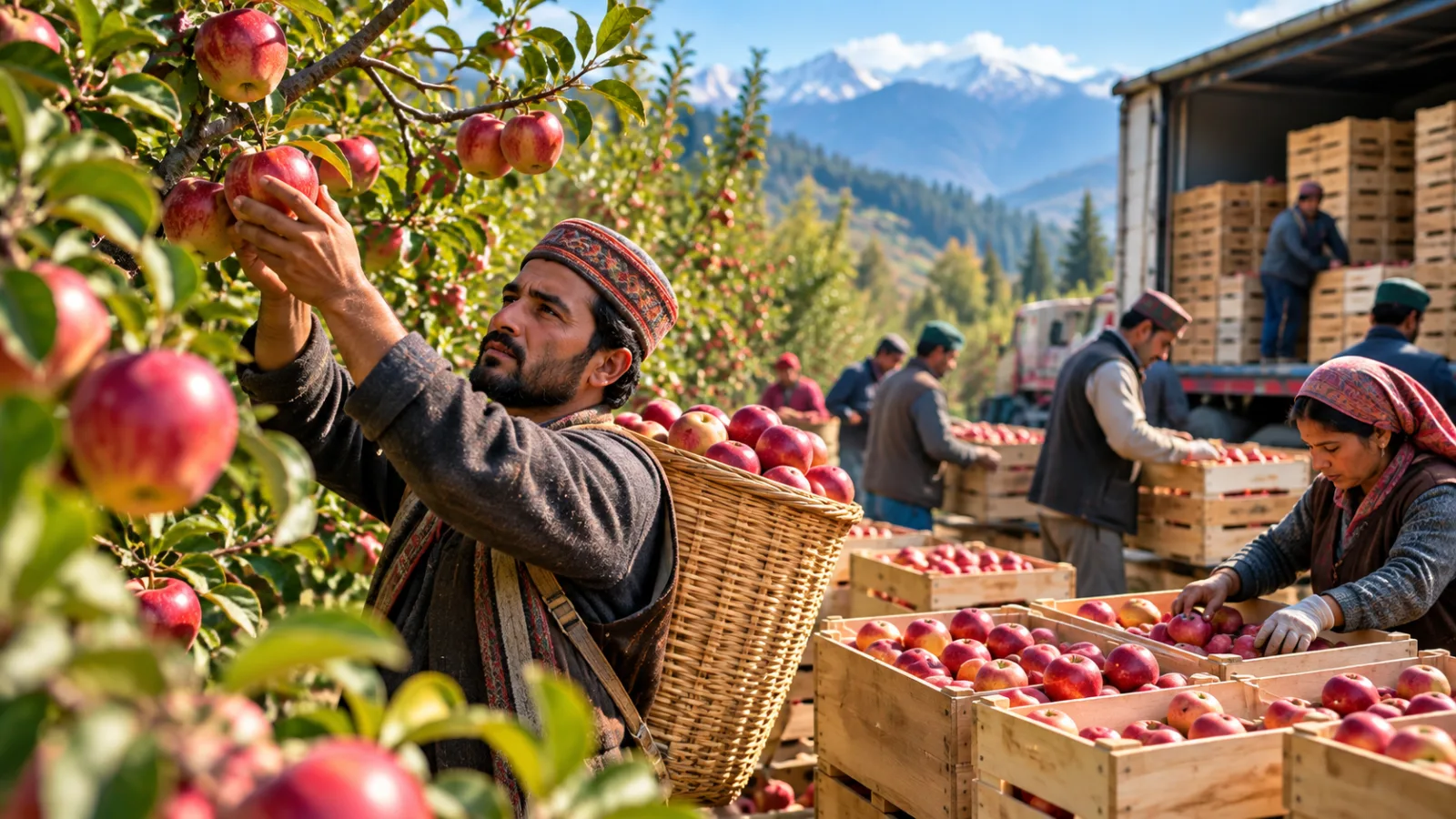
India is producing record quantities of apples, yet the country continues to import large volumes to meet demand outside the domestic harvest season. The focus keyword India apple imports highlights a supply-chain problem that goes beyond how much fruit the country grows.
Jammu and Kashmir accounts for roughly three-quarters of India's apple production and harvested more than 21 lakh tonnes in 2024-25. Despite this, India imported close to 5.6 lakh tonnes of apples during the same period, with the import bill reaching around $418 million. The contrast reflects a seasonal mismatch: domestic apples largely arrive between August and November, while supply becomes tighter during the remaining months.
The eight-month supply gap
During the harvest season, large quantities of domestic fruit enter the market at the same time, putting pressure on prices. Later in the year, imported apples from countries including Iran, Turkey, the US, Italy, Poland and New Zealand become more prominent.
Controlled-atmosphere storage has expanded significantly in Kashmir, allowing premium-quality apples to be preserved and sold months after harvest. However, storage is not a complete solution. Smaller growers can face challenges related to access, financing and storage costs, while lower-grade apples may not be suitable for long-term storage.
Storage is only part of the solution
International apple-producing regions have addressed similar seasonal challenges through a combination of storage, counter-seasonal production and processing. India could potentially use the same broad approaches to extend its domestic supply window and create markets for fruit that does not qualify for premium fresh sales.
Low-chill varieties such as HRMN-99 could also help expand apple cultivation into warmer regions. However, their wider commercial potential depends on factors including taste, consistency, shelf life and large-scale cultivation.
Turning more of the harvest into value
The opportunity extends beyond replacing imported fresh apples. Processing lower-grade fruit into juice, concentrate, cider and dried products could create additional value while reducing wastage.
For India, the challenge is therefore shifting from simply producing more apples to managing the crop throughout the year. Better grading, storage, processing, logistics and market access could improve farmer realisations, reduce waste and address part of the demand currently being met through imports.






Conversation
Be kind and stay on topic. Comments are moderated; abuse, spam and personal attacks are removed. Report a problem